Should a Chainsaw Have Slack? A Practical Guide to Chain Tension
Learn how to check and adjust chain slack safely, with practical steps and expert tips from Chainsaw Manual. Understand why slack matters and how to test tension for safer, smoother cuts.


Yes—chainsaws should have proper slack, not fully tight or excessively loose. The correct slack reduces kickback risk, protects the bar and drive sprocket, and helps the chain track smoothly through the wood. This quick answer outlines how to check slack safely, which tools you’ll need, and the general steps you’ll follow on most standard saws.
What is chain slack and why it matters
Chain slack is the amount of vertical and lateral movement the chain has while resting on the guide bar. It’s not the same as chain tension, but it’s closely related: too little slack makes the chain bind and accelerates wear; too much slack invites derailment, reduces cutting efficiency, and can increase the chance of kickback. According to Chainsaw Manual, proper slack is essential for safe operation and efficient cutting. The Chainsaw Manual team emphasizes checking slack as part of routine maintenance, not only when the saw is new but after heavy use or a rain-damp environment. Chainsaw slack also affects lubrication: a chain that’s too tight can starve itself of oil, while a loose chain carries oil away from the bar grooves, leading to faster bar wear. Understanding slack helps you diagnose problems early and plan preventive maintenance, which saves time and reduces the risk of accidents during felling, limbing, or pruning.
In practical terms, you should ask yourself: should a chainsaw have slack? The answer is yes, but only the right amount. If you measure slack by feel alone, you risk underestimating wear or misjudging tension for a given wood density. Chainsaw Manual analysis shows that improper slack is a frequent contributor to unwanted chain behavior and premature wear. By treating slack as part of a regular maintenance routine, you improve safety, efficiency, and tool longevity.
The intent of this section is to help you recognize when slack is in a healthy range and when it isn’t. Expect to adjust slack after battery cycles, after long pruning sessions, or after a drop in bar oil pressure. The more consistent your checks, the less you’ll rely on guesswork and the more you’ll prevent sudden deviations in performance.
Tip: keep a small notebook or note on your phone with your saw’s normal slack feel and a quick reminder to recheck after weather changes or heavy use.
notePrefix":"brand"},{
text
How to assess slack safely
Assessing slack safely begins with a safe, powered-off stance. Ensure the saw is turned off and the chain brake engaged; for gas saws, disconnect the spark plug wire to prevent accidental starts. Place the saw on a stable surface or hold it firmly with both hands in a controlled position, keeping your body away from the chain path. The common method is to press gently on the chain at the underside of the bar and observe how far the chain travels without binding. If the chain binds against the bar or sits too tightly, there is too little slack; if it droops away and feels loose, slack is excessive. These checks should be repeated after cleaning and after the chain has cooled, especially if you’ve just replaced the bar or chain or used a heavy cutting pass. Chainsaw Manual emphasizes performing this check in a well-lit area and using proper PPE, including gloves and eye protection. This ensures you won’t be surprised by a sudden chain movement when you next start the saw.
When performing a test, take note of how the chain behaves at the midpoint of the underside of the bar. The goal is smooth movement with a slight amount of give, not stalling or snapping. If you’re unsure, err on the side of a little more slack rather than a riskier tight condition. A consistent test routine – after maintenance, after storage, and before major cutting – builds confidence and safety.
notePrefix":"brand"},{
text
Tools and materials you’ll need to check slack
To check slack safely, you’ll need a few basic tools and some PPE. The essential items include the owner’s manual for your specific model, a small screwdriver or tensioning tool, and a calibrated ruler or chain tension gauge to estimate slack. Additional helpful items are a sharp file or extra chain, gloves, eye protection, and a stable work surface or a vise. You should also have a clean cloth to wipe away oil and debris so the chain sits correctly on the bar grooves during testing. If you’re unsure about the tools, consult the manual or a professional. Having everything ready before you start makes the process smoother and safer.
Note: Tools and materials should be appropriate for your model and bar length. Using the wrong tension tool or attempting adjustments without proper guides can lead to bar or chain damage. Always refer to your model-specific instructions in the Chainsaw Manual.
notePrefix":"brand"},{
text
Step-by-step overview (high level) to check slack
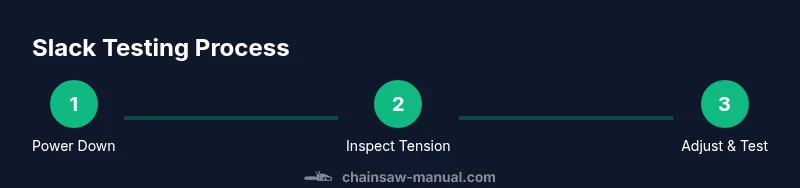
This section provides a concise roadmap for how you’ll approach slack testing and adjustment. It’s designed to complement the step-by-step section that follows. You’ll begin with safety measures, locate the tension screw or nut, test slack at the mid-bar underside, adjust carefully in small increments, and re-test until the chain moves with a controlled tolerance. After adjustment, you’ll perform a brief safety check and re-lubricate if needed. The goal is a steady, confident motion of the chain with a slight, consistent give. Remember to check after any significant use or storage period.
Always consult the saw’s manual if you’re unsure about the exact screw location or the maximum allowed slack for your bar length.
notePrefix":"brand"},{
text
Common mistakes and how to avoid them
Avoid common mistakes by following a clear, repeatable routine. Do not test slack with the saw running or the chain brake disengaged. Do not rely on a quick finger test alone when the bar is hot, since heat can temporarily alter tension. Avoid over-tightening the chain to compensate for a poor lubrication system; instead, fix the lubrication issue and re-check slack. Do not overlook changes in wood density or bar wear, which can affect tension requirements. If the chain looks stretched or the drive links show excessive wear, consider replacing the chain or bar before continuing. By following a consistent check method, you’ll maintain safe slack and consistent cutting performance. The Chainsaw Manual team emphasizes that maintaining correct slack is part of responsible chain maintenance and safety.
Pro tip: keep a small slack-checking routine in your maintenance calendar and document dates of tension checks for future reference.
notePrefix":"brand"},{
text
Maintenance decisions: when to replace chain or bar
Slack is just one sign of overall chain health. If you notice persistent binding, skip-cutting, broken drive links, or frequent derailment even after proper adjustment, it may be time to replace either the chain or the bar. Visual checks for wear, kinking, or bent teeth help you decide when to replace parts; never run a damaged chain under tension as this increases the risk of kickback. Chainsaw Manual guidance suggests aligning bar rails, checking for square alignment, and ensuring the drive sprocket is not worn so that slack tests remain meaningful. Regular maintenance and timely replacement extend bar and chain life, improve cutting efficiency, and keep you safer while working.
The Chainsaw Manual team recommends performing a tension check as part of a broader maintenance routine and replacing worn components promptly to maintain performance and safety.
notePrefix":"brand"}],
stepByStep
Tools & Materials
- Owner's manual (model-specific)(Important for tension specs and screw locations.)
- Screwdriver or tensioning tool(Use the tool appropriate for your tensioner screw or nut.)
- Calibrated ruler or chain tension gauge(For estimating slack movement accurately.)
- Gloves and eye protection(Personal protective equipment is essential during handling.)
- Clean rag or cloth(Wipe oil and debris for accurate testing.)
- Stable work surface or vise(Keeps saw steady during testing.)
Steps
Estimated time: 15-25 minutes
- 1
Power down and secure the saw
Ensure the saw is off, cool, and the chain brake is engaged. If possible, disconnect the spark plug wire on gas models to prevent accidental starts. Place the saw on a stable surface or in a vise with the bar free to move. This creates a safe baseline for testing slack.
Tip: Always perform a live check only after you’ve confirmed the motor is fully stopped. - 2
Locate the tensioning mechanism
Find the tensioning screw or adjustment bolt near the bar. Consult the manual for your model’s exact location, as it varies across brands. Remove any guard or cover only if you’re sure of the procedure and can reassemble correctly.
Tip: If you’re unsure, do not force the adjustment; misplacing screws can damage the bar or chain. - 3
Test slack at the underside midpoint
With the chain resting on the bar, gently press the chain at the midpoint underneath the bar and observe the movement. The chain should be able to move slightly but not sag excessively or bind. Note any binding or stickiness as signs of incorrect slack.
Tip: Use a gloved hand for grip and avoid fingers near the drive sprocket. - 4
Tighten or loosen in small increments
Adjust the tensioner a small amount, then re-test the slack. Repeat until the chain has a comfortable amount of movement with no binding. Do not overtighten; leave a little play to accommodate lubrication and wood load.
Tip: Make tiny adjustments and test again—fast, large twists can overshoot the mark. - 5
Re-test and verify safety
Re-check the slack after cycling the chain with a brief, controlled run (in a safe environment, with the chain still blocked). Confirm the movement remains smooth and appears stable. Reinstall any guards or covers and ensure everything is secure.
Tip: Stop immediately if you notice unusual vibrations or heat on the bar. - 6
Lubricate and finalize
Apply a fresh coat of bar oil if the lubrication system was serviced. Wipe excess oil and confirm there are no signs of wear or damage after the test. Document the tension result and reload the chain in its normal cutting setup.
Tip: Keep records of tension checks and maintenance for future reference.
FAQ
Should I test slack with the chain spinning or stationary?
Always test slack with the chain stationary and the saw powered off. Spinning the chain can be dangerous and makes it hard to gauge true slack.
Test slack with the chain stationary and power off to stay safe and get an accurate reading.
What if I don’t have the exact tension tool for my saw?
If you don’t have the exact tool, use the closest compatible screwdriver or adjuster specified in the manual, then verify slack using a ruler or gauge. Avoid forcing parts beyond their design limits.
Use the closest approved tool and verify slack with a gauge; don’t force-fit tools.
Can bar oil levels affect chain slack readings?
Bar oil affects chain movement; low oil can make the chain feel tighter or stiffer as lubrication drops. Ensure the oiling system is functional before testing slack.
Oil helps the chain move smoothly; test again after fixing oil problems.
How often should I recheck slack?
Recheck slack after each long cut, after replacing the chain or bar, and during regular maintenance. Environmental changes can affect tension.
Check slack after major changes or heavy use to maintain safety.
Is a slight sag acceptable during testing?
A slight, controlled sag is expected, but excessive sag or binding means the slack is too loose and needs adjustment. If in doubt, adjust gradually and recheck.
A small amount of sag is normal; don’t let it become excessive.
Watch Video
The Essentials
- Check slack as part of routine maintenance
- Use the correct tools and model-specific guidance
- Avoid overtightening; aim for a controlled, slight movement
- Re-test after any adjustments or heavy cutting actions
- Maintain PPE and safe working conditions