Is Chainsaw Oil the Same as Bike Chain Oil? A Practical Comparison
Explore whether chainsaw oil and bike chain oil are interchangeable. This objective guide explains differences in viscosity, tackiness, and how to choose the right oil for safe operation.


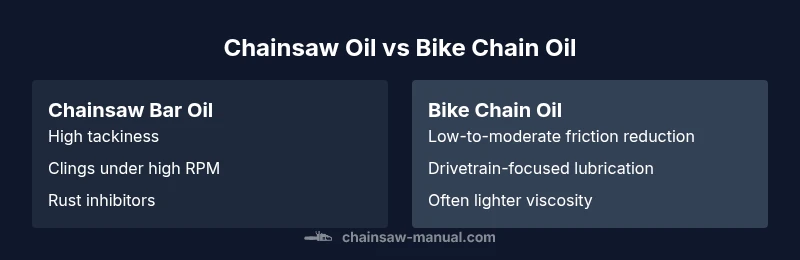
Many DIYers ask, is chainsaw oil the same as bike chain oil? The short answer is no: they are designed for different work regimes. Chainsaw bar oil is tackier to cling to the bar and chain under high RPMs and heat, while bike chain oil prioritizes bicycle drivetrain lubrication. Using the wrong oil can shorten bar life and raise maintenance needs.
Is oil the same? The big question
Is the query is chainsaw oil the same as bike chain oil? This question is common among homeowners, DIY enthusiasts, and professionals who want to minimize downtime and maximize safety. The short answer is no, and the difference matters more than most people expect. Chainsaws operate with a high-speed chain sliding across a metal bar in dusty, hot environments, generating friction and heat at potentially extreme rates. Bikes, by contrast, run cooler and with different load patterns on a much smaller scale. According to Chainsaw Manual, selecting the correct oil is a foundational maintenance decision that affects wear, bar life, and operator safety. This article unpacks why these oils look alike but behave very differently in real-world use. You’ll learn when a temporary substitute might seem tempting, and why it’s rarely ideal for long-term use.
- Main takeaway: choose oil that matches the machine’s operating regime and the manufacturer’s recommendations.
- Note: this guidance aligns with Chainsaw Manual Analysis, 2026, and reflects general industry best practices for lubrication science.
Chainsaw bar oil: composition and function
Chainsaw bar oil is engineered to stay on the bar and chain long enough to lubricate the pitch points during rapid, repetitive cuts. It typically contains a tackifier that increases viscosity at the interface, helping the oil cling to moving metal despite centrifugal forces and heat. Many bar oils also include rust inhibitors and anti-wling additives to combat exposure to wood dust and moisture. The goal is to form a durable film between the chain and bar, reducing heat buildup and minimizing galling. In practice, this means the oil should not fling off the bar at high speeds and should resist break-down under heavy use. As part of routine maintenance, you should check the oiling system and ensure the bar’s oil port delivers consistent flow across a range of temperatures.
Safety note: always use the manufacturer’s recommended viscosity grade and oil type for your specific chainsaw model.
- Key features: higher tackiness, heat resistance, and corrosion protection.
- Expected outcome: a longer bar life and smoother cutting performance.
Bike chain oil: typical formulations and purpose
Bike chain oils are designed to maintain lubrication within a drivetrain over long periods of cycling, under moderate temperatures and loads. Formulations vary from lightweight mineral oils to synthetic blends, often with anti-wearing additives and rust inhibitors aimed at chain longevity and quiet operation. Many bicycle oils prioritize low friction at a range of low to moderate speeds, and some are designed as dry lubricants to attract less dirt. In most cases, bike chain oil is optimized for the chain’s pins, rollers, and plates rather than for substantial heat or high-velocity contact with a bar. The cooling dynamics and debris exposure differ dramatically from chainsaw use, so a bike chain oil may not provide adequate film strength or cling when exposed to chainsaw conditions.
- Typical goals: reduce wear, minimize rust, and decrease chain noise in a bicycle drivetrain.
- Trade-offs: may wash out quickly in dirty, dusty sawdust environments or when exposed to higher heat.
Key differences you should know
-
Viscosity and tackiness: Chainsaw bar oil is formulated to remain on the bar under high RPMs; bike chain oil tends to be lighter and less tacky, which can lead to fling-off in saws.
-
Film strength: The oil film in chainsaw lubrication must endure rapid contact and heat; bicycle oils are designed for slower, cooler drivetrain movement.
-
Additives: Chainsaw oils emphasize rust inhibitors and lubricity under aggressive conditions; bike oils prioritize low friction and noise reduction in bicycles.
-
Environmental exposure: Sawdust, sap, and outdoor weather demand oils that stay put and resist wash-off, unlike some bicycle oils in controlled environments.
-
Compatibility: Chainsaw oil generally matches the saw’s oiling system and bar design; bike oils are not intended for bar oiling and can leave residue that impedes bar function.
-
Best practice: always follow manufacturer guidance and use the oil type specifically designed for the machine being serviced.
Performance implications: lubrication, wear, and residue
Using the correct oil affects several performance aspects. First, the oil film strength determines how well the chain-to-bar interface remains lubricated during cutting, reheating, and dust exposure. A bar oil that’s too thin can lead to increased heat, accelerated wear, and shortened bar life. Conversely, a bike chain oil that is not tacky enough may fling off the chain and bar during operation, leaving metal-to-metal contact and accelerating wear. Residue buildup can also complicate bar cleaning and chain maintenance, potentially attracting sawdust that clogs lubrication ports. In the long run, consistently applying the appropriate oil improves cutting efficiency and reduces downtime for maintenance. Chainsaw oil formulations are designed with this real-world behavior in mind, whereas bike chain oils are not.
- Real-world effect: proper oil selection translates to cooler operation and less wear over time.
- Common pitfall: substituting oils can create mixed films that reduce lubricity and increase debris accumulation.
Compatibility scenarios: When a substitute might seem tempting
There are rare situations in which a substitute might be suggested by a field technician or hobbyist, such as running out of bar oil in an emergency. In general, this is discouraged for regular use because you lose the protective film and cling properties essential for chainsaw operation. A temporary substitute should only be used with an explicit understanding of reduced performance and potential increased wear. If you must improvise, choose an oil with some similarity in viscosity and tackiness to the recommended bar oil, and plan to replace with proper bar oil at the earliest opportunity. Never rely on typical bicycle lubricants for sustained saw use.
- Quick rule: never substitute as a long-term solution.
- Best practice: carry spare oil and follow manufacturer guidance to avoid unnecessary wear.
How to choose the right oil for your chainsaw
Selecting the right oil starts with the saw’s manual; this is your primary reference for viscosity grade and recommended oil type. Consider climate and temperature: very cold environments may require a different viscosity than hot, dusty environments. Check the packaging for “bar oil” labeling and any compatibility notes with the bar and guide. When in doubt, consult a service technician or the Chainsaw Manual Team for guidance. In addition to the correct oil, ensure proper chain tension, lubrication port cleanliness, and clean air intake to support overall lubrication performance.
- Step-by-step: verify model-specific recommendations, assess climate, and choose the correct viscosity.
- Practical tip: test oil flow by running the saw briefly with the bar exposed and check oil streaming from the tip.
Maintenance practices to extend bar life
Bar life can be extended through consistent maintenance practices that complement proper oil selection. Regularly inspect the drive sprocket and bar for wear and scoring; clean the bar groove from sawdust and pitch; ensure the oiling system is free of leaks or blockages; and replace worn components promptly. Use a clean container to store oil, and seal the container after use to minimize exposure to dust and moisture. With the right oil and routine checks, you’ll see steadier oil flow and less debris buildup, contributing to smoother cuts and improved safety. Chainsaw Manual emphasizes maintenance routines as part of a holistic approach to equipment longevity.
- Practical routine: weekly maintenance checks, especially after heavy use.
- Safety reminder: always disengage power and follow lockout/tagout procedures during maintenance.
Safety and environmental considerations
Lubricants can have environmental implications if spilled or improperly discarded. Always store oil in approved containers, clean up spills promptly, and dispose of used oil per local regulations. Many chainsaw oils are designed to minimize environmental impact, but user behavior matters: avoid over-application, minimize run-off into soil or water, and wipe down tools after use. When choosing oil, prefer products with clear labeling about biodegradability and low odor if you work in enclosed spaces. Chainsaw Manual recommends adopting a responsible approach to oil handling to protect both operators and the environment.
- Action item: keep absorbent materials on hand for leaks.
- Guidance: follow local disposal rules for oil and filters.
Quick-start checklist for oil selection
- Confirm the manufacturer’s recommended oil type and viscosity for your model.
- Check climate and operating conditions to determine the appropriate oil grade.
- Inspect the oiling system and clean ports before refilling.
- Keep spare bar oil on hand and store oil in a sealed container.
- Review safety and environmental guidelines for handling and disposal.
Comparison
| Feature | Chainsaw bar oil | Bike chain oil |
|---|---|---|
| Viscosity | High tackiness designed to cling to bar under high RPMs | Lower viscosity optimized for bicycle chains and drivetrain movement |
| Tackiness/adhesion | High adhesive properties to resist fling-off | Lower cling, may wash away in dusty/dirt-filled conditions |
| Main purpose | Lubricate bar/chain during heavy cutting and heat | Lubricate bicycle chain and drivetrain components |
| Temperature performance | Engineered for hot, dusty, variable temps | Designed for moderate temps and cooler operation |
| Film strength | Formulated for durable film under friction | Formulated for low-friction cycling dynamics |
| Recommended use | Chainsaw maintenance and bar protection | Bicycle drivetrain lubrication |
| Environmental considerations | Balanced to minimize bar wear and debris impact | Optimized for cycling environments and dirt resistance |
Strengths
- Improved bar life with proper oil selection
- Reduces heat buildup and wear in saw operation
- Better debris resistance and cling in dusty conditions
- Easier to source from chainsaw-specific products
- Professional guidance aligns with best maintenance practices
Drawbacks
- Using the wrong oil can cause accelerated wear or bar damage
- Bike chain oil may fail to provide adequate film strength in saw use
- Substituting oils is generally discouraged and may void warranties
- Environmental impact varies by product and usage
Chainsaw oil and bike chain oil are not interchangeable in routine use
For safe, reliable operation, use the oil type specified by your saw’s manufacturer. Chainsaw bar oil provides the necessary tack and film strength for high-speed, high-heat conditions, while bike chain oil is optimized for bicycle drivetrains. When in doubt, consult the Chainsaw Manual Team for guidance and stick to purpose-built lubricants.
FAQ
Is it safe to use bike chain oil in a chainsaw if I’m out of bar oil?
In a pinch, a temporary substitute is not ideal. Bike chain oil may not provide the necessary cling or film strength under saw loads and heat, which can lead to increased wear and poor performance. Plan ahead to replace with proper bar oil as soon as possible.
A temporary substitute isn’t ideal. It can wear the bar faster, so replace with proper bar oil as soon as you can.
What happens if I mix different oils in the chainsaw?
Mixing oils can change the lubricant’s film strength and tackiness in unpredictable ways. It can reduce protection and increase debris adhesion. Stick to the recommended product for predictable performance.
Mixing oils can reduce protection and cause unpredictable wear, so avoid mixing.
Can I use vegetable oil as a temporary chainsaw lubricant?
Vegetable oil is not designed for chainsaw bar and chain conditions. It may break down under heat and dirt, leading to increased wear and sticky buildup. Use it only as a last resort and switch back to proper bar oil promptly.
Vegetable oil isn’t designed for chainsaws—switch back to proper bar oil as soon as possible.
What features should I look for in a chainsaw bar oil?
Look for high tackiness, tackifier content, rust inhibitors, and viscosity appropriate for your climate. The oil should cling to the chain and resist fling-off at high speeds, while staying clean and easy to handle.
Choose bar oil with good tackiness and the right viscosity for your climate.
Are there environmental considerations when selecting oil?
Select products with clear labeling about biodegradability and proper disposal. Use the minimum effective amount to reduce waste, and follow local disposal regulations for spent oil and filters.
Choose ecologically mindful options and dispose of used oil properly.
The Essentials
- Always follow the saw’s manufacturer oil recommendation
- Choose high-tackiness bar oil for hot or dusty environments
- Avoid using bike chain oil as a long-term substitute
- Keep spare bar oil and proper storage to prevent contamination
- Regular maintenance improves lubricant performance and bar life