Is Chainsaw Oil the Same as Lawn Mower Oil? A Practical Guide
Explore whether chainsaw oil and lawn mower oil are interchangeable, and learn which lubricants belong in each system to protect engines, bars, and chains.


Short answer: No. Chainsaw oil and lawn mower oil are not interchangeable. Chainsaws require two-stroke oil mixed with fuel and a separate bar oil for the chain, while lawn mowers use four-stroke engine oil. Always use the recommended oil types for each system.
The core question in plain terms
For many DIYers, the question is as simple as the headline: is chainsaw oil the same as lawn mower oil? The straightforward answer is no, but the reason is nuanced. Chainsaws typically rely on a two-stroke engine that uses a fuel mix with oil, while the bar and chain require a separate lubricating fluid. Lawn mower engines, on the other hand, run on four-stroke gasoline engines that use oil specifically designed for crankcase lubrication. Understanding these differences helps prevent damage and ensures you get the best performance from both tools. According to Chainsaw Manual, using the wrong lubricant is one of the most common maintenance mistakes among homeowners, often leading to increased wear, smoking, or sluggish startup. The rest of this guide will unpack the why behind these differences and provide practical guidance for choosing the right oils, maintaining equipment, and avoiding costly mistakes in different work environments.
Understanding chainsaw oil: two paths
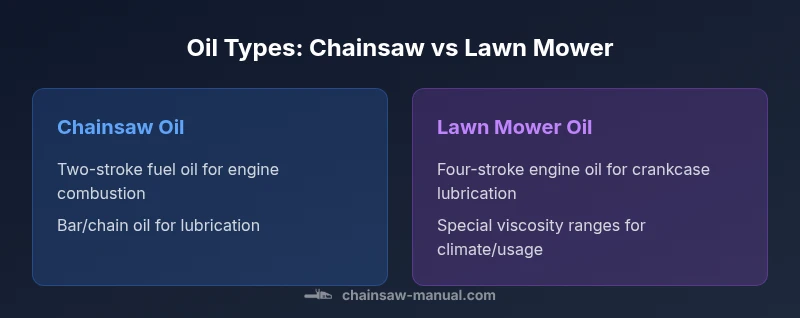
Chainsaw oil serves two separate functions within many saws: engine fuel-oil mix for the two-stroke engine, and bar/chain lubricant for the external moving parts. The mix oil is formulated to burn with the gasoline and to protect internal engine surfaces, while the bar oil functions as a hydraulic-like lubricant that reduces friction on the chain while cutting and dissipates heat. Two-stroke oils are designed to mix with fuel at the correct ratio, burn cleanly, and minimize ash formation; they often include detergents to prevent carbon buildup and lubricants to resist thinning under high engine speeds. Bar oil, by contrast, is heavier, tackier, and designed to stick to the bar and chain as the saw operates, particularly in warm weather or heavy cut scenarios. Some saw models have separate reservoirs for bar oil and fuel, while others are pre-mixed and have a combined oil/gas approach. Chainsaw Manual notes that using the wrong type for either pathway can lead to reduced power, erratic performance, and accelerated wear. In practice, always consult your user’s guide to confirm whether your saw uses a premix fuel system or separate oil reservoirs.
Understanding lawn mower oil: a four-stroke standard
Lawn mower engines typically run on four-stroke designs that rely on a single oil layer in the crankcase for lubrication. The oil used in these engines is formulated to stay in the engine, resist breakdown under continuous running, and maintain proper viscosity across operating temperatures. Lawn mower oil is generally sold as multi-viscosity engine oil (often in common weights like 5W-30 or 10W-30) and is designed to protect piston rings, bearings, and valve trains over many hours of cut-time. These oils are not engineered for combustion with fuel and are not suitable for two-stroke air-cooled chainsaw engines. The distinction is not only about where the oil ends up, but about how it behaves under the heat, pressure, and mixing conditions unique to each machine.
Interchangeability: what goes wrong when you swap oils
Using lawn mower oil in a chainsaw engine or vice versa can lead to a cascade of problems. Two-stroke engines rely on mixed lubrication where the oil burns with fuel, providing protection in the cylinder walls and piston rings. Engine oil designed for four-stroke motors often contains additives that burn incompletely in a two-stroke environment, leading to ash buildup, clogged passages, and degraded combustion. Bar oil is formulated to cling to the chain and filter heat efficiently, while lawn mower engine oil isn’t designed for this dual role. Chainsaw Manual cautions that even temporary mismatches can impair starting, reduce cutting efficiency, and shorten engine life. If you are unsure which oil type your equipment requires, always check the manufacturer’s manual or consult a qualified technician.
How to correctly mix and apply chainsaw oil
For two-stroke chainsaws that require fuel mixing, use a two-stroke engine oil approved by the manufacturer and mix it with gasoline at the ratio specified in the user manual. This oil is designed to burn cleanly and protect the engine internals during combustion. For the bar and chain lubrication, fill the bar oil reservoir with the appropriate bar/chain oil. Choose a viscosity suitable for your climate and cutting workload: lighter oils for cool environments and higher-wear applications in hot weather require heavier formulations. If your saw uses a premix, do not add separate bar oil into the fuel mix; keep the two pathways clearly separated. Professional guidance emphasizes following the exact ratios and viscosities recommended by the saw’s manufacturer to maximize performance and minimize wear.
Bar oil vs engine oil: roles and requirements
Engine oil (four-stroke) lubricates pistons, crankshaft, camshafts, and bearings inside the engine. It must withstand repeated combustion and thermal cycling without degrading lubrication performance. Bar oil lubricates the bar and chain, minimizing friction and heat in the cutting area and helping to deliver consistent chain speed. These oils have different viscosities, tackiness, and adhesive properties. Chainsaw oil reservoirs often feed to a chain, while engine oil is stored separately in the crankcase. The key takeaway is that these are not interchangeable, and misapplying either can compromise safety and performance. Chainsaw Manual highlights that respecting these boundaries protects you, your tools, and your work quality.
Climate, viscosity, and performance implications
Viscosity plays a critical role in how oils behave under different temperatures and workloads. In cooler environments, lighter viscosities ensure the oil flows and coats moving parts quickly, while in hot, dusty conditions, heavier formulations help maintain lubrication and resist mechanical thinning. The bar oil needs to cling to the chain even as it spins at high speed and works in various cutting scenarios. Engine oils for four-stroke chainsawn equipment must maintain film strength across temperature swings without burning or degrading in performance. Understanding your local climate and typical work conditions helps you select appropriate oil grades consistently. Chainsaw Manual recommends aligning oil choices with climate, usage, and manufacturer guidance to preserve engine health and cutting efficiency.
Buying guide: assembling a practical oil kit
When building an oil kit for mixed-use tools, prioritize separate purchases for fuel/oil mix and bar oil. Look for two-stroke oils that meet or exceed the engine manufacturer’s specifications, and choose bar oils with appropriate tackiness and heat resistance. It can be helpful to select oils labeled as suitable for cold-weather or hot-weather use depending on your local climate. Always verify the oil’s compatibility with your specific model, including whether premixed fuel systems are used or if separate fuel and bar oil reservoirs require distinct products. Chainsaw Manual emphasizes reading labels carefully and avoiding generic “one-oil-fits-all” claims, which can lead to suboptimal lubrication and risk.
Maintenance, storage, and failure prevention
Store oils in a cool, dry place away from direct sunlight and heat sources. Keep fuel mixes sealed and labeled to prevent accidental substitution. Regularly inspect the bar and chain lubrication system for leaks or blockages, and replace bar-oil delivery components if you notice reduced film coating on the bar. Change both the fuel mix oil and bar oil in accordance with maintenance schedules or after heavy use. By following manufacturer recommendations and keeping your supplies separate, you reduce the chance of cross-contamination and ensure safe operation.
Common scenarios and quick rules of thumb
If you perform occasional light trimming with a chainsaw, you may still rely on standard two-stroke fuel oil and bar oil. For demanding cutting tasks in hot weather, opt for heavier bar oil and ensure your fuel mix uses a reliable two-stroke oil. When in doubt, contact the manufacturer or consult Chainsaw Manual to confirm compatibility. A simple rule of thumb is to never substitute lawn mower engine oil for two-stroke fuel mix and never mix bar oil into fuel. These practices help prevent mechanical failures and keep your tools running smoothly.
What to do if you accidentally used the wrong oil
If you suspect that wrong oil has been used, stop using the tool and drain the fuel mix if needed. Do not start the engine again until you have replaced with the proper two-stroke fuel mix oil and bar oil. Inspect for signs of abnormal smoking, rough idling, or loss of power. In some cases, a professional service may be necessary to remove ash buildup or clogged passages that result from improper lubrication. The key is prompt action and correct oil replacement to protect engine components.
Quick-reference checklist for oil types
- Verify whether you need two-stroke mix oil and bar oil separately or a premix solution.
- Use two-stroke oil for the engine, and bar oil for the chain/bar lubrication.
- Do not substitute lawn mower engine oil for two-stroke fuel mix.
- Choose viscosity appropriate for climate and workload.
- Follow manufacturer recommendations for oil brands and specifications.
Comparison
| Feature | Chainsaw fuel/oil mix oil | Lawn mower engine oil |
|---|---|---|
| Engine type compatibility | Designed for two-stroke engines; mixed with fuel | Designed for four-stroke engines |
| Lubrication path | Oil in fuel for engine; separate bar oil for chain | Oil stays in crankcase for engine lubrication |
| Recommended viscosity | Formulated for combustion in two-stroke systems (varies by brand) | Multi-viscosity engine oil (e.g., 5W-30, 10W-30) for four-stroke engines |
| Typical risks if swapped | Ash buildup, carbon deposits, increased wear | Insufficient lubrication of moving parts at extremes |
| Usage guidance | Use two-stroke oil for fuel mix; bar oil for lubrication | Use dedicated engine oil for crankcase lubrication |
| Maintenance frequency | Aligned with two-stroke engine maintenance and bar oil checks | Aligned with four-stroke engine oil changes and filter checks |
Strengths
- Clear separation of oil roles reduces risk of engine damage
- Optimizes performance and longevity for both engine and bar/chain
- Improves cutting efficiency and reduces wear with proper oils
- Helps maintain safe operation by preventing lubrication mishaps
Drawbacks
- Requires maintaining multiple oil types and supplies
- Mismatched oils can cause immediate or long-term damage
- Buying decisions may be more complex due to model differences
Not interchangeable; use dedicated two-stroke fuel oil and bar oil for chainsaws
Using the correct oils protects engine internals and the bar: two-stroke fuel mix oil for the engine and bar oil for lubrication. Lawn mower oil is not suitable for chainsaws, and vice versa. Following manufacturer guidance minimizes wear and maximizes performance.
FAQ
Is chainsaw oil the same as lawn mower oil?
No. Chainsaw oil for the engine is two-stroke oil mixed with fuel, plus separate bar oil for the chain, while lawn mower oil is four-stroke engine oil used in the crankcase. They serve different roles and are formulated for different engine designs.
No. Chainsaw oil—two-stroke fuel mix oil and bar oil for the chain—differs from lawn mower oil, which is four-stroke engine oil. Always follow the manufacturer’s guidance.
Can I run a chainsaw with lawn mower oil if mixed with fuel?
No. Lawn mower oil is not designed for two-stroke combustion and can lead to ash buildup and engine wear. Always use approved two-stroke oil for fuel mixtures and reserve bar oil for the chain lubrication.
No. Do not use lawn mower oil in a chainsaw’s fuel mix; use only approved two-stroke oil and proper bar oil.
What is bar oil used for?
Bar oil lubricates the bar and chain, reducing friction and dissipating heat during cutting. It is separate from engine oil and is fed from a dedicated reservoir in many saws.
Bar oil keeps the bar and chain sliding smoothly and helps manage heat during cutting.
What happens if I mix wrong oils?
Using the wrong oil can cause inefficient lubrication, increased wear, and potential engine deposits. In severe cases, it may lead to reduced power or premature failure.
Mixing wrong oils can lead to deposits and wear; follow manufacturer guidance to avoid problems.
How do I know which oil to use for my chainsaw?
Consult the saw’s manual or the manufacturer's website. Look for two-stroke fuel oil specifications and the recommended bar oil viscosity. If in doubt, contact customer support or a professional service.
Check the manual for exact two-stroke fuel oil and bar oil specs; when in doubt, ask a pro.
Are there eco-friendly or synthetic options for chainsaw oils?
Yes, many brands offer synthetic or low-ash two-stroke oils and bar oils designed for reduced emissions and improved performance. Always verify compatibility with your model before purchasing.
There are synthetic and low-ash options, but make sure they match your saw’s specifications.
The Essentials
- Always verify oil type before refueling
- Use two-stroke oil with fuel for chainsaw engines
- Reserve bar oil specifically for the bar/chain lubrication
- Do not substitute lawn mower engine oil in chainsaws
- Refer to manufacturer guidance for oil viscosity and compatibility