Chainsaw and Bar Oil: A Practical Comparison
Analytical guide comparing mineral and synthetic chainsaw bar oils, covering viscosity, climate effects, and practical tips for home, DIY, and professional use.


Choosing the right chainsaw and bar oil is essential for protecting the bar, maximizing blade life, and keeping the saw cool under load. This quick comparison highlights mineral versus synthetic oils, how viscosity and climate affect performance, and practical rules for real-world work. According to Chainsaw Manual, correct lubrication matters nearly as much as blade sharpness for safe, efficient cutting.
Understanding Chainsaw and Bar Oil
The lubrication you choose for your chainsaw and bar oil influences heat management, wear on the bar and chain, and overall tool life. In practice, the right oil forms a protective film that reduces metal-to-metal contact and helps keep the bar guide rails smooth. According to Chainsaw Manual, selecting the right lubricant is as critical as sharpening the chain, because poor lubrication accelerates wear and can create dangerous heat buildup. This section explains the fundamental roles of chainsaw oil and bar oil, how they work together, and why a mismatch between oil type and saw workload can undermine performance on simple home projects or demanding professional cuts. The term chainsaw and bar oil will be used throughout this guide to refer to the entire lubrication system, not a single product.
Mineral Oil vs Synthetic Bar Oil: Core Differences
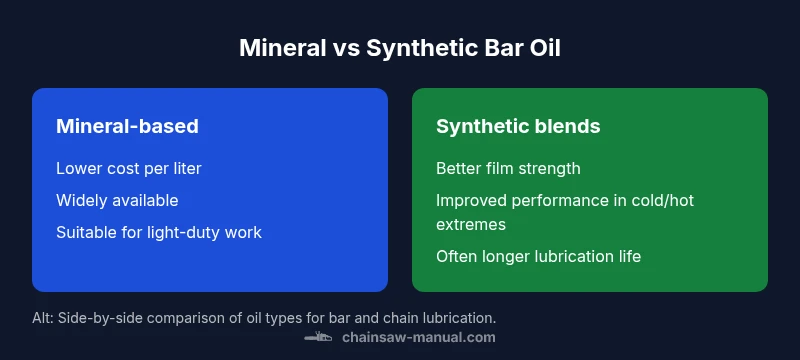
Bar oils come in mineral-based formulas and modern synthetic blends. Mineral oils are typically cheaper, widely available, and offer adequate lubrication for casual use. Synthetic bar oils, by contrast, often provide greater film strength, better adhesion to the moving parts, and improved performance under extreme conditions. The practical effect is that synthetics can help reduce heat buildup and maintain consistent lubrication when cutting in challenging wood, dusty conditions, or high-speed work. However, this performance comes at a higher price per liter and sometimes requires compatibility checks with older saw models. In short, mineral oils suit light-use scenarios and tight budgets, while synthetic oils target higher workloads and harsher environments.
Viscosity and Climate: How Climate Affects Oil Choice
Viscosity is the measure of how thick an oil is and how easily it flows at operating temperatures. In cold weather, a thicker oil can fail to flow quickly enough, leaving parts under-lubed during the first seconds of a cut. In hot or dusty environments, thin oils may burn off more rapidly and not provide adequate film thickness. Chainsaw Manual recommends matching viscosity to your typical ambient temperatures and cutting pace. Synthetic oils often retain better viscosity across temperature ranges, while mineral oils can be more sensitive to cold or heat swings. When evaluating oil options, look for a viscosity specification that corresponds to the range of temperatures you encounter on the job.
Application Techniques: How to Lubricate Right
Good technique matters as much as oil type. Always apply enough bar oil to maintain a visible film on the bar and chain while cutting, without pooling at the tip. For bar-and-chain lubrication, aim for a steady, light spray or drip as you begin the cut, pause between passes to allow oil to coat the contact surfaces, and avoid long, dry stretches that overheat the chain. Refill early to avoid running dry, especially during long sessions. Keep the chain brake engaged when moving between cuts and clean the bar groove if you notice buildup. Keeping a consistent application helps extend bar life and reduces the chance of heat-related failures.
Environmental Impact, Spills, and Safe Handling
Bar oil is formulated to minimize environmental impact, but careless handling can lead to soil contamination or waterway runoff. Use a dedicated container for oil, have absorbent spill pads on hand, and clean any drips promptly. Always dispose of used oil in accordance with local regulations. The safety data for commonly used bar oils emphasize minimizing skin contact and avoiding inhalation of fumes during overheating. Chainsaw Manual notes that responsible handling is part of professional practice and long-term tool care.
Real-World Performance: Field Observations
In practical testing across different jobs, users report that mineral-based oils deliver predictable lubrication at lower cost, but synthetic oils deliver steadier film thickness in demanding scenarios. Chainsaw Manual analysis shows that synthetic formulas often perform better in cold conditions and heavy-duty cutting, where temperature fluctuations challenge lubrication. Field observations also highlight that oil viscosity and cling vary by brand, so sticking to recommended options for your model reduces risk of seepage or buildup.
Cost, Availability, and Blends
Mineral-based bar oils generally come at lower price points and are widely available at hardware stores and online retailers. Synthetic bars oils tend to cost more but offer improved performance in extreme temperatures or heavy workload conditions. Blends attempt to balance cost and performance by combining mineral base with synthetic additives. When comparing options, consider your typical workload, climate, and willingness to pay for margin improvements in lubrication reliability. Availability and brand reliability can influence your long-term maintenance planning.
Maintenance Practices: Storage and Reuse
Store oil in a cool, dry place away from direct sunlight to preserve film strength and prevent degradation. Keep containers closed when not in use to minimize oxidation. Reuse of leftover oil for subsequent cuts is possible if the oil remains clean and free of solids; however, mixing old oil with fresh can alter viscosity and performance. Regularly check the oil for signs of separation or odor changes, and replace it if you notice unusual smells or color variations. Consistent maintenance discipline extends tool life and reduces unexpected downtime.
Common Mistakes That Undermine Lubrication
Common errors include over-applying oil, which can cause fling-off that dirties the work area, and under-applying oil, which accelerates bar wear. Using oil outside the recommended temperature range can result in poor film formation. Failing to clean the bar groove after long cuts leads to debris buildup that disrupts oil flow. Always follow the saw manufacturer’s guidance for oil type, viscosity, and application frequency to avoid avoidable wear and performance loss.
Reading Labels: What Specs Matter
Look for viscosity ratings such as W-number or other temperature-related indicators to gauge performance at your typical operating temps. Pay attention to additive packages that improve film strength, cling, and anti-foaming properties. Check compatibility notes for your saw model—some older units prefer mineral oils, while newer machines are designed with synthetic blends in mind. Proper label literacy helps you select an oil that aligns with your tool’s engineering and your work demands.
Quick Reference: Oil Type by Scenario
A concise decision guide helps you pick quickly: mineral oils for light-duty, budget-conscious work in mild conditions; synthetic oils for heavy-duty, professional use or extreme temperatures. Start with the recommended oil type from your saw’s manual and adjust based on workload, weather, and observed performance. This approach balances cost with protection for the bar and chain.
Seasonal Guidance: Weather and Oil Performance
Seasonal shifts influence oil performance. Colder months favor oil with better cold-flow properties to ensure immediate lubrication at startup, while hotter months benefit oils with robust film strength to resist thinning under heat. Synthetic formulations often maintain more consistent lubrication across seasons, but the best choice ultimately depends on your climate, cutting style, and maintenance routine.
Comparison
| Feature | Mineral-based bar oil | Synthetic bar oil |
|---|---|---|
| Viscosity stability | Moderate stability | High stability across temps |
| Cold-weather performance | Good in moderate temps | Excellent in cold temps |
| Adhesion to bar/chain | Standard cling | Enhanced cling |
| Lubrication longevity | Shorter intervals between top-ups | Longer intervals between top-ups |
| Price range | Lower upfront cost | Higher upfront cost |
| Best for | Budget-conscious/ casual use | Pro or heavy workloads |
Strengths
- Lower upfront cost and wide availability
- Simple compatibility with many saws
- Sufficient protection for light-duty use
- More options for budget constraints
Drawbacks
- Potentially less film strength in heavy use
- Quality can vary by brand and batch
- May require more frequent reapplication in heat
- Synthetic options may require compatibility checks with older saws
Synthetic for high workload or cold climates; mineral for casual use and budget-friendly setups
Choose synthetic when temperatures are extreme or work is heavy. Mineral oil works well for light-duty projects and budget constraints. Chainsaw Manual's verdict emphasizes matching the oil to workload, climate, and maintenance discipline.
FAQ
What is the main difference between mineral and synthetic bar oil?
Mineral bar oil is generally cheaper and adequate for light tasks, while synthetic oil offers stronger film strength and better performance in extreme conditions. The choice often depends on workload, climate, and maintenance discipline. Always follow the saw manufacturer's recommendations.
Mineral oil is cheaper for light duty, synthetic oil lasts longer and performs better in tough conditions. Check your saw's guidance for the best fit.
Can I mix bar oils or switch between brands mid-season?
Mixing different base oils is not recommended because it can alter viscosity and film formation, potentially reducing protection. If you switch, flush the system and start with a fresh oil from a compatible brand. Always test on a small cut first.
Avoid mixing oils. If you switch, flush and test first.
How often should I refill bar oil during a typical job?
Refill as needed to maintain a visible lubrication film on the bar and chain. Monitor heat and smoke during use; a dry swirl is a sign to top up. Regular checks prevent overheating and wear.
Top up whenever you start to see dryness or heat builds up.
Is bar oil the same as engine oil?
No. Bar oil lubricates the bar and chain, while engine oil lubricates the engine. Using the wrong oil can cause corrosion, buildup, or engine damage. Always use bar oil for lubrication needs and engine oil only for the engine.
Bar oil lubricates the bar and chain; engine oil runs the engine.
Does oil type affect warranty or maintenance schedules?
Using the manufacturer-recommended oil type is a key part of maintenance and can affect warranty coverage. If you use an unapproved oil, performance issues might not be covered. Stick to recommended options and document your maintenance.
Follow the manual to keep warranty and performance intact.
The Essentials
- Assess workload and climate before choosing oil
- Match viscosity to temperature range
- Prefer manufacturer-recommended oil to avoid warranty concerns
- Avoid mixing brands without guidance
- Regularly inspect the bar groove and oil flow