How to Tell When Chainsaw Chain Needs Replacing
Learn clear signs of wear, how to test tension and sharpness, and a safe replacement guide to keep your chainsaw cutting efficiently and safely.


A chainsaw chain needs replacement when you notice visible wear or damage that sharpens cannot fully restore, excessive stretch, broken or chipped teeth, cracked drive links, or loose rivets. Regular inspection of cutters, depth gauges, and drive links, plus performance issues like frequent dulling and excessive smoking, signal replacement should be planned. Safety and efficiency hinge on timely replacement.
Why chain condition matters for safety and performance
Keeping your chainsaw chain in good condition is essential not only for cutting efficiency but also for user safety. A worn or damaged chain can increase kickback risk, reduce bite into wood, and place extra stress on the bar and engine. Chains that are dull or chipped require more throttle use and can overheat, especially during long cuts or in hard woods. The Chainsaw Manual team emphasizes proactive maintenance as a core safety habit for homeowners, DIY enthusiasts, and professionals alike. Regular checks help you avoid sudden tool failures and costly downtime. In this section, we explore how wear manifests in real-world use and what to look for before you reach the point of replacement.
Signs your chain is worn or damaged
Dull teeth are the most obvious indicator: if the chain struggles to bite, glides or slides on the wood, or produces fine sawdust instead of clean chips, it’s time to reassess. Visible nicks, chips, or chipped tips reduce cutting efficiency and can lead to unpredictable cutting behavior. Cracked, bent, or mushroomed drive links are another red flag, as are rivets that feel loose or begin to protrude from the chain. A chain that appears stretched when you compare it to a fresh one or shows excessive gaps between the drive links indicates wear beyond sharpening capability. If you notice flame-like heat discoloration on the chain, a burnt odor, or excessive resistance during normal operation, stop, switch to safety gear, and evaluate whether replacing the chain is warranted.
How to assess wear without specialized tools
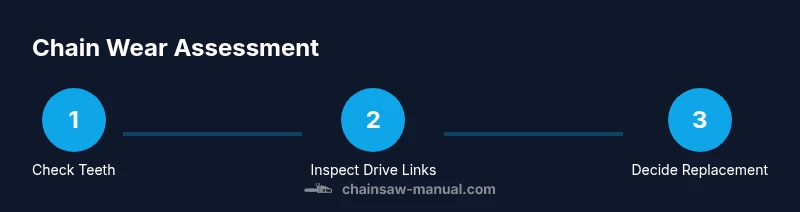
Begin with a hands-on inspection: check the teeth for rounding, chipping, or uneven wear; verify that the depth gauges are not depressed; and look for gaps in the drive links. Use a chain gauge if you have one; compare the old chain with a new one or a manufacturer spec gauge. If the chain shows any of the identified wear signs or does not track cleanly along the bar groove, replacement is likely the prudent choice. When in doubt, err on the side of safety and replace rather than risk kickback or tool damage. This approach aligns with the guidance Chainsaw Manual provides for routine maintenance and safe operation.
Inspect drive links, rivets, and depth gauges
Drive links wear primarily at the base where moving parts engage the bar groove and sprocket. If the edges of the drive links appear mushroomed, the rivets feel loose, or the drive links exhibit noticeable wear, the chain’s ability to engage the bar is compromised. Depth gauges live at the top of the cutters and maintain the correct cutter height; when these gauges become worn down, cutting depth decreases and the chain’s performance drops. A visual check is often enough to reveal obvious wear; for a more precise assessment, use a depth gauge tool or consult the bar manufacturer’s wear limits. Chains that fail these checks should be retired and replaced promptly.
Teeth wear, sharpening limits, and retirement decisions
Sharpening can extend a chain’s life briefly, but there are practical limits. If teeth have become uneven, chipped, or rounded to the point that sharpening cannot restore a uniform bite along the entire circumference, replacement is usually the safer option. Also, if several teeth show significant damage at once or if one tooth consistently loses its edge more rapidly than the others, retire the chain and install a new one. Depth gauges that are significantly worn reduce cutting depth and can compromise chain performance. The decision to replace versus sharpen should weigh safety, performance, and tool longevity.
How to test chain performance safely
Always prioritize safety when testing a chain’s performance. Start with a cool, disconnected power source or a stilled spark plug on gasoline chains; engage the chain brake before handling the chain. Inspect for smooth operation by manually rotating the chain to confirm it moves freely without binding. Perform a light cut on scrap wood to observe bite, speed, and smoke. If you notice aggressive snagging, skipping, excessive heat, or unusual vibrations, stop and reassess chain condition. If difficulties persist after sharpening and inspection, replacement is the responsible choice.
When to replace vs sharpening: a practical framework
The rule of thumb is simple: use sharpening for minor edge refreshment when teeth are intact and the chain tracks well; replace when teeth are chipped, the chain is stretched beyond safe tolerance, drive links or rivets show wear, or performance cannot be restored with sharpening. In persistent challenging cuts or when the chain shows consistent deviation from the bar groove, replacement is the prudent option. A well-chosen, properly installed chain is essential for predictable, safe operation and longer tool life.
Step-by-step replacement overview (high-level)
This overview prepares you for the formal, technician-level steps in the dedicated STEP-BY-STEP section. Before replacing a chain, ensure you have the correct chain pitch, gauge, and drive link count for your bar. Verify the bar and sprocket are in good condition, and have a clean workspace with adequate lighting. Protect yourself with gloves and eye protection, and set the chain brake. The goal is a safe, accurate replacement that preserves cutting performance and minimizes risk during operation.
Maintenance practices to extend chain life
To stretch the life of your chain, maintain proper lubrication, tension, and cleaning. Clean debris from the bar groove and oil passages after each use and replace the bar oil regularly. Use chain oil of the correct viscosity and ensure the oiling system is not clogged. When storing, keep the chain dry and lightly lubricated to prevent corrosion. Regular inspection of the bar groove, sprocket, and oiling holes helps detect wear early and prevent unexpected chain failures.
Common mistakes and safety reminders
Avoid operating with a dull or damaged chain; do not force a chain through hard wood or large obstacles. Don’t skip maintenance steps or neglect chain lubrication. Always use the right protective gear and follow the manufacturer’s guidelines for chain selection and installation. Acknowledge that even a small lapse in safety can lead to serious injury. Chainsaw Manual emphasizes consistent, careful practice and strict adherence to safety protocols to keep you productive without compromising your well-being.
Tools & Materials
- Replacement chains that match bar pitch, gauge, and drive link count(Select by bar compatibility and your saw model)
- Chain gauge or ruler(Used to assess wear and pitch accuracy)
- Screwdriver or scrench (screwdriver-wrench combo)(For cover removal and tension adjustment)
- Gloves and eye protection(Protect hands from sharp teeth and debris)
- Bar oil and clean rag(Keep oiling system functional and clean parts)
- Bar and chain cleaning brush(Optional but helpful for stubborn debris)
- Scraper or file (for small sharpening touch-ups)(Only if you plan light maintenance between replacements)
Steps
Estimated time: 25-40 minutes
- 1
Prepare and secure the saw
Park the chainsaw on a stable surface. Engage the chain brake, remove the spark plug wire (or disconnect the battery on an electric model), and wear protective gloves. This prevents accidental starts and protects you while you work.
Tip: Double-check the brake is engaged before touching the chain. - 2
Remove the cover and bar
Use the screwdriver or scrench to loosen the bar cover fastening screw(s). Lift off the cover and bar gasket, exposing the chain. Inspect the area for built-up sawdust or resin before you proceed.
Tip: Keep track of screws and spacers to avoid misassembly. - 3
Take off the old chain
Carefully rotate the chain around the bar and sprocket to release it. Remove the chain from the bar groove and ensure all links disengage from the drive sprocket before lifting away.
Tip: If the chain is stubborn, gently work it free rather than forcing it. - 4
Inspect the bar and drive area
Check the bar groove for wear, sharp ridges, or uneven sides. Look at the drive sprocket for hooked teeth and check rivet holes for elongation. Replace the bar or sprocket if wear is detected.
Tip: A worn bar groove can transfer wear to a new chain quickly. - 5
Install the new chain around the bar and sprocket
Position the chain so the teeth face the direction of rotation. Thread it into the bar groove and around the drive sprocket. Ensure the chain sits correctly in the groove and is not twisted.
Tip: Be mindful of the chain tension during installation to avoid pinching fingers. - 6
Reattach the bar and cover
Reinstall the bar and cover, tightening screws evenly. Check that the chain begins to turn freely with a light manual spin while the brake is still engaged. Confirm there is no binding and that the chain sits properly in the groove.
Tip: Tighten in a cross pattern to ensure even seating. - 7
Set the correct tension when cool
With the chain cool, adjust the tension so that it sits snug in the bar groove but can still be moved by hand with moderate effort. A loose chain can derail and cause damage; a too-tight chain can bind and strain the bar.
Tip: Consult the bar manufacturer guidelines for your specific saw model. - 8
Lubricate and perform a test cut
Fill the bar oil reservoir and run the saw briefly to verify proper lubrication. Make a test cut on scrap wood, observing for smooth engagement, consistent cutting depth, and absence of excessive heat or smoke.
Tip: Delay a real-world cut until you confirm even feeding and safe operation.
FAQ
How can I tell if my chainsaw chain is dull vs. damaged?
Dull chains struggle to bite and produce fine dust. Damaged chains show chips, cracks, or bent teeth. If easy sharpening does not restore performance or if there is visible damage to teeth or drive links, replacement is recommended.
A dull chain bites poorly and sheds fine dust; damage means chips or bent teeth. If sharpening can't restore performance, replace.
Is it safe to keep using a dull chain?
Continuing to use a dull chain increases kickback risk and damages the bar. Always sharpen or replace to maintain safe cutting performance.
No. Dull chains raise kickback risk and damage the bar; sharpen or replace to stay safe.
How often should I replace a chainsaw chain?
There is no one-size-fits-all interval. Replace when wear signs are visible, when teeth are damaged, or when sharpening cannot restore cutting efficiency.
Replacement should happen when wear signs appear or sharpening no longer restores performance.
Can I sharpen a damaged chain?
Sharpening can help while teeth remain intact, but severely damaged teeth or rivets may require replacement. If sharpening alters chain balance, replace to maintain safe operation.
You can sharpen mild wear, but heavily damaged teeth usually mean replacement.
What tools do I need to replace a chain?
You’ll need a replacement chain matched to your bar, a chain gauge or ruler, a screwdriver or scrench, gloves, eye protection, and bar oil for lubrication.
Get a matched replacement chain, gauge, screwdriver, gloves, eye protection, and oil.
How do I tell if my bar is worn?
Check for uneven grooves, hooked or sharp edges on the bar, and excessive burrs. A worn bar can accelerate chain wear and reduce cutting performance; replace the bar if needed.
Look for uneven grooves and burrs; a worn bar can shorten chain life.
Watch Video
The Essentials
- Inspect chain wear before every heavy cut
- Distinguish between sharpenable wear and replacement needs
- Follow safe replacement steps with proper PPE
- Maintain lubrication and tension for longer life
- Replace when wear compromises safety or performance