How to Stop Chainsaw Overheating: A Practical Guide
Learn safe, proven steps to prevent your chainsaw from overheating. This Chainsaw Manual guide covers cooling techniques, maintenance checks, and cutting habits to keep your saw cool and productive.


By addressing airflow, lubrication, and workload, you can stop overheating before it starts. Start with clean air intake and cooling fins, confirm bar oil is flowing, keep the chain sharp, and cut with steady, controlled feed rates. If the saw gets hot, pause for cooling and inspect key components. Regular maintenance reduces risk year‑round.
Understanding Overheating in Chainsaws
Overheating in a chainsaw happens when engine heat outpaces cooling. If you’re asking how to stop chainsaw from overheating, the answer isn’t a single trick but a system of good habits: proper airflow, clean oiling, chain maintenance, and prudent cutting technique. In this section, we’ll explore the primary heat sources—airflow restrictions, excessive friction, and heavy workload—and show practical actions you can take before, during, and after cutting to keep temperatures safe. According to Chainsaw Manual, overheating is often caused by airflow restrictions, dull chains, and insufficient lubrication; this trio creates heat fast once you push the saw into dense wood. The good news is that most overheating incidents are preventable with routine checks and disciplined operation. Start by inspecting the cooling fins around the clutch cover and the air intake screen for clogs. Even a light layer of sawdust can reduce airflow enough to raise operating temperatures noticeably.
Common Causes You Can Fix
There are several root causes you can address to reduce heat risk. First, airflow restrictions—dust, debris, or a blocked cooling fin can trap heat. Second, friction from a dull or loose chain increases RPM and engine load, generating more heat. Third, inadequate bar oil or a failing oiling system causes metal-to-metal contact and friction heating. Lastly, cutting technique and workload—pushing the saw too hard or making long, continuous cuts without pauses increases heat. Practical corrections include cleaning the air intake, sharpening and tensioning the chain, filling the bar oil reservoir, and using a steady, moderate feed rate. By focusing on these factors, you reduce the likelihood of overheating during long work sessions and extend the life of your saw. As a reminder, routine maintenance also helps: replace worn parts promptly and follow the manufacturer’s service intervals.
Immediate Steps When You Notice Heat
If the saw begins to feel unusually hot during a cut, stop cutting and allow cooling time. Move to a shaded or ventilated area, unplug if electric, and inspect the air intake for obstructions. Check the bar oil level and confirm oil is reaching the bar by running the chain for a few seconds while held in the air; you should see oil on the bar tip. Rotate the chain by hand to ensure it spins freely and isn’t pinched. If the oil flow is insufficient, clean the oil passages and replace a clogged filter. After cooling, resume at a reduced cutting speed and shorter passes to avoid a repeat surge of heat.
Maintenance Routines That Reduce Heat
A proactive maintenance routine is the best defense against overheating. Clean or replace the air filter regularly and inspect cooling fins under the clutch cover for dust buildup. Check the spark plug condition and ensure proper fuel mix and carburetor adjustment (per your saw’s manual). Use fresh bar oil and verify the oiler is delivering oil to the bar; a dull or lifeless oil stream is a telltale sign. Periodically inspect the cooling fan if your model has one, and remove debris from around the cooling fins. For storage, allow the saw to rest after heavy use and store in a cool, dry place away from direct sun. Regular maintenance reduces heat generation and helps the engine reach its optimal operating temperature more quickly during work.
Cutting Techniques to Lower Load
Your cutting technique has a direct impact on heat. Avoid forcing the saw through the wood; let the chain do the work with a steady, controlled feed rate. Use correct chain pitch and gauge for your bar and wood type to minimize resistance. When cutting hardwoods, make relief cuts and bore starts to reduce friction and heat buildup. Break up long felling or milling tasks into shorter sessions with brief rest periods for the saw. If you’re cutting in hot or dusty conditions, tilt the saw to prevent oil pooling and ensure consistent airflow around the clutch area.
Operational Environment and Cooling Aids
Environment matters. Work in shade or under a breezy canopy when possible, and avoid direct sunlight that can raise ambient temperature around the engine. Keep the air intake free of dust by using a pre-cleaner or a soft brush, and consider using a cooling mat or a stand that elevates the saw to promote airflow around the cooling fins. A breezy, cooler environment dramatically reduces heat buildup, and intermittent rest breaks prevent the engine from hitting peak temperatures during extended tasks. Remember to store your chainsaw away from heat sources when not in use and inspect for heat-related wear after long sessions.
Authority Sources
For further safety and maintenance guidance, consult authoritative sources:
- OSHA safety standards for tree care and chainsaw use (https://www.osha.gov)
- University extension resources on chainsaw safety and maintenance (https://extension.umn.edu/forestry-and-nursery-management/chainsaw-safety)
- Industry best practices published by recognized safety organizations (major publications) These sources provide high-level safety context and practical maintenance routines that complement the hands-on guidance in this article. Always cross-check with your saw’s user manual.
What to Do If It Still Overheats
If overheating persists despite following these steps, stop using the saw and consult a professional technician. Continuing operation when temperatures remain high can damage the piston, bearings, and seals, and may void warranties. Document symptoms (temperature readings, oil flow, noise) to help the technician diagnose. Do not ignore persistent heat since repeated overheating can lead to sudden failures that are dangerous to you and bystanders.
How to Verify Improvements
After performing maintenance and adjusting cutting technique, verify improvements by performing test cuts under controlled conditions. Monitor the temperature gauge if your model has one, or feel the clutch housing with the back of your hand at a safe distance after a short test cut. Check oil flow by briefly running the chain in the air and looking for a visible oil spray on the bar. Compare performance to previous sessions: easier cutting, less vibration, and cooler engine readings. Document your checks and plan follow-up maintenance.
Tools & Materials
- Bar oil (high-viscosity recommended)(Choose bar oil suitable for ambient temperature; ensure reservoir is full.)
- 2-stroke fuel mix (as recommended by manufacturer)(Mix fuel and oil to the correct ratio; use fresh fuel.)
- Personal protective equipment (PPE): safety glasses, gloves, cut-resistant chaps(Always wear PPE during operation.)
- Chain sharpening file or kit(Optional but recommended for keeping friction low.)
- Air filter brush or small air compressor(Helpful for deep-cleaning air intake and cooling fins.)
- Soft brush and lint-free cloth(Used to remove dust from cooling fins and around the clutch cover.)
Steps
Estimated time: 60-90 minutes
- 1
Inspect cooling system and air intake
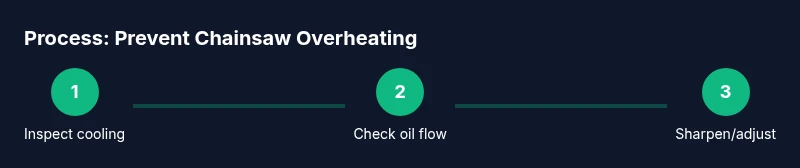
Power down and cool the saw, then remove the clutch cover to inspect the air intake and cooling fins. Clear dust with a soft brush and check for obstructions that could reduce airflow. A clean intake improves cooling capacity significantly.
Tip: Use a low-powered blast of air or a dry brush; avoid water that can affect electrical parts. - 2
Verify bar oil flow
Run the chain for a few seconds while the bar is elevated to observe oil spray. If oil doesn’t reach the bar, inspect the oil passages and replace clogged filters. Consistent lubrication reduces friction and heat.
Tip: If unsure, perform a quick stand-alone test with the bar in the air to confirm flow. - 3
Sharpen and tension the chain
A sharp, properly tensioned chain reduces resistance and heat generation. File to the manufacturer’s spec and re-tension after about a minute of operation. A tight chain prevents slippage that creates extra load.
Tip: Check chain tension with the bar’s nose nip; it should move slightly but not sag. - 4
Adjust cutting technique
Practice a steady, controlled feed rate and avoid log-wide plunges or cutting aggressively in hard wood. Relieve cuts in hardwoods to reduce friction and heat buildup. Take short intervals when felling or milling.
Tip: Let the saw do the work; do not push it through the cut. - 5
Incorporate cooldown breaks
Schedule short rests after heavy use, especially during long, continuous cuts. In hot conditions, add more frequent pauses to prevent peak temperatures. Cool-down breaks help protect engine components.
Tip: During breaks, store the saw in a shaded area away from direct sun.
FAQ
What causes a chainsaw to overheat?
Common causes include airflow obstruction, a dull or loose chain, and insufficient bar oil. Heavy workloads amplify heat, so technique matters as much as maintenance.
Overheating is usually caused by blocked airflow, a dull chain, or not enough lubrication, especially when the work is heavy.
Can I continue cutting if the saw gets hot?
No. If the saw overheats, stop cutting, allow it to cool, and assess for blockages or lubrication issues before resuming.
If it overheats, stop and let it cool before resuming.
How often should I clean the air intake?
Clean the air intake and cooling fins after heavy use or daily if you’re working in dusty conditions. Regular cleaning keeps cooling efficiency high.
Clean the air intake after heavy use or daily if dusty.
Is bar oil temperature important for cooling?
Bar oil viscosity and flow impact cooling. Ensure the oil reaches the bar consistently and use the recommended viscosity for your climate.
Yes, oil temperature and flow help cooling by reducing friction.
What cutting techniques reduce heat?
Use a steady feed, relieve cuts in tough wood, and avoid long, continuous passes that build heat. Small, deliberate cuts are kinder to the saw.
Steady feeding and shorter passes reduce heat buildup.
Should a dull chain cause overheating?
Yes. A dull chain increases resistance and engine load, producing more heat. Regular sharpening keeps temperatures lower.
A dull chain raises heat due to higher friction.
Watch Video
The Essentials
- Keep airflow unobstructed to prevent heat buildup.
- Maintain proper lubrication and sharp chain to reduce friction.
- Cut with a steady pace and avoid excessive loads.
- Schedule cooldown breaks during heavy work.
- Regular maintenance minimizes overheating risk.