Chainsaw Is Smoking? A Practical Troubleshooting Guide
A practical, safety-first troubleshooting guide for when a chainsaw is smoking. Learn causes, immediate safety steps, a diagnostic flow, and a step-by-step repair plan to prevent fires and extend engine life.


A smoking chainsaw is typically a sign of overheating, an overly rich fuel mix, or oil burning in the exhaust. Start by cooling the saw, then inspect the air filter, fuel mix, and bar/oil system. If the issue persists, avoid running the saw and consult a professional. This quick check helps prevent fire risk and further damage.
What 'chainsaw is smoking' signals and why it matters
When you hear or see smoke from a chainsaw during operation, the phrase "chainsaw is smoking" signals a potential safety risk and engine distress. Smoke can originate from overheating, burning oil, or fuel issues that cause unburned vapors to escape through the exhaust. The consequences range from accelerated wear to a dangerous fire risk, especially in dry environments. Chainsaw Manual emphasizes addressing smoking promptly to protect you and bystanders and to minimize costly repairs. By identifying the most probable sources—fuel system, air intake, lubrication, and exhaust components—you can decide whether a quick adjustment will fix it or if professional service is required. In many cases, the problem is linked to routine maintenance that was skipped or performed incorrectly, so a disciplined approach is essential for long-term reliability.
Immediate safety steps to take now
First, stop the saw and engage the chain brake. If you can do so safely, move the unit to a non-flammable surface and disconnect the spark plug boot to prevent accidental starts. Allow the engine to cool completely before handling any components. Wear appropriate PPE—gloves, eye protection, and long sleeves—and keep a clear area around your workspace. Do not attempt to run the saw again while it remains smoky, as this increases the risk of fire and personal injury. After cooling, perform a cautious visual inspection for obvious leaks or damage. If you smell fuel or see oil pooling, address those leaks and clean up spills before re-testing. Remember, safety first, and when in doubt, call a professional.
Common causes of smoking in chainsaws
There are several frequent reasons a chainsaw may smoke. Overheating is common when the chain is dull, the bar is under heavy load, or the chain brake is engaged during operation. A rich fuel mixture—caused by carburetor settings, stale fuel, or incorrect premix ratios—also produces smoke or odor. Oil burning occurs when bar oil is over-applied, leaks, or the oiling system is restricted, allowing oil to reach the exhaust. Obstructions in the muffler or spark arrestor can force exhaust gases to back up and smoke. Finally, worn piston rings or a failing exhaust seal can cause excessive smoke and loss of power. Each cause requires a different fix, so a structured diagnostic approach matters.
Diagnostic flow you can follow to pinpoint the cause
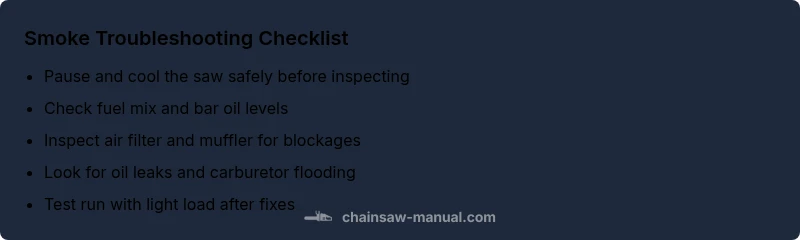
Start with the simplest checks and progress to more involved inspections. If smoke is heavy and persistent after cooling, prioritize fuel and lubrication: inspect fuel mix, fresh fuel, and bar oil levels. Next, check the air intake: remove and clean or replace the air filter and inspect the carburetor for flooding. Examine the muffler and spark arrestor for blockages. If the saw continues to smoke after these checks, assess the exhaust path for oil leaks and inspect the cooling fins and fins around the cylinder for oil buildup. When in doubt, escalate to a professional who can service the carburetor, seals, and piston rings. Chainsaw Manual recommends documenting each step so you can replicate the process if needed.
Step-by-step repair and checks (overview)
This section provides a practical, hands-on sequence to address the most common causes of smoking. Start with the easiest fixes and proceed to more complex tasks only if necessary. Remember to work in a well-ventilated area and keep fuel away from heat sources. If you’re unsure at any point, stop and seek professional support. The goal is to eliminate the smoke source safely and restore normal operation.
Prevention and maintenance to stop smoking from returning
Preventing future smoking begins with a regular maintenance routine: use fresh fuel, mix according to manufacturer recommendations, and check the bar oil system routinely. Clean or replace air filters, inspect the muffler and spark arrestor, and ensure cooling fins aren’t obstructed by debris. Store the saw in a dry, sheltered spot to prevent moisture damage and varnish buildup in the carburetor. Keeping a maintenance log helps you track parts that wear quickly and catch issues early. A proactive approach reduces downtime and keeps your chainsaw reliable.
When to call a professional and what to expect
If smoking persists after performing basic checks, it’s time to consult a certified chainsaw technician. A pro can diagnose carburetor faults, compression issues, or degraded piston rings that aren’t safe to fix in a home workshop. Expect a professional to inspect fuel lines, seals, muffler, and combustion chamber, and to test with calibrated equipment. Early professional intervention saves money and reduces downtime, particularly for professionals relying on consistent performance.
Steps
Estimated time: 60-90 minutes
- 1
Pause and cool the saw safely
Stop the engine, engage the chain brake, and move the saw to a non-flammable surface. Remove the spark plug boot if safe to do so and let the engine cool for at least 10-15 minutes before handling any parts.
Tip: Never touch hot exhaust or muffler; use heat-resistant gloves. - 2
Check for leaks and obvious faults
Visually inspect for fuel or oil leaks around the tank, lines, and muffler. Wipe spills, ensure the fuel cap is sealing properly, and inspect for signs of oil pooling near seals or gaskets.
Tip: Address any leaks immediately; a small leak can lead to a larger fire risk. - 3
Inspect air filter and muffler for clogs
Remove and inspect the air filter; clean or replace if dirty. Check the muffler and spark arrestor for carbon buildup and remove obstructions carefully with a brush or compressed air.
Tip: Do not use water to clean air filters; let them dry completely before reinstallation. - 4
Verify fuel mix and bar oil levels
Confirm you’re using fresh fuel and the correct premix ratio for your saw. Check the bar oil reservoir and lines for blockages or leaks; top off if needed and ensure the oiling system is delivering oil to the bar.
Tip: If in doubt, dilute or replace fuel with manufacturer-recommended premix and re-test. - 5
Inspect carburetor and spark plug
Look for signs of flooding, varnish, or worn parts in the carburetor. Inspect the spark plug for fouling or wear and replace if necessary. If you adjusted the carburetor, revert to factory settings and re-tune gradually.
Tip: Carburetor tuning should be done with precise measurements; avoid arbitrary adjustments. - 6
Reassemble and test with light load
Reassemble all components, start the saw on idle, and test under no load first. If it stays cool and does not smoke, slowly apply light cutting pressure and monitor performance.
Tip: Always wear PPE and test in a clear, open area away from combustibles.
Diagnosis: Chainsaw is smoking during operation
Possible Causes
- highOverheating due to dull chain, heavy load, or improper cooling
- mediumRich fuel mixture or carburetor flooding
- lowOil leaking into exhaust path or over-oiling
Fixes
- easyStop the saw, allow it to cool completely, and check for obvious leaks or spills
- easyCheck and adjust fuel mix, replace old fuel, and ensure bar oil is at the correct level
- easyInspect air filter, muffler, and spark arrestor; clean or replace as needed
- mediumInspect fuel lines, carburetor seals, and oiling system; perform repairs or replacements as needed
- hardIf smoke persists after basic checks, consult a certified chainsaw technician
FAQ
Why is my chainsaw smoking after starting?
Smoke after starting is typically due to overheating, a rich fuel mix, or oil burning in the exhaust. Check fuel, air filtration, and lubrication first before running the saw again.
Most smoking starts come from overheating or fuel issues. Start with fuel and air checks, then inspect the exhaust.
Is it safe to run a smoking chainsaw?
No. Stop immediately and assess the problem. Running a smoking saw can ignite fuel/oil fumes and cause engine damage.
No—it's not safe to run a smoking chainsaw. Stop and diagnose before using again.
What should I check first if my chainsaw smokes?
First, cool the saw, then inspect fuel mix, air filter, and bar oil. Check for leaks and muffler obstructions before testing again.
First check cooling, fuel mix, air filter, and oiling. Look for leaks and exhaust blockages.
What if the smoke stops after cooling but returns during use?
If smoke reappears under load, revisit fuel mixture, air intake, and lubrication. A persistent issue may indicate carburetor or internal wear requiring professional service.
Smoke that returns under load needs a deeper check of fuel and lubrication; consider a professional service if it continues.
When should I call a professional for a smoking chainsaw?
Call a professional if smoke persists after basic checks or if you notice unusual noises, reduced power, or persistent oil smell. A technician can diagnose carburetor, seals, or piston wear.
Call a pro if it keeps smoking after the checks or if you hear odd noises.
Can I fix smoking chainsaws myself regularly?
Basic diagnostics and maintenance are doable, but complex issues like carburetor failures or piston wear should be handled by a professional to avoid injury.
You can do simple checks, but tricky fixes are best left to a pro.
Watch Video
The Essentials
- Stop the saw and cool it immediately.
- Check fuel mix and bar oil levels before reattempt.
- Inspect air intake and exhaust for blockages.
- Replace worn parts and follow a maintenance plan.
- Seek professional help if smoking persists.