Why is My Chainsaw Overheating? Practical Troubleshooting for Safe Use
Urgent expert guide to diagnose and fix chainsaw overheating. Learn the common causes, step-by-step fixes, safety tips, and prevention methods to keep your saw cool under load.


Most overheating in chainsaws comes from overloading, restricted air flow, or poor lubrication. Quickly reduce load, stop cutting, and let the bar cool. Then perform these quick checks: inspect an unclogged air filter, verify bar oil is flowing, confirm proper chain tension, and clear any debris from cooling fins. If the issue persists, consult a professional.
Why Chainsaws Overheat
When a chainsaw gets too hot, performance drops, lubrication thins out, and metal components wear faster. Understanding why is my chainsaw overheating helps you prevent damage and extend the life of your saw. According to Chainsaw Manual, overheating is typically caused by airflow restrictions or lubrication failures, especially in hot climates or during heavy work. The Chainsaw Manual team found that homeowners commonly overlook simple fixes that restore safe operating temperatures, such as cleaning air intakes, verifying oil flow, and inspecting the cooling fins. In practice, you’ll notice heat buildup most during prolonged cutting, when the bar and chain are under heavy resistance, or after extended storage with dust and debris blocking vents. Addressing these factors quickly prevents permanent damage and costly repairs in 2026.
Common Causes at a Glance
- Overloading the bar and chain: heavy cuts or dull chain increase friction and heat.
- Restricted air intake: clogged air filter, muffler screen, or chassis vents trap hot air.
- Inadequate bar oil or oil flow: dry bar/chain causes more friction and heat.
- Wrong fuel mix or stale fuel: poor combustion creates extra heat and deposits.
- Dull chain or mis-tensioned chain: leads to more resistance and overheating.
- Blocked cooling fins or spark arrestor: restricts heat dissipation and can ignite debris.
- Storage in heat or sun: ambient temperature compounds engine heat buildup.
If you suspect any of these, start with the simplest checks first, then move to deeper diagnostics. Our goal is to get you back to work quickly and safely while protecting your saw from long-term damage.
Immediate Quick Checks You Can Do Safely
Before you touch the engine, power off and allow the saw to cool completely. Then start with these rapid checks:
- Inspect the air filter: remove debris and wash or replace if dusty or oily.
- Check bar oil flow: hold the saw at idling and squeeze the bar oil lever (if applicable) or watch the bar as you run for a moment; oil should stream or bead onto the bar.
- Verify chain tension and sharpness: a loose or dull chain increases rubbing and heat.
- Look for obstructions: clear dirt from the cooling fins and ensure the cooling air can circulate around the muffler and spark plug area.
- Confirm fuel mix and freshness: use the correct two-stroke ratio and fresh fuel to prevent incomplete combustion that creates extra heat.
If you find any issue, fix it and test under light load before resuming work. Remember to wear PPE and work in a well-ventilated area to stay safe while diagnosing overheating.
Diagnostic Flow: Symptom-to-Diagnosis
Symptoms: sudden heat buildup during normal cutting, frequent pauses due to temperature, or visible smoke without fire.
Diagnosis path:
- Check air intake and filter for obstruction → if blocked, clean/replace and re-test.
- Verify bar oil flow → if no oil, check reservoir, pump, and lines for leaks.
- Inspect chain condition and tension → adjust or replace dull chain.
- Examine cooling system (fins, spark arrestor) → clean; ensure vents are clear.
- Review fuel mix and quality → adjust to recommended ratios and use fresh fuel.
- If temperatures remain high after these steps, escalate to a professional service.
This flow helps you systematically identify the root cause without unnecessary disassembly. Safety remains the priority throughout.
Step-By-Step Fixes for the Most Common Cause
- Clean or replace a clogged air filter. A clean intake dramatically improves cooling airflow.
- Confirm bar oil is flowing freely. Refill and test, ensuring the nozzle isn’t blocked.
- Correct chain tension and sharpen if needed. A properly tensioned, sharp chain reduces friction and heat generation.
- Inspect cooling fins and spark arrestor. Remove debris and burn residues that trap heat.
- Check the muffler for carbon build-up and ensure there’s no obstruction that restricts exhaust flow.
- Verify fuel mix and freshness. Replace stale fuel and use the manufacturer’s recommended ratio.
- Run a controlled test under light load to confirm the temperature drops and stabilizes. If not, seek professional service.
Tip: Keep clean, dry storage and perform routine maintenance after each use to prevent overheating before it starts.
Prevention, Maintenance, and Tips
Proactive maintenance is your best defense against overheating. Implement a simple weekly routine: inspect the air intake, oil system, chain condition, and cooling surfaces; clean after every use, particularly in dusty environments. Use the correct bar oil viscosity and ensure the oil pump isn’t worn. Store the saw in a cool, shaded area and avoid long, continuous runs on hot days. Regular professional service every season helps catch issues before they escalate. By following these practices, you’ll minimize overheating events and extend your chainsaw’s service life—an essential habit for homeowners and professionals alike.
Steps
Estimated time: 20-40 minutes
- 1
Power down and cool
Turn off the saw, disconnect spark plug wire if needed, and let the engine cool completely before inspecting components.
Tip: Never open the flywheel cover while hot; wait until cool to avoid burns. - 2
Inspect air filtration
Remove the air filter housing and check for dirt, oil, or debris. Clean or replace the filter as needed.
Tip: Clean workspace helps you avoid losing small parts. - 3
Test bar oil flow
Ensure the bar oil reservoir is full and the pump is delivering oil to the bar.
Tip: If oil isn’t reaching the bar, inspect the line for kinks or leaks. - 4
Check chain condition
Inspect tension and sharpness; adjust tension and sharpen if dull.
Tip: A properly tensioned chain reduces heat from friction. - 5
Clean cooling surfaces
Brush off dust from cooling fins and spark arrestor area to improve heat dissipation.
Tip: Avoid bending cooling fins; work gently with a soft brush. - 6
Review fuel mix
Confirm you are using the correct fuel-to-oil ratio and fresh fuel.
Tip: Stale fuel can cause incomplete combustion and extra heat. - 7
Test under light load
Run at a light load to verify the temperature stabilizes; avoid full-throttle bursts until resolved.
Tip: If it still overheats, do not use the saw; seek service.
Diagnosis: Chainsaw overheats during use or after short runs
Possible Causes
- highAir intake or cooling vents blocked
- mediumBar oil flow restricted or oil reservoir low
- mediumDull or mis-tensioned chain causing excess friction
- lowIncorrect fuel mix or stale fuel
Fixes
- easyClean or replace air filter and clear vents
- easyCheck oil flow, refill reservoir, inspect pump/lines for leaks
- easySharpen and properly tension the chain
- easyValidate fuel mix and fuel freshness; replace if needed
FAQ
What is the most common cause of chainsaw overheating?
The most common cause is restricted airflow from a dirty air filter or clogged cooling vents, which reduces heat dissipation. Fuel quality and lubrication also play significant roles and should be checked promptly.
The most common cause is blocked airflow from a dirty filter or vents, plus fuel quality and lubrication to check quickly.
Can a clogged air filter really overheat the saw?
Yes. A clogged air filter reduces cooling efficiency and starves the engine of air needed for proper combustion and cooling. Clean or replace the filter as part of your quick checks.
Yes, a clogged air filter can lead to overheating; clean or replace it as part of your quick checks.
Is overheating always dangerous for the engine?
Prolonged overheating can cause scoring, warped components, and premature wear. It’s essential to diagnose promptly and address root causes before continuing work.
Yes, prolonged overheating can damage the engine; diagnose and fix the root cause before more use.
How often should I service my chainsaw to prevent overheating?
Follow manufacturer recommendations, but a proactive approach includes monthly checks during heavy use and seasonal professional service to clean cooling paths and inspect the lubrication system.
Follow the manual, but regular monthly checks and seasonal service help prevent overheating.
Can the bar oil type affect overheating?
Yes. Using the wrong viscosity or poor-quality oil can cause insufficient lubrication, increasing friction and heat. Use the recommended viscosity for your climate and saw.
Yes, wrong oil can increase heat—use the recommended viscosity.
What should I do if overheating continues after all checks?
If overheating persists after all checks and maintenance, stop using the saw and consult a qualified technician. Continuing to run it can cause serious engine damage.
If it still overheats after checks, stop and get professional service.
Watch Video
The Essentials
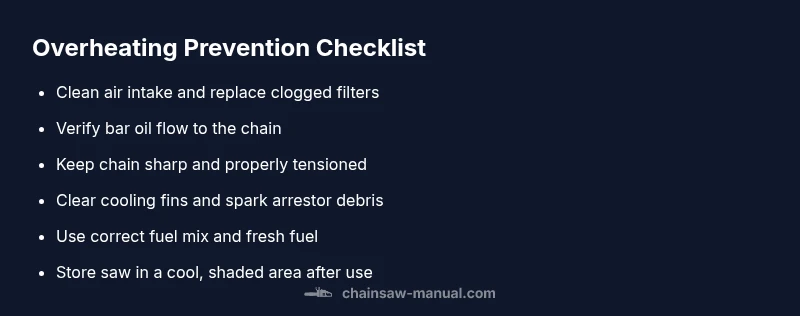
- Identify airflow and lubrication issues first
- Regularly inspect air filter and oil flow
- Keep chain sharp and properly tensioned
- Clean cooling fins and spark arrestor to maximize cooling
- Use fresh fuel and correct fuel mix to prevent extra heat