How to Oil a Chainsaw Without an Oiler
Learn safe, practical methods to oil a chainsaw when the built-in oiler is not working. This guide covers tools, setup, step-by-step manual lubrication, safety tips, and maintenance to keep cutting efficiently until the oiler is repaired.


Goal: oil the chainsaw even when the oiler isn’t delivering lubricant. You can accomplish this by manually lubricating the bar and chain, using a clean rag to distribute oil, and testing the system at idle after securing the saw. This quick answer previews the essential steps, safety precautions, and materials you’ll need for temporary manual lubrication.
Why proper oiling matters for chainsaw performance
A well-lubricated bar and chain are essential for efficient cutting, reduced heat buildup, and minimized wear on the drive sprocket. When the oiler isn’t delivering lubricant, the risk of bar/chain overheating increases, which can shorten chain life and raise the chance of kickback. Understanding how to oil a chainsaw without oiler—even temporarily—helps you maintain cutting performance while you arrange a fix. Chainsaw Manual emphasizes that consistent lubrication protects the bar rails, chain links, and oil passages, reducing friction and heat buildup. In practical terms, this means you should aim for a thin, even film along the entire length of the bar, especially the nose, where heat concentrates during heavy cuts. If you’re studying how to oil a chainsaw without oiler, plan to distribute oil across the bar using a manual method that matches your saw’s geometry and oil viscosity. (Note: this is a temporary workaround; you should restore the oiler as soon as possible and recheck the lubrication path after repairs.)
How to oil a chainsaw without oiler: a practical overview
When the built-in oiler is unavailable, manual lubrication requires discipline and method. The core objective is to keep the bar and chain coated so heat doesn’t degrade the bar rails or drive sprocket. Start by ensuring you are working in a well-ventilated area with a stable surface. The manual approach involves applying oil directly to the bar-rail surface and the underside of the chain, then rotating the chain by hand to distribute the lubricant evenly. If you’re curious about how to oil a chainsaw without oiler, this section outlines the logic: a consistent oil film reduces friction, cleans debris, and helps prevent bar wear between official oiling cycles. Always inspect the oiler path for clogs or leaks and adjust your technique to the oil’s viscosity and your climate. Chainsaw Manual recommends practicing with a non-operational test cut in an empty log to verify distribution before resuming work.
Safety first: PPE and safe workspace
Protective equipment minimizes risks when manual lubrication is required. Wear cut-resistant gloves, eye protection, and long sleeves to guard against oil splashes and flying debris. Work on a stable surface with the saw braked and the bar pointing away from your body. Keep children and pets clear, and have a fire extinguisher or water source nearby in case of oil spills. The oiler bypass technique increases the importance of a tidy workspace to prevent slips. Chainsaw Manual highlights that PPE is a non-negotiable step for anyone learning how to oil a chainsaw without oiler, ensuring you maintain control and reduce injury risk while you perform maintenance.
Manual lubrication methods for bar and chain
Manual lubrication can be executed via several practical methods when the oiler is down. One common approach is to apply bar oil directly along the bar-rail surface using a clean oil bottle tip or a small brush. Another option is to pre-wet a lint-free rag with oil and wipe the bar evenly, then run the chain slowly to distribute it. For those who want a more controlled method, a wick or sponge can be placed at the bar rail to feed oil as the chain moves. No matter which method you choose, the goal is uniform coverage along the entire length of the bar, including the nose. When you’re working through how to oil a chainsaw without oiler, it’s critical to avoid oil pooling at the bar tip, which can sling onto you or the ground. After applying oil, wipe away excess and inspect the underside of the chain for signs of even distribution. This section provides practical guidelines to help you select the right viscosity and spread pattern for your climate and workload.
Step-by-step workflow overview
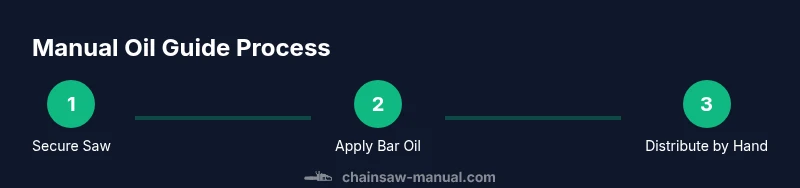
In practice, follow a repeatable workflow to ensure you cover all surfaces and don’t miss critical contact points. Begin with prep and safety, then move to oil application, distribution, and verification. The goal is to create a thin, even layer that persists through several minutes of light cutting until you repair or replace the oiler. Keep in mind that the absence of a functioning oiler increases the risk of dry spots along the bar if you delay maintenance. Chainsaw Manual’s guidance emphasizes documenting your process so you can reproduce it consistently if you encounter the same issue again in another tool.
Common mistakes and how to avoid them
Common mistakes include applying too much oil in one spot, which leads to drips, slippery work areas, and wasted lubricant. Another frequent error is failing to distribute oil evenly across the bar rail, leaving dry patches that cause uneven wear. A third pitfall is neglecting to check for oil path blockages in the oiler housing, which can mask a faulty internal seal later. To avoid these issues, apply oil in a slow, controlled line from the bar tip toward the powerhead and then rotate the chain by hand to distribute. If you notice oil spraying off the bar or excessive smoke, you may be over-lubricating or misapplying oil. In that case, wipe clean, adjust, and re-test before resuming work. This approach aligns with Chainsaw Manual’s safety and maintenance guidance for temporary manual lubrication.
Testing and verification after manual lubrication
After you finish manual lubrication, run the chain at idle with the chain brake engaged to verify oil distribution. Look for a thin film along the entire bar and a slight oily residue at the rail joints when you rotate the chain by hand. Listen for changes in sound as the chain becomes lubricated; if it sounds louder or duller, re-check the oil film and distribution path. If you plan to cut, perform a small test cut to confirm smooth operation without smoke or bar scorching. Chainsaw Manual stresses that thorough testing is essential to confirm that your manual lubrication technique maintains safe operation until you repair the oiler.
Real-world scenarios: bar types, climate, and oil choices
The exact method you choose depends on the bar length, rail design, and your climate. Heavier bars or longer bars may require more oil and a slower distribution pattern to ensure that oil reaches the nose under load. In arid or hot conditions, oil may evaporate more quickly, so you might need to reapply more frequently and wipe excess carefully to avoid oily residues on skin. Climate and oil viscosity influence how you apply oil when the oiler is down. Chainsaw Manual recommends selecting a bar oil with proven performance in your working environment and maintaining a consistent distribution method so you don’t miss critical surface areas. This final block ties together the practical realities you’ll face when learning how to oil a chainsaw without oiler in the field.
Tools & Materials
- Bar oil (appropriate viscosity for your climate)(Choose a high-adhesion oil designed for bar rails; consider viscosity range suitable for seasonal temperatures.)
- Lint-free rag(Use for pre-wetting and wiping excess oil; keep separate from other workshop rags.)
- Protective gloves(Cut-resistant if possible; protects hands from sharp chain and hot bar.)
- Safety glasses(Eye protection against oil splashes and debris.)
- Small brush or oil bottle tip(Useful for precise application along the bar rails.)
- Paper towels or shop towels(Clean spills and wipe surfaces after lubrication.)
- Stable work surface or vise clamp(Keeps the saw steady while you work; secure and stable positioning is essential.)
Steps
Estimated time: 20-45 minutes
- 1
Secure and prepare the saw
Place the chainsaw on a stable surface with the chain brake engaged. Wear PPE and ensure the bar is pointed away from your body. Clear the area of bystanders and prepare your oiling supplies within arm’s reach.
Tip: Double-check that the chain cannot move when braked before you begin. - 2
Inspect the oil path and oiler housing
Look for visible clogs, dried residue, or oil leakage in the oiler housing and along the oil passages. A blocked path is a warning sign that the oiler will fail soon and manual lubrication will be more important.
Tip: Use a wooden dowel or non-metal tool to gently clear minor blockages; avoid metal tools that could scratch passages. - 3
Prepare the bar rail and underside
Wipe the bar clean to remove old residue. This prevents clumping and ensures even oil distribution when you apply new lubricant.
Tip: A clean surface improves the spread of oil and reduces dirt buildup. - 4
Apply oil along the bar rail
Apply a thin, even line of bar oil along the entire length of the bar, focusing on the rail and the nose. If using a rag, lightly dampen it and wipe along the rail.
Tip: Avoid pooling oil at the nose; this can sling onto you or the ground. - 5
Distribute oil by rotating the chain
With the chain brake still engaged, rotate the chain slowly by hand to spread the lubricant across the bar and chain link surface. Check for even coverage on the underside of the chain.
Tip: Do not spin the chain aggressively; gentle, controlled motion yields best results. - 6
Test and reset after lubrication
Run the saw briefly at idle while braked to confirm distribution and observe for drips. Wipe any excess oil and store your tools properly. Plan to recheck the oil path after you resume cutting or after long idle periods.
Tip: If you see dry spots, reapply a small amount of oil and test again before heavy use.
FAQ
Can manual oiling replace the oiler for an extended period?
Manual oiling is a temporary workaround intended to keep the chain lubricated while you arrange repairs. Long-term use without a functioning oiler increases wear and risk; restore the oiler as soon as possible.
Manual oiling is a temporary fix; you should restore the oiler as soon as possible to protect the bar and chain.
Is it safe to use any oil when the oiler is not working?
Use bar oil designed for chainsaws, matching viscosity to climate conditions. Other oils may be too thin or too sticky, reducing protection and causing residue build-up.
Stick to bar oil made for chainsaws; other oils can cause problems and won’t protect as well.
How do I know if the oiler is clogged?
Check oil flow on the bar during a brief test: if the bar remains dry or shows only a light film, the oiler path may be blocked. Inspect the housing for residue and test again after clearing.
If the bar stays dry, the oiler path is likely blocked; clear it and re-test.
Will manual oiling affect the warranty?
Warranty terms vary by manufacturer. Some require proper maintenance of the oiler, while others permit temporary manual lubrication during repairs. Check your warranty terms and consult support if unsure.
Warranty terms vary; check the specific terms for maintenance requirements and manuals.
What is the best practice after manual oiling?
Re-test distribution in a controlled setting, observe for drips, and perform a light test cut to confirm even lubrication. Plan to replace or repair the oiler promptly.
Test distribution and a light cut; replace the oiler as soon as you can.
Can I substitute bar oil with another lubricant?
Substitute lubricants are not recommended. Bar oil is formulated for viscosity and adhesion on chainsaw bars; alternatives may migrate, cause buildup, or damage the chain.
Stick with bar oil designed for chainsaws for best results.
Should I adjust tension after manual lubrication?
Yes. After distributing oil, recheck chain tension and spin freely by hand. A properly tensioned chain reduces wear and ensures even lubrication.
Check tension after lubrication to prevent extra wear.
What safety precautions accompany manual oiling?
Always wear PPE, keep hands clear of the chain, and work on a stable surface. Stop and reassess if you notice unusual smells, smoke, or leakage.
Wear PPE and work safely; stop if you notice anything unusual.
Watch Video
The Essentials
- Secure the saw and wear PPE before manual lubrication.
- Apply bar oil evenly along the entire bar rail and nose.
- Distribute oil by rotating the chain slowly with the brake engaged.
- Test the distribution and wipe away excess before resuming work.
- Repair or replace the oiler as soon as possible; manual lubrication is temporary.