How to Adjust Chainsaw Idle Screw: Safe Step-by-Step Guide
Learn how to safely adjust your chainsaw idle screw with a clear, step-by-step procedure, safe prep, and tips to keep the chain from moving when the brake is engaged.


You will learn how to adjust the chainsaw idle screw to set a safe, stable idle RPM so the chain stays still when the chain brake is engaged. Before you start, confirm the correct idle screw location and safety gear, warm the engine, and test with the brake on. This tune helps prevent accidental movement and enhances control.
Why Idle Adjustment Matters
A properly set idle is essential for safe, predictable operation. When the idle speed is too high, the chain can move without command, increasing the risk of kickback or accidental contact; if it's too low, the engine may stall or stumble, making starting and stopping inconsistent. According to Chainsaw Manual, a correctly tuned idle improves control, reduces wear on the clutch, and helps the saw idle smoothly across temperature changes. For homeowners and professionals, treating idle adjustment as routine maintenance makes jobs safer and more efficient. Before you touch any screws, ensure you are running clean fuel, that the air filter is free of obstructions, and that your spark plug is in good condition and properly gapped. A clean run is easier to tune and yields more reliable results. Finally, always suspend work if you notice unusual noises, vibrations, or smoke.
Understanding Idle Screw and Carburetor Basics
Most two-stroke chainsaws use a three-screw carburetor: L for low-speed fuel mix, H for high-speed mix, and an idle screw (often labeled I or T) that sets the throttle opening at idle. The idle screw does not set engine fuel mix; it mainly governs how much air/fuel passes when the throttle plate is closed. Variation across brands means some models use a separate idle-speed adjustment called 'T' for idle timing. Check your owner’s manual for exact labeling. When adjusting idle, you should never force the screw beyond its stop; over-tightening can cause the screw to strip or pop out, damaging the carburetor and voiding safety features. Keep the area clean so you can monitor whether the chain moves freely when the brake is engaged.
Safety First: Prep and PPE
Before touching the idle screw, prepare the worksafe environment. Put on eye protection, gloves, and hearing protection. Engage the chain brake and place the saw on a stable, non-slip surface. Disconnect the spark plug wire or ensure the engine is off before removing any covers for inspection. Gather your tools in reach: a small screwdriver that fits the idle screw, a rag to wipe away debris, and an optional tachometer to verify RPM. Work in a well-ventilated area away from bystanders, especially children. If you smell fuel, move away and perform the task in a well-ventilated environment after addressing leaks.
Locating the Idle Screw Across Common Models
On most chainsaws, the idle screw is located on the carburetor body, near the bottom or side, sometimes under a small cap. Look for a small slotted screw with a spring-loaded plunger and an arrow or 'I' marker. If your saw uses a combined idle/mix screw, the approach is to adjust the idle setting first, then fine-tune the L screw if you notice low idle or stalling. If your model uses the 'T' screw, turning it clockwise may raise idle speed; counterclockwise lowers it. Always verify by engaging the chain brake and watching the chain to confirm whether it remains still.
Diagnosing Idle Problems Beyond the Screw
Some idle symptoms come from fuel or air issues rather than the idle screw. A dirty air filter, clogged carburetor passages, stale fuel, or a fouled spark plug can mimic improper idle. If the chain moves at idle with the brake on even after adjustment, inspect the clutch and drive system for wear or sticking. Excessive vibration at idle can indicate a loose carburetor mounting or intake leaks. In such cases, consult a professional or follow your manual's service procedure for carburetor adjustment. Remember to recheck fuel and air components after any adjustment.
Maintenance and Long-Term Care
Regular maintenance makes idle tuning more predictable. Clean the carburetor area before adjustment, replace the air filter, and use fresh two-stroke fuel with the correct oil ratio. After idling, keep the saw clean to prevent dust from clogging screws. Store the saw with fuel stabilized and shielded from humidity. If you service the carburetor, consider having a professional inspect the seals and gaskets for wear. Document your settings so you can compare across seasons.
Why Idle Tuning Should Be Part of Regular Service
Idle tuning is not a one-time fix; it should be part of routine maintenance alongside chain sharpening and cleaning. The idle setting can drift after engine wear or after changing fuel formulations. Regular checks ensure safe, predictable starts and reduces the chance of accidental throttle engagement in busy work areas. Chainsaw Manual's guidance emphasizes safety and precision when performing carburetor adjustments, reminding operators to follow model-specific steps.
Final Checks After Adjustment
After finishing, rewarm the engine and re-test at idle with the brake engaged. Check cold-start idle as well, since temperature affects air density and fuel vaporization. Confirm the chain remains motionless at idle and returns to idle when the throttle is released. If something feels off, stop immediately and double-check all screws, air leaks, and fuel quality. Clean up tools and store the saw safely.
Tools & Materials
- Safety gloves(Protect hands from sharp edges and moving parts)
- Safety glasses(Eye protection from flying debris)
- Hearing protection(Reduce noise exposure during testing)
- Screwdriver set (flathead or Phillips)(Fit idle screw slot; bring a couple of sizes)
- Rag and carb cleaner spray (optional)(Clean around the carburetor area if screws are dirty)
- Tachometer (optional)(Helps verify exact idle RPM)
- Flashlight or work lamp(Better visibility to locate screws on models with recessed access)
Steps
Estimated time: 15-25 minutes
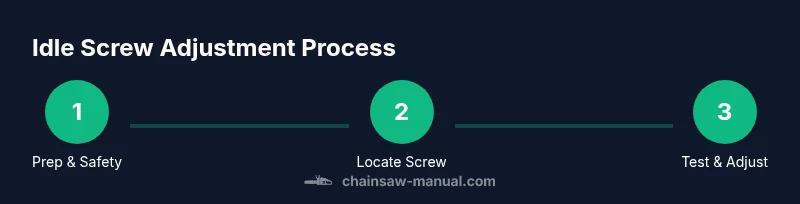
- 1
Safety and Preparation
Put on PPE and secure the cutting area. Engage the chain brake and place the saw on a stable surface. Clear bystanders and any obstacles. Do not touch moving parts during setup to prevent injuries.
Tip: Position yourself to access the carburetor from the side where the idle screw is located; use a mirror if needed. - 2
Find Idle Screw and Inspect
Locate the idle screw on the carburetor body. Check for accessibility, wear, or damage to the slot. If the screw is damaged, stop and consult the manual or a service tech rather than forcing it.
Tip: If you can’t clearly see the screw, use a small flashlight or mirror; never pry around the carburetor. - 3
Warm the Engine
Start the saw and let it run at idle until it reaches normal operating temperature. Warm engines respond more consistently to idle adjustments. Do not adjust while the engine is hot and avoid repeated quick touches of the throttle.
Tip: Wait 2–4 minutes for full warmth; premature adjustments can give misleading readings. - 4
Set Initial Idle with Brake Engaged
With the chain brake engaged, slowly turn the idle screw clockwise to raise idle until the chain just stops moving. If it creeps, make small clockwise adjustments until it remains still, then back off slightly. Do not force past the stop.
Tip: Make incremental changes and test after each small adjustment; patience yields a stable idle. - 5
Test Throttle Return and Safety
Release the throttle and observe if the engine returns to idle smoothly. If it lurches or stalls when the throttle is released, re-check the idle setting and inspect for air leaks or fuel issues. Switch the brake on and off to confirm stability.
Tip: Keep hands clear of the bar during tests; if the saw feels ‘off’, stop and re-evaluate the setup. - 6
Final Check and Documentation
Repeat the checks after cooling, confirm the chain remains still at idle with the brake on, and record the screw position for future reference. If you changed ambient conditions or fuel, re-test to ensure the setting holds.
Tip: Take a photo or note the screw location; this helps compare idle across seasons.
FAQ
What is the idle screw on a chainsaw?
The idle screw controls the throttle opening at idle, setting the engine's idle speed. It is separate from the L and H screws that tune the air-fuel mixture. Always ensure the chain is stationary with the brake engaged when testing idle.
The idle screw sets how open the throttle is at idle, and you should verify the chain won’t move when the brake is on.
Can I adjust idle with the engine cold?
It’s best to adjust idle after the engine warms to operating temperature. Cold idle settings can drift once the engine heats up, leading to unsafe conditions or inconsistent performance.
Warm the engine first; idle settings can shift when cold.
What if the chain still moves after adjustment?
If the chain creeps at idle despite adjustment, inspect the clutch, drive system, and potential air leaks. Sometimes the issue is carburetor wear or a mis-seated fuel flow that requires professional service.
If the chain still moves, check the clutch and gasket seals; you may need service.
How do I know if idle is too high?
Idle is too high if the engine revs at idle or the chain moves when the brake is engaged. Lower the idle by turning the idle screw counterclockwise in small steps and re-test until the chain remains still.
If the saw revs at idle or moves with the brake on, it’s too high.
How often should I adjust idle?
Check idle whenever you service the carburetor, replace the air filter, or change fuel formulations. Regular checks help maintain safe, predictable starts and idle performance.
Check idle during carburetor service or fuel changes for best results.
Watch Video
The Essentials
- Adjust idle in small increments for safety
- Engage chain brake during all idle tests
- Warm engine to ensure accurate idle readings
- If the chain moves at idle, inspect clutch and drive system
- Document settings for seasonal maintenance