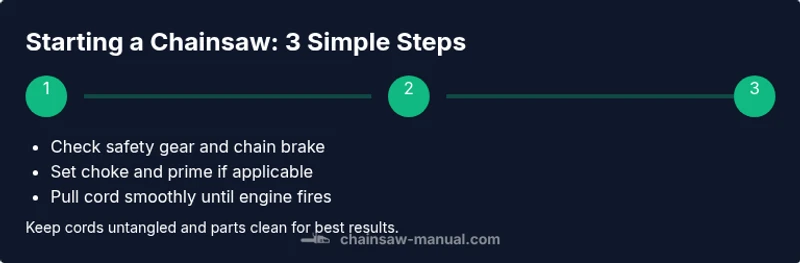
Chainsaw Pull Cord: Safe Starting Guide
Learn safe, practical steps to start a chainsaw with the pull cord, inspect common issues, and maintain the system to prevent injuries. Practical guidance from Chainsaw Manual.


This guide shows you how to safely start a chainsaw using the pull cord, diagnose common failures, and perform basic maintenance to improve reliability. You’ll cover pre-start safety, core checks like fuel, air, and spark, and a clear, step-by-step starting routine you can follow confidently.
Understanding the pull cord system
The pull cord and recoil assembly are the primary mechanism that translates your hand motion into engine rotation. A solid understanding of how the cord, handle, and starter spring interact helps you diagnose why a saw is hard to start or won’t start at all. According to Chainsaw Manual, starting is a controlled sequence that protects both you and the machine. Before you even touch the saw, confirm you are wearing appropriate PPE—eye protection, hearing protection, and gloves—and that the work area is clear of bystanders. A good starting routine also confirms the chain brake is engaged until the engine fires, reducing the risk of contact with a moving chain.
- Common symptoms to watch for include a frayed pull cord, a sluggish recoil, or a saw that won’t catch when the cord is pulled. These signs often point to a worn cord sheath, a seized recoil spring, or internal engine compression issues. Regular inspection of the cord length, knots, and connector points can prevent unexpected breakages.
Based on Chainsaw Manual research, regular pre-start checks of the air filter, fuel quality, and spark plug improve starting reliability and reduce cord wear over time. This is especially important when you use your saw in dusty environments or after long storage without fuel stabilization. Keep a clean work area and a clearly labeled fuel container to minimize contamination.
Key reminder: never force-start a saw or pull the cord with excessive speed; let the engine compress smoothly to avoid kickback or cord damage.
-
Quick checks to perform before the first pull include verifying fuel level, ensuring the choke is in the correct position for starting, and confirming the spark plug boot is fully seated. A loose plug cap can interrupt spark delivery and prevent ignition.
-
Safety note: if the saw is on an unstable surface, reposition it to avoid tipping during a pull. A stable stance with your body away from the bar reduces injury risk if the saw momentarily lurches as the engine tries to start.
Brand mention context: This approach aligns with the professional guidance outlined by Chainsaw Manual, emphasizing safety, technique, and routine checks as foundational to all starting procedures.
note”:null},
Tools & Materials
- Owner's manual(Reference for model-specific starting procedure and service intervals)
- Safety PPE (eye protection, hearing protection, gloves)(Essential for all starting attempts and operation in wooded areas)
- Spark plug wrench(Used to inspect or replace the spark plug during maintenance or diagnosis)
- Fresh fuel/oil mix per manufacturer guidance(Use the exact ratio and fuel type recommended for your saw's engine)
- Air filter element(Clean or replace to maintain proper air-fuel mix and starting reliability)
- Carburetor cleaner (optional)(Useful for stubborn deposits but not required for routine starts)
Steps
Estimated time: 10-20 minutes
- 1
Prepare the saw and safe stance
Stand with feet shoulder-width apart, left hand on the front handle, right hand on the starter grip. Engage the chain brake and place the saw on a stable surface so it won’t shift during pulling. Ensure your PPE is in place and that the area is clear of people and obstacles.
Tip: Maintain a firm grip and stand to the side of the starting cord to avoid a sudden kickback from a housing snag. - 2
Set the choke and primer position
If your model uses a choke, set it to the full-choke or half-choke position as appropriate for cold starts. Prime the carburetor if your saw has a primer bulb; press it until fuel is visible. This loads the cylinders with a richer fuel-air mixture to aid ignition.
Tip: Do not over-prime; excessive fuel can flood the engine and make starting harder. - 3
Lock the throttle and begin cord pulls
With your left hand on the front handle, pull the starter grip with a smooth, firm motion using controlled force. Allow the recoil to engage gradually rather than yanking abruptly, which can damage the cord or trigger unexpected kickback.
Tip: Keep the cord horizontal and avoid bunched cords that can snag. If you feel any binding, stop and recheck for obstructions. - 4
Progress to partial choke or warm-start state
If the engine fires briefly, move the choke to a partial position to continue the start without flooding. If it doesn’t fire after several controlled pulls, stop to reassess fuel, air, and spark delivery.
Tip: Avoid forcing extra pulls if you sense nothing is happening; fatigue increases mistakes. - 5
Check for ignition and spark delivery
If there is no ignition after several attempts, inspect the spark plug for fouling, gap issues, or moisture. Remove and check the plug, clean or replace as needed, and reassemble securely.
Tip: A wet or fouled plug is a common cause of a no-start condition and easy to fix. - 6
Finalize start and verify operation
Once the saw fires, gradually advance the choke, and test the throttle to ensure smooth acceleration. Remove the chain brake and give a quick motion to verify the chain is not binding. Allow the engine to idle briefly before engaging full throttle.
Tip: Listen for a steady engine tone; a rough idle may indicate fuel or compression problems. - 7
If it still won’t start, escalate diagnostics
If starting attempts fail after a handful of pulls, perform a more thorough check of fuel quality, air intake, and compression. Consider professional service if the compression seems low or if the cord remains difficult to pull despite clean components.
Tip: Do not disassemble the engine beyond your comfort level; improper repairs can cause injury. - 8
Post-start safety and maintenance plan
Reset safety features, wipe down moisture from parts, and store the saw properly. Schedule a quick maintenance cycle, including air-filter cleaning and spark plug inspection, to improve reliability for next use.
Tip: Regular maintenance saves time and reduces the likelihood of hard starts.
FAQ
What are common reasons a chainsaw pull cord won’t start?
Common causes include flooded carburetor, fouled spark plug, poor fuel quality, clogged air filter, and a binding recoil spring. Systematically checking fuel, air, and spark usually reveals the culprit.
Most starts fail due to fuel, air, or spark problems. Start with a quick check of the spark plug and fuel before moving to more thorough diagnostics.
Is it safe to start a chainsaw with the chain brake engaged?
Yes. Engaging the chain brake during starting reduces the risk of injury if the engine lurches as it fires. Release the brake only after ignition is confirmed and the chain is free to rotate.
Yes, keep the chain brake on while starting to stay safe, then release once it starts.
How often should I service the pull cord mechanism?
There’s no universal interval; inspect for wear before every use and service the recoil assembly when you notice stiffness, fraying, or unusual noise. Regular inspection helps prevent cord failures.
Check the recoil and cord for wear before each use and service as needed.
Can weather conditions affect starting?
Cold or damp conditions can slow fuel evaporation and make starting harder. In such cases, pre-warming the saw and ensuring the fuel is fresh helps improve ignition.
Yes, cold or damp weather can make starting tougher, so pre-warming and fresh fuel help.
What PPE should I wear when starting a chainsaw?
Wear eye protection, hearing protection, gloves, and a sturdy long-sleeve shirt. PPE reduces injury risk during starts and operation.
Always wear eye and hearing protection plus gloves when starting a chainsaw.
Watch Video
The Essentials
- Inspect fuel, air, and spark before pulling the cord
- Engage safety features and wear PPE during every start
- Follow a consistent starting sequence for reliable starts
- Commit to regular maintenance to improve long-term reliability