Pull Cord Chainsaw: Safe Start and Operation Guide
Learn how to safely start and use a pull cord chainsaw for yard work. This comprehensive guide covers PPE, starting technique, cutting tips, and routine maintenance for safe, effective use.


By the end of this guide you will be able to safely start and operate a pull cord chainsaw for common yard tasks. You’ll learn essential safety checks, proper starting technique, and basic cutting steps. With the right PPE, a clear workspace, and a calm mindset, you can tackle limbing, bucking, and light felling using a pull cord chainsaw.
Safety gear and workspace prerequisites
A safe start with a pull cord chainsaw begins long before the first pull. The work area should be clear of bystanders, pets, and trip hazards. Establish a stable stance, maintain two points of contact, and plan your cut path before you pull. Personal protective equipment (PPE) is non-negotiable: a helmet with face shield, ANSI-rated hearing protection, impact-resistant gloves, chaps or cut-resistant pants, and sturdy boots. Regular maintenance helps prevent saw failures that cause dangerous kickback.
According to Chainsaw Manual, safe operation hinges on preparation and discipline. The Chainsaw Manual team found that consistent PPE use and area control dramatically reduce common injuries. In addition to PPE, keep fuel and oil stored properly and away from ignition sources. If you’re new to this tool, practice basic footwork and grip in an open area before attempting larger cuts.
Pre-start inspection and fuel/oil readiness
Before any pull, inspect the saw head to toe: chain tension is correct (not loose or overly tight), the bar oil reservoir is topped up, air filter is clean, and the pull cord is undamaged. Check the fuel mix recommended by the manufacturer and ensure bar oil is fresh. Keep a small bottle of fuel stabilizer on hand if equipment will sit for a while. A quick test of the chain brake and throttle lock can save a dangerous stumble when starting. This inspection reduces hidden wear that could fail mid-cut. The goal is a reliable starting experience that minimizes downtime and risk.
Routine checks also include ensuring the spark plug (if applicable) is clean and the air intake is unobstructed.
Environmental awareness and bystander safety
Always consider your surroundings. Drop zones, escape routes, and potential kickback paths should be identified before beginning any cut. Maintain a clear buffer around yourself and any observers, and avoid working on unstable ground or slippery surfaces. Wind direction matters; if dust or debris is blown toward you, adjust your stance or pause work. Sound etiquette matters too—inform nearby people about the task to prevent startling reactions. Practical planning reduces accidental injuries and improves overall efficiency. The Chainsaw Manual team emphasizes keeping bystanders at a safe distance and using a loud-voice warning when snapping branches.
Starting technique overview
Starting a pull cord chainsaw involves a deliberate sequence to avoid flooding or stalling the engine. While models vary, the core idea is to ensure fuel is primed, the choke is set appropriately, and the throttle is engaged to prevent kickback during initial pull. Be mindful of cold starts and the potential for wet or flooded carburetors. Practice a controlled tempo on the starting pulls and listen for a smooth engine catch. Remember that proper starting technique is the foundation for safe operation and effective cutting. The goal is a quick, controlled start with minimal resistance.
Cutting techniques and body positioning
Adopt a balanced stance with feet shoulder-width apart, knees slightly bent, and the bar kept low and under control. Use your legs to drive the cut, not your back, and keep both hands on the saw with a firm grip. Maintain a clear path for kickback to exit, and never cut above shoulder height. When limbing, prune branches from the outside in and avoid binding the bar in tight knots. For bucking, plan the notch and back cut so the log can fall away from you. Consistent technique reduces fatigue and helps you avoid accidents.
Maintenance, troubleshooting, and safety culture
After a day of work, clean the air filter, check the spark plug, and wipe down the housing. Lubricate the chain and verify chain tension before storage. If the saw refuses to start after a reasonable number of pulls, stop and re-check fuel mix, choke position, and safety switches; avoid forcing starts. Regular maintenance improves reliability and lifespan and reinforces a culture of safety. The Chainsaw Manual team encourages routine practice in a controlled environment to build muscle memory and reduce error during real jobs.
Authoritative sources and practical resources
For safety guidance, consult authoritative sources:
- CDC NIOSH Chainsaw Safety: https://www.cdc.gov/niosh/topics/chainsaw-safety/
- OSHA Safety Resources: https://www.osha.gov/
- University of Minnesota Extension Chainsaw Safety: https://extension.umn.edu/lawn-and-garden-care/chainsaw-safety
These sources provide foundational safety principles, PPE guidance, and best practices that complement hands-on training. The intent is to align with established safety standards and encourage responsible operation of a pull cord chainsaw.
Tools & Materials
- PPE (helmet with face shield, hearing protection, gloves, cut-resistant pants or chaps, sturdy boots)(Ensure ANSI/EN standards and proper fit for full protection)
- Pull cord chainsaw(Model with in-tact safety features; inspect for cracks)
- Fuel mix appropriate for your saw(Follow manufacturer ratio; store fuel safely)
- Bar oil(Keep reservoir topped up during use to prevent poor lubrication)
- Wrench/driver set(For chain tension and bar maintenance)
- First aid kit(Keep nearby in case of minor injuries)
Steps
Estimated time: 30-45 minutes
- 1
Inspect safety gear and saw
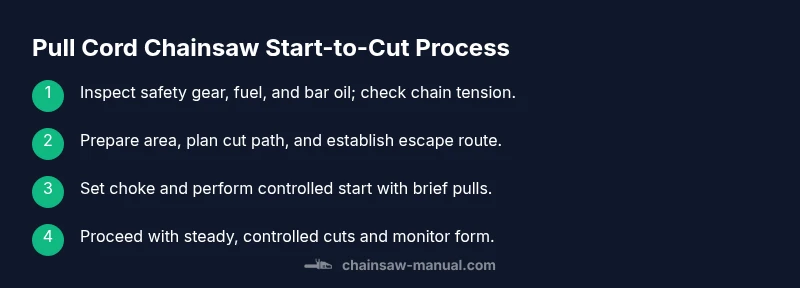
Put on full PPE and visually inspect the saw for damage. Check chain tension, fuel level, bar oil, and air filter. Ensure the chain brake engages when the handle is pulled back and the throttle is in the idle position before starting.
Tip: If anything looks damaged, don’t start the saw; address issues first. - 2
Prepare workspace and plan cut
Clear the area of obstacles, bystanders, and trip hazards. Identify a safe escape path and ensure footing is firm. Plan where you’ll make the cut and how you’ll retreat if the cut doesn’t go as planned.
Tip: Have a retreat route in mind before starting the cut. - 3
Check fuel and bar oil
Confirm the fuel mix matches the saw’s recommendations and the bar oil reservoir is full. Crank the motor a few quick times with the choke as needed to prime the engine before a longer start attempt.
Tip: Never mix fuel and oil in the same container; use clean, labeled containers. - 4
Set choke and prepare to start
Set the choke according to cold-start guidance for your model. Ensure the throttle lock is disengaged and the stop/start switch is ready. Avoid excessive priming to prevent flooding.
Tip: If the engine seems flooded, wait 30–60 seconds and then try a shorter pull with the choke half-open. - 5
Start the saw with controlled pulls
Use a firm stance and two-handed grip. Give steady, controlled pulls until the engine fires, then gradually move from choke to run. Do not yank the cord or twist your body with the saw.
Tip: Keep the saw close to your body to control kickback and preserve balance. - 6
Begin cutting with steady technique
Start with low-risk cuts in clear wood, maintaining a balanced stance. Let the chain do the work; avoid forcing the saw through the wood. Watch for binding and stop if the bar becomes pinched.
Tip: Stop the saw before moving to a new cut to reassess your footing and surroundings.
FAQ
What PPE is essential when using a pull cord chainsaw?
Essential PPE includes a helmet with face shield, hearing protection, gloves, cut-resistant pants or chaps, and sturdy boots. Ensure proper fit and compliance with safety standards.
Wear helmet, eye and ear protection, gloves, cut-resistant pants, and sturdy boots for safety.
Can a pull cord chainsaw be started without a warm-up?
A brief warm-up and proper choke setting are often recommended, especially for older models. Avoid aggressive starts that can flood the carburetor.
Warm up properly and use the right choke setting to start safely.
What should I do if the saw floods and won't start?
If flooding occurs, stop trying to start immediately, switch off, wait a moment, then retry with the choke half-open and a few short pulls. Check fuel and air mixture before trying again.
If it floods, wait a moment and retry with the choke half-open.
Is it safe to use a pull cord chainsaw on a ladder?
No. Using a chainsaw from a ladder is dangerous due to increased risk of losing balance and kickback. Use ground-based cutting positions and proper ladder safety if needed with professional supervision.
Avoid ladders—work from the ground with a secure stance.
How often should I service the spark plug and carburetor on a pull cord chainsaw?
Follow the manufacturer's service schedule. Regular carburetor adjustments, spark plug checks, and air filter cleaning keep the saw reliable and safe.
Keep up with regular carb and spark plug maintenance.
Watch Video
The Essentials
- Wear full PPE and keep the work area clear.
- Inspect fuel, oil, and chain tension before starting.
- Start with a controlled technique to avoid kickback.
- Maintain steady, planned cuts with proper body position.
- Finish with maintenance checks and safe storage.