Chainsaw for Beginners UK: Safe Start Guide
A practical, safety-first guide for homeowners and DIYers in the UK learning to use a chainsaw. Learn how to pick a beginner-friendly model, equip yourself with PPE, perform setup checks, and execute your first cuts with confidence.


Learn how to start safely with a beginner-friendly chainsaw in the UK. This quick guide covers selecting a suitable model, essential PPE, area checks, basic starting technique, and your first cuts. You’ll understand basic maintenance, safety practices, and how to avoid common mistakes, so you can build confidence before tackling larger wood projects.
Why safety-first matters for chainsaw beginners in the UK
Safety comes first when learning to use a chainsaw in UK conditions. The Chainsaw Manual team emphasizes planning, PPE, and an organized work area before every cut. In this section we outline why following a structured safety routine reduces risk and builds long-term confidence for DIYers and professionals alike. According to Chainsaw Manual, safe operation starts with choosing the right tool, making a clear plan, and respecting power tools as potentially dangerous when misused. Weather, terrain, and wood type all influence how you should approach each job, so assess each site before you begin.
A solid safety mindset also means understanding local considerations, such as noise, residue, and nearby people. By building a routine around area clearance, PPE checks, and cautious cutting techniques, beginners can progress quickly while staying within safe practice boundaries. Chainsaw Manual emphasizes that consistency—not speed—is the backbone of safe operation, especially when learning basic handling and stance.
What to look for in a beginner-friendly chainsaw in the UK
When shopping for a chainsaw as a beginner in the UK, prioritize lightweight balance, simple start mechanisms, and protective features. A bar length of 12–14 inches (30–35 cm) suits small branches and garden wood, while 1.5–2.5 kW petrol or cordless options offer manageable power. Electric models tend to be quieter and cleaner, but petrol units excel in larger tasks. Check access to service centers in the UK and confirm that the model ships with a robust safety chain brake and automatic oiler. Consider vibration levels, ease of maintenance, and the availability of uk-based support in case of service needs.
Most beginner-friendly models include a chain brake that is easy to engage, a quick-release air filter for simple cleaning, and a tensioning mechanism that doesn’t require special tools. The right weight distribution reduces fatigue and improves control. As you compare options, also factor in battery life for cordless models and local availability of spare parts.
For first-timers, choosing a model with a low kickback bar and a clear manual is essential. In the UK market, reputable brands offer extended warranties and certified training resources, which can be valuable as you build your foundational skills.
PPE and safety setup you should have on hand
Equipping yourself properly is non-negotiable. A certified helmet with a face shield, hearing protection, cut-resistant chaps, and sturdy gloves reduce exposure to kickback and debris. Add steel-toed boots with good grip and high-visibility clothing for outdoor work. Keep a first aid kit and a fire extinguisher nearby, and have a stable, clear workspace with good lighting. Regularly inspect PPE for wear and replace any damaged gear immediately. Always verify your PPE meets current safety standards and is appropriate for chainsaw use in the UK environment.
An organized PPE kit also helps with confidence: if you can see that you’re protected, you’ll cut with greater calm and precision. Chainsaw Manual emphasizes routine PPE checks before each session, as worn gear can compromise protection when it matters most. Remember that PPE is your first line of defense against common injuries such as cuts, debris, and hearing damage.
Fuel, oil, and basic maintenance basics for beginners
If you are using a petrol chainsaw, follow the manufacturer’s fuel mix and oil recommendations precisely and never mix oils in a dirty container. Use bar oil consistently to keep the chain lubricated and avoid overheating. For electric models, ensure the battery is charged and use appropriate charging equipment in dry conditions. Regular maintenance includes checking the chain tension, cleaning the air filter, and keeping the bar groove clear of debris. In the UK, where damp weather is common, it’s especially important to dry the saw fully after use to prevent corrosion and ensure reliable performance. Chainsaw Manual notes that a simple, repeatable maintenance routine yields safer, more predictable operation over time.
Handling, stance, and cutting technique
Stand with feet slightly wider than hip width, weight balanced, and hips aligned with your cutting line. Grip the saw firmly with both hands, left hand on the front handle and right hand on the rear handle, thumbs wrapped around. Keep the chain away from your body and maintain a controlled, steady motion. Begin with small, clean cuts into undemanding wood to learn the feed and traction before progressing. Remember to look up from the cut occasionally to check for splits or hidden branches that could shift unexpectedly. This is the foundation of safe, repeatable cuts that build confidence over time.
Start-up and basic first cuts: a safe sequence
Before starting, clear the area and check for people or pets in the radius. Engage the chain brake, follow starting procedures per the manual, and maintain a stable stance. Start with shallow, controlled cuts in softwood to test bite and balance, then increase depth gradually as you gain confidence. Stop often to reassess the area and adjust stance as needed. If the wood binds or the cut becomes difficult, back off and reassess rather than forcing the saw forward. This approach minimizes kickback risk and promotes accuracy over time.
Maintenance routine to build confidence
Create a simple, repeatable routine after every session: wipe down the saw, inspect the chain, retighten the bar, and refill oil. Check that the chain sits correctly in the groove and that the drive sprocket turns freely. Store the saw in a dry, secure place away from children, ideally with the chain brake engaged. Periodically replace the air filter and test the chain brake to ensure it engages fully. A disciplined maintenance habit reduces downtime and extends tool life, keeping beginner projects moving smoothly.
Choosing between electric, cordless, and petrol in the UK
Electric corded models are lightweight and quiet but require a nearby power source, while cordless batteries offer mobility at the expense of runtime. Petrol chainsaws provide power for larger tasks but demand more maintenance and ongoing fuel costs. For beginners, a low-weight option with automatic oiling and a reliable brake is worth prioritizing, followed by battery life and the availability of service in the UK. When indoors or in built-up areas, electric models can be more considerate of noise and emissions. Always align your choice with the typical job size, terrain, and local regulations.
Practical tips for UK conditions
Weather, damp wood, and variable terrain in the UK demand extra caution. Work in daylight or well-lit areas, avoid working on wet ground, and never use a chainsaw on unstable slopes. Keep the bar and chain clean in salty or dusty conditions, and be mindful of local noise restrictions and residents. Build experience gradually, log every session, and review safety practices after each cut. If you’re working near property lines or near passersby, pause and reassess to ensure a safe zone around your work area.
Tools & Materials
- Chainsaw (beginner-friendly, lightweight)(Choose a model under 4 kg with a safety chain brake and low kickback bar.)
- PPE kit(Helmet with face shield, hearing protection, cut-resistant chainsaw chaps, gloves.)
- Sturdy work boots(Steel-toe and non-slip grip for stable footing.)
- First aid kit(Basic trauma supplies for minor injuries.)
- Fuel and bar oil (petrol)(Use fresh fuel and the correct oil mix per manufacturer.)
- Bar oil(Keep chain well lubricated to prevent overheating.)
- Allen/torx wrenches and screwdriver(Tools to adjust chain tension and fittings.)
- Spare chain and sharpening kit(For ongoing maintenance and dull chains.)
- Cleaning cloth(Wipe residue after use to prevent corrosion.)
- Fire extinguisher (small)(Workshop safety in case of fuel incidents.)
Steps
Estimated time: 30-60 minutes
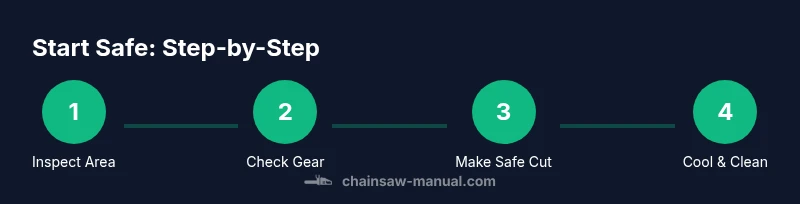
- 1
Inspect area and gear up
Survey the work zone for people, pets, loose branches, and obstacles. Clear the area, then put on full PPE and ensure the chain brake is engaged before handling the saw.
Tip: Walk the perimeter with a visual sweep to identify any hidden hazards. - 2
Check the chainsaw and PPE
Inspect chain tension, bar oil level, fuel, and the air filter. Confirm PPE is intact and properly worn before starting.
Tip: Do a quick, controlled hand-test of chain tension away from the running bar. - 3
Prepare bar and chain
With the chain brake on, snug the chain in the groove; do not overtighten. Check that the bar and chain rotate freely when the saw is off.
Tip: Avoid lubricating a dirty chain; clean grit from the bar groove first. - 4
Start the saw safely
Use the proper starting method per your model, keeping a stable stance and the bar pointed away from your body. Start with the chain brake on and cut only after the chain is running smoothly.
Tip: Never start indoors or in a crowded space. - 5
Make first cuts in controlled wood
Begin with small, shallow cuts in softwood to learn bite and balance. Feed the saw steadily; don’t rush into deep cuts or bindings.
Tip: If the wood binds, stop, disengage, and re-evaluate. - 6
Cool-down and cleanup
Shut off the saw, release the chain brake, and allow the chain to stop. Wipe down surfaces, inspect for wear, and securely store the tool.
Tip: Keep a log of maintenance and any abnormal findings.
FAQ
What is the best chainsaw type for beginners in the UK?
For beginners in the UK, a lightweight, low-kickback chainsaw is recommended. Electric or battery-powered units are easier to start and maintain, while petrol options offer more power for larger jobs.
A lightweight, low-kickback chainsaw is best for beginners in the UK, with electric models being easier to start.
Do I need training or a license to operate a chainsaw in the UK?
There is no general licence required for private chainsaw use in the UK, but formal training and a proper risk assessment are strongly advised, especially for work beyond basic domestic tasks.
No license is required for private use, but training and safety gear are essential.
What PPE is essential for chainsaw work?
Helmet with face shield, hearing protection, cut-resistant chainsaw chaps, gloves, and sturdy boots are essential for safe operation in most UK settings.
You should wear a helmet, face shield, hearing protection, cut-resistant pants, gloves, and sturdy boots.
How should I sharpen and maintain the chain?
Keep the chain sharp with proper sharpening tools and maintain correct tension. A dull chain increases kickback risk and reduces cutting efficiency.
Keep the chain sharp and properly tensioned for safe, effective cutting.
What should I do if the saw kicks back?
If kickback occurs, shift your stance, keep both hands on the saw, and reduce the feed rate. Stop and reassess the cut to avoid loss of control.
If kickback happens, maintain stance, stop, and reassess before continuing.
Are electric chainsaws safer for beginners?
Electric chainsaws are generally quieter and lighter, making them user-friendly for beginners. However, all chainsaws carry risk, so always use PPE and follow safe practices.
Electric models can be safer for starters, but treat all chainsaws with caution.
Watch Video
The Essentials
- Choose a beginner-friendly chainsaw with low kickback features.
- Wear full PPE and maintain a clean, organized work area.
- Follow a step-by-step start-up and cutting routine for safety.
- Regular maintenance prevents accidents and extends tool life.