Chainsaw Techniques for Beginners: Safe Cutting Guide
A practical, safety-first guide to chainsaw techniques for beginners. Learn PPE, stance, notching, limbing, and maintenance with step-by-step instructions and pro tips from Chainsaw Manual.


According to Chainsaw Manual, beginners can build safe, effective cutting skills by starting with fundamentals: PPE, grip, stance, and a simple three-cut routine. This quick guide outlines essential steps, how to plan a cut, avoid kickback, and progress from small branches to basic logs. You’ll learn a safe starting routine, tool checks, and when to pause for maintenance.
Why safety and technique matter for chainsaw techniques for beginners
In the world of chainsaw work, safety is not just a feature—it's the foundation of every cut. For beginners, building proper technique starts with a deliberate progression from personal protective equipment to the most basic cut. The Chainsaw Manual team emphasizes that safe practice reduces the risk of injury and accelerates learning. The core idea is simple: plan every cut, control the saw, and respect the wood. As you gain confidence, you’ll rely less on fear and more on mechanics, geometry, and timing. This approach aligns with industry best practices and the guidance provided by Chainsaw Manual analysis in 2026, which highlights iterative practice and strict PPE use as non-negotiables for beginners.
Beyond personal safety, proper technique minimizes damage to your material and to your equipment. Small, deliberate motions beat powerful but careless strokes. As you practice chainsaw techniques for beginners, focus on clean, controlled cuts, predictable outcomes, and routine maintenance cues that prevent surprises on the jobsite. Your goal is to develop muscle memory for grip, stance, and directional cutting, so you can react instinctively when conditions change.
note”:null},{
Tools & Materials
- PPE: helmet with face shield(ANSI-rated helmet with face shield, hearing protection included)
- Safety glasses or goggles(ANSI-rated eye protection)
- Hearing protection(NRR 20–30 dB or higher earmuffs/plugs)
- Cut-resistant chaps or pants(Chainsaw-grade PPE to protect legs)
- Sturdy boots(Steel-toe or composite-toe, ankle support, non-slip soles)
- Gloves(Work gloves with good grip and cut resistance)
- First-aid kit(Basic kit with wound care and eye irrigation)
- Fuel mix and bar oil(Two-stroke mix per saw manual, clean containers)
- Chain sharpening file/kit(For periodic edge maintenance)
- Screwdrivers/Scrench tool(Screwdriver and scrench for chain tension)
Steps
Estimated time: 60-90 minutes
- 1
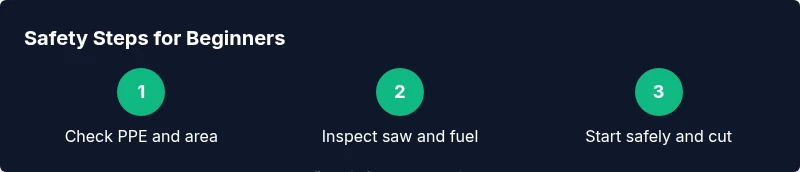
Prepare safety gear and workspace
Put on all PPE and inspect your work area for obstacles, tripping hazards, and bystanders. Clear the cutting path, move people away, and establish a safe retreat line behind you. This pre-cut check reduces surprises and sets a predictable work environment.
Tip: Do a quick PPE check before each session—loose gear is a common cause of injuries. - 2
Inspect the chainsaw and fuel
Check bar oil, fuel mix, chain tension, and chain sharpness. Ensure the chain brake works, the chain isn’t loose, and the chain is properly lubricated. A faulty setup leads to tugging, kickback, or accelerated wear.
Tip: If in doubt, resharpen or replace a dull chain before cutting. - 3
Start the saw safely
Engage the chain brake, place the saw on a stable surface, and start with a deliberate stance. Keep hands off the trigger until the bar is ready to move. A calm start reduces the chance of a sudden snap or kick.
Tip: Never start the saw with the engine in gear or in your hand. - 4
Adopt a solid stance and grip
Feet shoulder-width apart, with your body weight balanced and your rear foot slightly forward. Grip the saw firmly but not so tight that you tremble, and keep elbows relaxed to absorb vibration.
Tip: Keep the chain brake engaged until you intend to cut. - 5
Plan and execute a simple limb cut
Choose a small, dead limb. Make a light notch on the cutting side, then a back cut behind it. Keep the cut depth shallow and avoid twisting the bar.
Tip: Always plan a retreat path after the cut to avoid being trapped. - 6
Progress to notching and controlled cuts on a log
Move to a longer cut on a log. Use a two-cut approach: relief cut first to prevent pinch, then the main cut. Steer the bar by rotating your wrists and guiding with your whole torso, not just arms.
Tip: Never cut with the tip of the bar—use the middle portion of the blade. - 7
Shutdown, clean, and store
Let the saw cool, wipe off debris, and wipe the chain. Re-tension and inspect the chain, refuel if needed, and store in a safe location. A routine shutdown preserves performance and safety for your next session.
Tip: Document any issues observed during the cut for future maintenance.
FAQ
What PPE should I wear when using a chainsaw?
Always wear a helmet with face shield, hearing protection, cut-resistant pants, gloves, and sturdy boots. Eye protection is essential, and a first-aid kit should be nearby.
Always wear a helmet with face shield, hearing protection, cut-resistant pants, gloves, and sturdy boots. Eye protection is essential.
How can I prevent kickback while starting or cutting?
Keep the chain brake engaged until you’re ready to cut, avoid cutting with the tip, and maintain a stable stance. Never twist the bar while cutting.
Keep the chain brake on until you start cutting and avoid using the tip of the bar to prevent kickback.
What maintenance should I perform after each use?
Inspect chain tension, clean debris, check bar oil level, and lubricate as needed. Store properly to prevent rust and corrosion.
Check the chain tension and clean debris after use, then lubricate and store safely.
Can I use a chainsaw indoors?
Avoid enclosed spaces; use chainsaws outdoors or in well-ventilated areas to avoid carbon monoxide buildup and poor visibility.
No, don’t use a chainsaw indoors unless you have a dedicated, ventilated workspace.
How long does it take to learn basic cuts?
With regular practice of basic cuts and safety routines, you’ll gain familiarity over several weeks. Progress at a comfortable pace and always prioritize safety.
With consistent practice, you’ll pick up basic cuts in a few weeks while staying safe.
What should I do if the saw stalls or binds?
Stop the engine, release tension, and remove wood slowly. Do not yank the saw or force it free; reassess the position and plan a safer cut.
If the saw stalls, stop it and remove wood slowly; don’t yank it free.
The Essentials
- Wear full PPE and set a safe work area
- Master grip, stance, and stable start
- Plan each cut and maintain an escape route
- Keep chain sharp and properly oiled
- End sessions with clean-up and maintenance
- Practice progressively to build confidence