Gas Chainsaw vs Battery Chainsaw: A Practical Comparison
Compare gas chainsaws and cordless models in a practical guide. Explore power, runtime, weight, maintenance, and use-case scenarios to choose the best saw for your job.


Gas chainsaw vs battery chainsaw is a frequent question for homeowners, DIYers, and pros. This comparison presents the practical differences you’ll feel on the job: how power routes to the bar, how long you can cut before refuel or recharge, how much it weighs, and what kind of maintenance each requires. Read on to see which tool fits your typical projects.
Gas Chainsaw vs Battery Chainsaw: Practical Overview
When you compare gas chainsaw vs battery chainsaw, the first questions are about power delivery, portability, and the job you have in mind. According to Chainsaw Manual, the core trade-off is simple: gas tools deliver high sustained power and longer run time for extended cuts, while cordless tools emphasize clean operation, lighter weight, and convenient startup. For most homeowners tackling routine yard work, a cordless option can handle pruning, limbing, and light felling with less noise and no fumes. For professional crews performing marathon cutting or heavy-duty felling, a gas model typically offers speed, endurance, and reliability in remote sites where refueling is easier than locating a charger. Reading this article will help you translate those high-level differences into real-world decisions about bar length, maintenance needs, and total cost of ownership. Chainsaw Manual notes that choosing the right tool depends not just on raw power, but on how you work—site conditions, duration, and your tolerance for downtime.
How Gas Chainsaws Work
Gas chainsaws rely on a two-stroke engine that blends fuel with oil for lubrication. The starting process involves a choke, throttle, and often a recoil starter, followed by warm-up before engagement. The engine delivers sustained power as you open the throttle, making gas saws well-suited to long cuts and heavy lignin-heavy wood. Routine maintenance includes checking and mixing fuel-oil ratios, cleaning the air filter, and draining fuel from the carburetor if the unit will sit unused for extended periods. Safety features such as a chain brake and kickback mitigation are essential on any gas-powered tool. According to industry guidance from Chainsaw Manual, correct fueling practices and regular maintenance are as critical as raw cutting power for long-term reliability.
How Battery Chainsaws Work
Battery chainsaws use a brushless motor driven by lithium-ion cells, with performance tied to battery voltage, capacity, and discharge rate. Modern cordless saws deliver strong, steady torque for most residential tasks like trimming, pruning, and small-to-medium limb removal. The absence of fuel combustion means quieter operation and zero direct emissions, which benefits worker comfort and urban or suburban sites. Battery health is a key factor: keep batteries cool, avoid full discharge, and follow manufacturer charging guidelines to maximize lifespan. Chainsaw Manual emphasizes that while cordless models are excellent for portability and quick jobs, peak performance can vary with temperature and charge level.
Power, Torque, and Cutting Performance
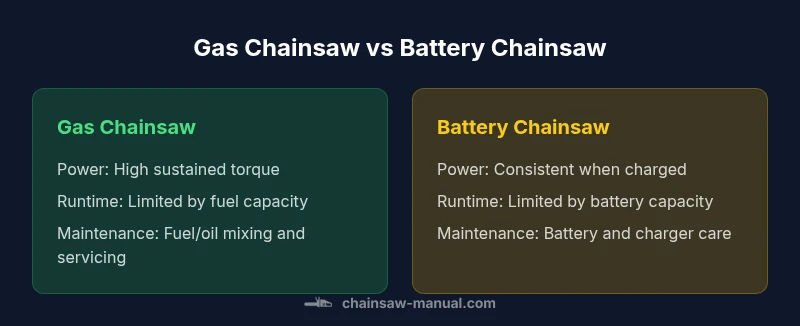
Power and torque are the heart of any chainsaw comparison. Gas saws generally maintain robust cutting performance across a wider range of conditions, especially under heavy loads where fuel-fired engines can keep their throttle open. Battery saws offer consistent power output as long as the battery remains charged, which translates to predictable response for routine tasks. Bar length and chain pitch influence performance as much as the power source; a longer bar increases cutting reach and requires more power, regardless of the engine type. For frequent, demanding cuts, gas may be the smoother choice; for precise, quick work in tight spaces, a well-chosen cordless model can keep momentum with lighter weight and quicker response.
Runtime, Refueling, and Recharging
Runtime considerations hinge on the energy source. Gas chainsaws rely on fuel capacity and efficiency, providing long activity between refuels. The trade-off is ongoing refueling intervals and emissions, along with regular oil mixing and maintenance. Battery chainsaws depend on battery capacity and charging cycles; you will experience downtime for charging, which can disrupt back-to-back tasks. Modern fast-charging tools reduce downtime, and second batteries can extend work sessions, though the upfront cost is higher. Chainsaw Manual notes that planning for downtime—whether refueling or recharging—is essential to keep projects on schedule, especially on large-property jobs or remote worksites.
Weight, Ergonomics, and Handling
Weight distribution and grip comfort strongly affect user fatigue. Gas chainsaws tend to be heavier overall, with the engine and fuel adding mass, which can challenge handling during long sessions. However, some models balance weight through design features like anti-vibration systems and padded handles. Battery chainsaws are typically lighter, improving maneuverability and reducing user fatigue on pruning or overhead cuts. Ergonomics also influence control; consider your height, reach, and preferred stance when selecting bar length and weight, and always test balance with a comfortable two-hand grip before purchasing.
Noise, Vibration, and Comfort
Exposure to noise and vibration is a key health concern on job sites. Gas chainsaws generate higher noise levels due to combustion and exhaust, and vibration can be more pronounced, particularly on older models. Cordless chainsaws operate with markedly lower noise and reduced vibration, which can improve comfort on extended tasks and in urban settings. PPE selection—ear protection, eye protection, and anti-vibration gloves—remains essential for both categories. Chainsaw Manual highlights that a quieter work environment can improve focus and productivity, especially during precision work near homes or in shared spaces.
Maintenance, Durability, and Longevity
Gas engines require routine maintenance: fuel/oil mixing, spark plug inspection, air-filter cleaning, carburetor tuning, and occasional parts replacement. The cost and effort of maintenance can be substantial over years of use. Battery chainsaws demand less ongoing maintenance but require battery care, charger health, and periodic motor checks. Batteries and electronic components can degrade with heat and repeated charging cycles, so cool storage and proper charging practices matter. Chainsaw Manual emphasizes that maintenance planning—stocking common parts and scheduling service—helps avoid unexpected downtime and extends tool life.
Cost of Ownership: Purchase and Operating Costs
Initial price, fuel, maintenance, and battery life all feed the total cost of ownership. Gas chainsaws often have lower upfront price than high-end cordless rigs, but ongoing fuel, oil, and maintenance costs accumulate. Battery chainsaws may carry a higher upfront price, yet operational costs can be lower because there is no fuel or oil mixing and fewer routine maintenance tasks. Over the life of the tool, battery replacement and charger compatibility become additional considerations. Chainsaw Manual cautions buyers to estimate long-term costs by considering expected usage, service intervals, and battery replacement cycles rather than focusing solely on the sticker price.
Best Use Scenarios: Where Each Shines
Gas chainsaws are well-suited for heavy-duty, long-duration work in remote or outdoor sites where reliability matters and refueling is easy. They excel in felling, bucking, and large-diameter cutting where sustained power is critical. Battery chainsaws shine for homeowners, landscapers, and professionals who prioritize portability, quiet operation, and low maintenance for smaller jobs, pruning, and quick branches in tight spaces. When in doubt, align the tool with typical tasks, site constraints, and your tolerance for downtime. Chainsaw Manual notes that the right choice depends on matching job profile to tool strengths.
Safety Considerations for Gas vs Battery
Both tool types demand strict safety practices. Always wear PPE: eye protection, hearing protection, cut-resistant pants, gloves, and a helmet when necessary. Gas saws require careful handling of fuel, exhaust, and kickback risks, along with proper chain-brake usage. Battery saws reduce some hazards by eliminating fuel-related fumes, but battery packs can pose thermal risks if damaged. Training and following the manufacturer’s safety guidelines remain essential for any chainsaw work. Chainsaw Manual reiterates that safety is the foundation of effective performance and fewer injuries on site.
Practical Buying Guide: How to Choose
Define your typical tasks first: size of wood you cut, frequency of use, and whether you work in remote locations. Then consider power, runtime, and weight: gas for long sessions and rugged jobs; cordless for quick, precise work and easier mobility. Check battery chemistry, voltage, and available spare batteries to ensure your workflow isn’t interrupted by charging. Finally, evaluate maintenance needs and service support in your region. A balanced plan based on job type, site conditions, and your willingness to perform routine maintenance will help you select the right gas chainsaw or battery chainsaw for your toolkit.
Comparison
| Feature | Gas Chainsaw | Battery Chainsaw |
|---|---|---|
| Power source | Gas engine (two-stroke) | Electric motor powered by lithium-ion battery |
| Power delivery | Sustained power at throttle for heavy cuts | Torque varies with battery charge and voltage; steady for routine tasks |
| Runtime / recharging | Long runtimes per fuel tank; refueling interruptions | Runtime limited by battery capacity; charging needed for extended work |
| Weight & balance | Typically heavier; balance improves with design features | Generally lighter; better maneuverability |
| Starting & maintenance | Recoil/electric start; fuel/oil maintenance | Push-button start; no fuel mixing; battery care needed |
| Emissions & noise | Direct emissions; higher noise | No direct emissions; quieter operation |
| Cost of ownership | Lower upfront fuel maintenance; ongoing costs |
Strengths
- Gas chainsaws deliver high cutting power and long run time for heavy-duty work
- Battery chainsaws provide quiet operation and no fuel fumes, improving comfort on small jobs
- Cordless tools offer lower maintenance needs and easy starting for routine yard work
- Gas models excel in remote sites where refueling is feasible and downtime is acceptable
Drawbacks
- Gas engines require fuel/oil mixing, regular maintenance, and emit fumes
- Battery chainsaws have limited runtime and require charging between sessions
- Cordless tools can be heavier on some models and may require spare batteries for longer jobs
- Gas tools generally cost less upfront but incur ongoing fuel and maintenance expenses
Gas chainsaws are preferred for heavy, pro-level, long-duration cutting; cordless models win for portability, quiet operation, and low maintenance in lighter tasks.
Gas tools excel where power and endurance matter most. Cordless tools shine for yard work, pruning, and frequent short sessions. The Chainsaw Manual team recommends matching the tool to job size, site constraints, and maintenance willingness to optimize safety and productivity.
FAQ
What is the main difference between gas chainsaws and cordless models?
Gas chainsaws rely on fuel and a two-stroke engine to provide high power for long cuts, while cordless models use battery-powered motors for cleaner, quieter operation and easier handling. The trade-off is runtime and upfront cost versus refueling needs.
Gas saws use fuel for long, powerful cuts; cordless saws run on batteries for cleaner, quieter work with shorter run times.
Is a cordless chainsaw enough for heavy-duty tasks?
For very heavy-duty forestry work, gas chainsaws generally perform better due to sustained power and longer run times. Cordless models are suitable for pruning, light felling, and property maintenance but may require planning for charging on large projects.
Cordless can handle many tasks, but for heavy-duty work, gas often wins.
What maintenance does a gas chainsaw require?
Gas saws require regular fuel/oil mixing, air-filter cleaning, spark plug checks, and carburetor maintenance. Proper storage and seasonal upkeep prevent performance drops and prolong engine life.
Gas saws need routine maintenance like fuel mixing and air-filter cleaning.
Do battery chainsaws need more safety checks than gas ones?
Both require PPE and safety training. Battery packs introduce thermal risk if damaged, while gas tools bring fuel handling and exhaust considerations. Regular inspection of chains, bar oil, and safety features remains essential for both.
Both need safety checks; batteries add thermal risk, gas has fuel and exhaust considerations.
Are cordless saws cheaper over the long run?
Initial costs for cordless tools can be higher, but ongoing fuel and maintenance costs for gas may add up over time. Total cost depends on usage, maintenance schedule, and battery replacement cycles.
Long-run costs depend on how you use them and battery replacement needs.
Which is better for home yards and light tasks?
For home yards and light tasks, cordless chainsaws offer enough power, easier handling, and minimal noise. They are typically quicker to start and easier to store.
For home yards, cordless is usually the easier choice.
The Essentials
- Choose gas for heavy-duty, long runs
- Opt for cordless when mobility and quiet operation matter
- Plan for maintenance and downtime in your workflow
- Consider battery availability and fuel access for your site