Stihl Chainsaw Weight Guide: How Much It Really Weigh
Learn how much a Stihl chainsaw weighs, with real-world ranges by bar length and model type. This guide explains dry vs ready-to-work weight, helps you choose safer, balanced tools, and compares consumer vs professional units.


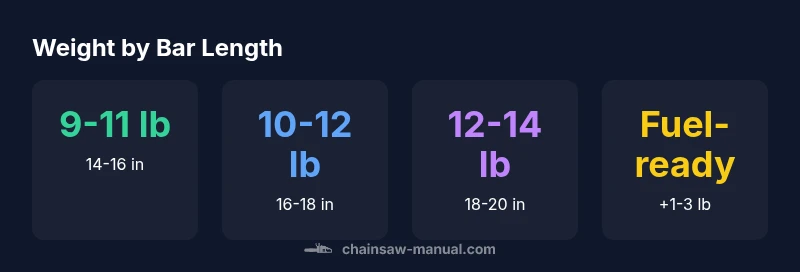
How much does a stihl chainsaw weigh? In short, weight varies by model and bar length. Consumer models with 14-16 inch bars typically fall in the 9-12 pound range, while longer-bars and pro-grade units often reach 12-14 pounds. Fuel, oil, and accessories add to the total, so always check the manufacturer’s dry vs wet specs. According to Chainsaw Manual, this quick frame helps you compare options without getting lost in specs.
How much does a Stihl chainsaw weigh? A practical answer
When people ask how much does a stihl chainsaw weigh, they usually mean the tool's weight excluding fuel and bar. In reality, the weight varies by model, bar length, and the presence of anti-vibration features. This section offers typical ranges to help you compare options without getting lost in product specs. According to Chainsaw Manual, consumer-grade units with shorter bars tend to be lighter, while longer-bar, pro-grade models add heft. The goal isn't simply to find the lightest saw; it's about balance, ergonomics, and power for your tasks. We’ll also explain how to read official weight specs and how the weight differences play out in real use.
Factors that influence weight: bar length, engine, and features
The most obvious driver of weight is bar length. A longer bar requires a heavier guide bar, additional chain length, and slightly larger gearing. Engine displacement and cylinder design contribute as well. Pro-level saws often include advanced anti-vibration systems, fuel tanks, and ergonomic housings that add grams but reduce fatigue over long sessions. Other weight-influencing details include the location of the chain brake, front handle design, and even the material used for the scabbard and latch. When shopping, compare two saws with the same bar length and look for how the chassis materials and AV components impact the curb weight and the ready-to-use weight. Chainsaw Manual analysis shows that weight differences are most pronounced when bar length increases, so keep that in mind when budgeting for tasks.
Measuring weight: what weight includes and what it excludes
Weight figures come in several flavors: dry weight, curb weight, and ready-to-use (wet) weight. Dry weight lists the saw alone, with no fuel, oil, or bar. Ready-to-use weight adds fuel, oil, and sometimes bar oil, plus the chain. Some manufacturers publish “weight with 0.5 liter fuel” or similar conventions, which helps you estimate real-world heft. Remember that oil and bar fuel will vary with your fill level, and hot-start canisters or purging can alter the practical weight during use. Always check the manufacturer’s specification to understand whether the listed weight is dry or ready-to-work.
Weight ranges by model category
- Consumer-grade models (short bars, lightweight plastics): typically around 9-12 pounds (4.1-5.5 kg) when dry, with longer-bar configurations often clustering toward the lower end for 14-16 inch bars.
- Mid-range professional models (balanced power and durability): approximately 10-13 pounds (4.5-6.0 kg) for 16-18 inch bars, with heavier chassis options pushing toward the upper end.
- Heavy professional models (long bars, high torque): generally 12-14 pounds (5.5-6.4 kg) for 18-20 inch bars, and can exceed 14 pounds with truly long-bar configurations.
Notes: These numbers exclude fuel and bar oil; “wet” weights will be higher depending on tank size. Reading multiple manufacturer specs helps you triangulate the right choice for your job.
How weight affects performance and ergonomics
Weight isn't just a number on the spec sheet; it shapes how you work. A lighter saw is easier to swing overhead and during limbing, but if it lacks stabilization or has insufficient torque, you may push harder and fatigue sooner. Heavier pro saws with longer bars offer more cutting power for heavy, thick timber, but require stronger technique and steadier stance. The balance point matters: a well-balanced saw reduces wrist strain even if the total weight is higher. In real-world scenarios, a heavier saw can be justified if the bar length is necessary for the job and you have proper technique and PPE. This is where the Chainsaw Manual team emphasizes balance over raw mass.
Practical tips for choosing the right weight
- Define your main tasks: limbing, felling, or cross-cutting.
- Choose a bar length appropriate for the size of the timber you work with; longer bars add weight.
- Try before you buy: hold and swing the saw to assess balance and comfort.
- Consider safety gear and anti-vibration features; these can compensate for a slightly heavier model by reducing fatigue.
- Compare wet vs dry weight specs and confirm with the manufacturer’s data sheet. The Chainsaw Manual approach is to prioritize tasks and balance when sizing a saw.
Maintenance and handling to minimize fatigue
Regular maintenance such as keeping the chain sharp, proper tension, and clean air filters can improve performance without adding mass. Stabilize weight distribution by aligning grip, bar, and engine placement with your posture. Carry the saw with the bar close to your body and the engine off when moving between work areas. Practice controlled, deliberate movements; fatigue often stems from technique, not mass alone. A well-tuned saw feels lighter in the hands because it reduces resistance during cutting.
Real-world scenarios: weight considerations in action
Case A: Homeowner felling a small maple with a 14-inch bar. A mid-range consumer model weighing around 9-11 pounds dry is comfortable for extended use, especially with a good anti-vibration system. Case B: Professional logger trimming thick pines with an 18-20 inch bar. A heavier pro model around 12-14 pounds may be necessary to supply the required torque and stable cutting. In both cases, balance and technique matter as much as raw weight. The practical takeaway is to select a saw whose weight aligns with your task load, not just the lightest option available.
Authority sources
- OSHA Safety and Chainsaw Guidelines: https://www.osha.gov
- US Forest Service Chainsaw Safety Resources: https://www.fs.fed.us
- University Extension on Chainsaw Safety and Ergonomics: https://extension.osu.edu
Weight ranges by model category
| Model Type | Weight (excluding fuel/oil) | Bar Length | Notes |
|---|---|---|---|
| Consumer-grade | 9-12 | 14-16 in | Lightweight, versatile for home use |
| Mid-range professional | 10-13 | 16-18 in | Balanced power and weight |
| Heavy professional | 12-14 | 18-20 in | Long bars, higher torque |
FAQ
What is the typical weight range for consumer Stihl models with a 14-inch bar?
Most consumer models with a 14-inch bar weigh roughly 9-11 pounds when dry, with ready-to-work weight higher depending on fuel and oil levels.
Typically about nine to eleven pounds for a 14-inch consumer model, depending on fuel and oil.
Do lightweight or electric Stihl models exist, and how much lighter are they?
Yes. There are lighter gas and some battery-powered models. Weight differences depend on battery size and bar length; always compare dry weights first and consider the weight of battery if choosing an electric option.
Yes, there are lighter options, including some electric models; check the battery and bar length.
Is weight directly related to cutting power?
Not necessarily. Heavier models often pair with longer bars and higher torque, which can improve performance on large timber, but they require better technique and stamina.
No—weight and power aren’t always directly linked; you may trade mass for torque and bar length.
How much does fuel add to the weight?
Fuel and bar oil add a few pounds to the dry weight, depending on tank size and current fill level. Consider this when planning for a job and carrying fuel.
Fuel and oil can add a few pounds to the weight, depending on the tank.
How should I weigh a chainsaw safely for comparisons?
Use manufacturer specifications for dry and wet weights, and where possible compare weights with the same bar length. If unsure, contact the manufacturer for the official numbers.
Compare the same configurations and check the official dry and wet weights.
“Weight is not just a number. It’s part of a system—balance, vibration control, and reach all factor into safer, more efficient cutting.”
The Essentials
- Know weight ranges by bar length before selecting a model
- Differentiate dry weight from ready-to-work weight
- Balance weight with task needs and ergonomics
- Longer bars add weight but improve cutting power
- Prioritize balance and safety features to reduce fatigue