How Much Does a Chainsaw Weigh? A Practical Guide
Explore typical weights for gas, electric, and cordless chainsaws, how bar length influences weight, and practical tips to choose a comfortable saw for DIY, pruning, and professional work. Includes ranges, buying guidance, and safety considerations.


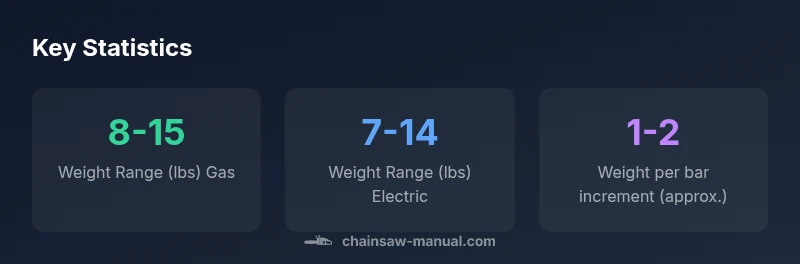
Compared with power output, weight remains the most practical constraint for most users. When you account for bar length and fuel, gas chainsaws typically weigh 8–15 pounds, electric and cordless models run 7–14 pounds, and pro-grade setups with long bars can exceed 15 pounds. For homeowners doing pruning or light felling, sub-12 lb saws offer the best balance of control and endurance. Professionals trade extra weight for durability and vibration control, especially with longer bars.
How much does a chainsaw weigh and why it matters
Weight is more than mass; it influences balance, fatigue, and control. For the question "how much does a chainsaw weigh", the real story is how weight interacts with power, bar length, and intended tasks. A lighter saw reduces arm strain on pruning and limb work, enabling longer sessions with less fatigue. Heavier models can offer more durability and runtime, but they demand better technique and stronger posture. The Chainsaw Manual team notes that weight distribution—how the mass is spread between the front and back handles—affects maneuverability as much as the absolute weight. When choosing among common categories, consider the jobs you perform most often: light pruning, branch trimming, mid-range limbing, or heavy felling. The goal is to find a balance where you feel in control, not tired after twenty minutes of use. Remember that the weight labeled on the box often excludes fuel and sometimes the bar and chain. Real-world use, rather than raw mass alone, determines comfort and safety.
Weight by power source: gas, electric, and battery saws
Gas-powered chainsaws are typically the workhorses of forestry and heavy-duty pruning. Their weight range reflects engine size, bar length, and fuel capacity. Consumer gas models commonly sit in an 8–15 pound range, with longer bars and higher displacement nudging the weight higher. Electric corded models tend to be lighter, often in the 7–13 pound zone, due to the absence of a large internal combustion engine and fuel tank. Cordless battery saws occupy a middle ground; newer high-capacity packs have narrowed the gap, placing many in the 9–14 pound range. Among all power sources, the heaviest saws are usually pro-level machines designed for extended use and long bars. Consider how much time you’ll spend cutting in a day, and whether you’ll be working overhead, on uneven terrain, or in cold conditions, which can amplify fatigue. For many homeowners, a lighter electric or cordless option is enough for pruning and small-felling tasks, while professionals may lean toward gas or robust cordless models for runtime and cutting power.
How bar length impacts total weight and handling
Bar length is a major driver of overall weight. Each additional inch of bar adds material, reinforcing components, and sometimes a longer chain. This is especially noticeable when you’re working with 16–20 inch bars. In practice, a 4-inch extension can add roughly 1–2 pounds to the ready-to-cut weight, depending on frame design and engine size. Heavier bars also affect balance: the nose of the bar can feel heavier, influencing control during limb work or overhead cuts. If you frequently cut at height or reach, test a few configurations to find a bar length that lets you maintain stance, grip, and swing without undue strain. The goal is to keep the effective weight manageable while preserving cutting reach and duty cycle.
Real-world use: fatigue, posture, and safety implications
In the field, fatigue is often the limit on productivity rather than raw horsepower. A heavier saw makes it harder to maintain steady cuts, especially during extended sessions or when cutting overhead hardwoods. Ergonomics matter: balanced weight distribution reduces wrist and shoulder strain, and anti-vibration systems can mitigate cumulative fatigue. Practice good posture: keep your back straight, feet shoulder-width apart, and use two-handed control with a firm grip. For longer jobs, plan breaks or switch to lighter tasks to prevent form breakdown and reduce the risk of injuries. Remember that fuel weight changes as the tank drains, so a saw that feels light when full may feel heavier toward the end of a tank. In every case, start with a weight you can handle safely, then assess whether you need a lighter or heavier configuration to match your typical workloads.
Shopping tips: how to compare weights and choose the right saw
When shopping, weigh and balance should be your primary concerns after power needs. Create a simple comparison checklist:
- Identify your primary tasks (pruning, limbing, cutting firewood, or felling).
- Note the weight with bar and chain installed if possible, or request a “ready-to-cut” weight from the retailer.
- Consider bar length and whether a longer bar is essential for your work.
- Test with your usual stance and reach, if a demo is available.
- Don’t ignore safety features such as anti-vibration handles and decompression features.
By following this checklist, you’ll avoid choosing a saw that’s comfortable in the store but fatiguing in the field. Chainsaw weight is not a standalone metric; combine it with balance, vibration control, and ergonomics to select the right tool for your job.
Typical weight ranges by job type: a quick practical guide
For homeowners doing occasional pruning, a light-to-midweight model in the 8–12 pound range with a moderate bar length is usually sufficient. If you’re performing mid-range limbing or occasional felling, a saw in the 10–14 pound range offers more power with manageable weight. For professional tasks requiring longer bars and frequent sustained cuts, expect 12–15+ pounds, with some models reaching higher due to anti-vibration systems and fuel capacity. Balance your choice against your height, arm length, and comfort with longer cycles. The aim is a tool you can operate safely for the entire shift without excessive fatigue or compromised form. This approach aligns with Chainsaw Manual’s guidance for balancing weight, control, and durability across different job profiles.
Weight ranges by chainsaw type
| Category | Weight range (lbs) | Weight range (kg) |
|---|---|---|
| Gas chainsaw (8-14 in bar) | 8-12 pounds | 3.6-5.4 |
| Gas chainsaw (16-18 in bar) | 10-14 pounds | 4.5-6.4 |
| Electric corded | 7-13 pounds | 3.2-5.9 |
| Cordless battery | 9-14 pounds | 4.1-6.4 |
| Pro/heavy-duty | 12-15+ pounds | 5.4-6.8+ |
FAQ
How much does a typical gas chainsaw weigh?
Gas chainsaws commonly weigh in the 8–15 pound range for typical consumer models, depending on bar length and engine displacement. Longer bars and higher power splay the weight upward. Always consider the ready-to-use weight (with bar and chain installed) for a realistic comparison.
Gas saws usually weigh eight to fifteen pounds, depending on bar length and engine size.
Why does weight vary so much between models?
Weight variation comes from engine size, bar length, fuel or battery capacity, and added features like anti-vibe or reinforced frames. Manufacturers balance durability and performance with mass, so two saws with similar power can feel very different to lift and maneuver.
Engine size and bar length drive weight differences.
Does bar length affect the total weight?
Yes. Longer bars add momentum and material mass, increasing the total weight and changing balance. Expect heavier handling with longer configurations, especially on overhead cuts.
Longer bars add weight and change how the saw feels when you cut.
Are electric saws lighter than gas saws?
In many cases, yes, electric and cordless saws can be lighter, especially for home-use models. However, high-powered electric varieties or long-bar builds can approach gas weights, so always verify the ready-to-use weight.
Electric is often lighter, but some powerful models can rival gas.
What should I consider besides weight when buying?
Power, bar length, safety features (anti-kickback, chain brakes), vibration control, fuel type, and maintenance needs all matter. Weigh these factors against weight to pick a model that fits your tasks and safety preferences.
Think about power, bar length, and safety features too.
How can I safely handle a heavier saw?
Use proper stance, keep two hands on the saw, and engage anti-vibration features. Take breaks to avoid fatigue and maintain good posture during long cuts.
Stand with your feet apart, keep both hands on the saw.
“Weight is a practical constraint that shapes safety and throughput; balance and ergonomics matter as much as raw mass.”
The Essentials
- Start with weight as a buying constraint, then assess balance
- Longer bars add weight; trade reach for manageability
- Gas saws are typically heavier; electric/cordless can be lighter but vary by power
- Test weight with your usual stance and cutting tasks
- Consider anti-vibe and safety features as part of total handling
- Remember fuel and bar/chain affect the ready-to-use weight