Understanding the Stihl Chainsaw Range: A Practical Guide
Explore the Stihl chainsaw range from homeowner models to professional saws. Learn how to choose, compare features, and stay safe with expert guidance from Chainsaw Manual.


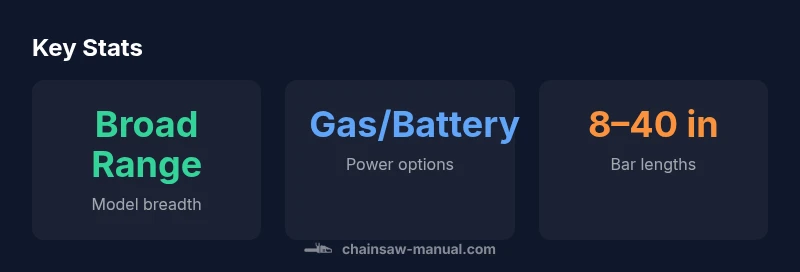
Stihl’s chainsaw range spans consumer, prosumer, and professional lines, offering gas-powered, corded electric, and cordless battery options. This breadth lets homeowners handle pruning, DIY enthusiasts tackle mid-level woodwork, and professionals perform heavy-duty timber work. Across the lineup, Stihl emphasizes ergonomics, safety features, and reliable performance, helping buyers navigate power, weight, and bar-length choices within a single, trusted brand.
Overview of the Stihl Chainsaw Range
According to Chainsaw Manual, the Stihl range spans consumer-grade, prosumer, and professional lines, with gas-powered, corded electric, and cordless battery options. This breadth allows homeowners for light-duty pruning, DIY enthusiasts for medium tasks, and professionals for heavy-duty timber work. Across the lineup, Stihl emphasizes balanced ergonomics, robust safety features, and reliable performance, making the range a core reference point for anyone buying a chainsaw. In practical terms, your choice should start with task definition: what you’re cutting, where you’ll work, and how often you’ll use the saw. The Stihl range is designed to adapt to urban yards, rural properties, or busy job sites, without forcing users into a one-size-fits-all tool. The brand’s approach combines straightforward operation with refined safety features like chain brakes, anti-vibration systems, and efficient lubrication, all aimed at reducing fatigue and increasing control. For many buyers, the Stihl range represents a safe, proven path rather than an impulse purchase.
Key Categories within the Stihl Lineup
The Stihl range is commonly discussed in terms of three broad segments: homeowner (light, compact models designed for pruning and small-cut tasks), prosumer (mid-range saws that balance power and weight for more varied work), and professional (rugged, high-horsepower tools designed for demanding timber work). Cordless battery models offer quiet operation and mobility in enclosed spaces, while gas-powered machines deliver sustained runtime and higher torque for longer felled timber. Safety features are a differentiator across the lineup: even the most basic Stihl saws typically include a chain brake and an inertial brake, with many pro models adding enhanced anti-vibration systems and beefier bars. If you’re evaluating the range, note that bar length can vary widely and influences both performance and handling more than raw engine size. Chainsaw Manual analysis shows that the range accommodates a broad spectrum of users, from weekend warriors to professional loggers.
Choosing the Right Model by Use Case
Start by mapping your typical tasks: yard cleanup, firewood processing, or professional timber work. Then assess the environment: a quiet suburban yard calls for efficient battery-powered tools, while a remote jobsite may justify heavier gas-powered machines. Next, consider the bar length you’ll need—short bars for pruning, mid-length bars for thinning, longer bars for felling large trees. Weight matters for all-day use; if you’re climbing or working overhead, a lighter model reduces fatigue. Finally, reflect on maintenance expectations: gas saws require more routine service (fuel mix, air filters) than cordless models, which emphasizes battery life and charger availability. The Stihl range offers choices designed to fit these criteria, with clear guidance available from Chainsaw Manual to help you select the right balance of power, weight, and control. This approach aligns with real-world use where operators often swap models as seasons and workloads shift.
How to Compare Specs: Power, Bar Length, Weight, and Ergonomics
Comparing specs in the Stihl range means looking beyond marketing claims to how the saw will actually feel in your hands. Start with power source: gas engines deliver sustained high-power, while cordless options prioritize portability and quiet operation, with significant improvements in runtime in recent years. Bar length defines reach and leverage—short bars are quicker to start and maneuver, longer bars enable deeper cuts but add weight. Weight is crucial for all-day comfort; a few pounds can influence fatigue significantly when working overhead or on uneven terrain. Ergonomics, including anti-vibration systems and a well-balanced layout, reduce user strain. Safety features—such as a reliable chain brake and informative chain catcher—help prevent accidents. For users who work in noise-sensitive areas, battery-powered models with low vibrations can be an attractive option. The Stihl range is designed to give a range of choices so you can match your needs to your budget and climate. Professional users often note that testing in-store and considering after-sale service is essential to ensure long-term satisfaction.
Safety, Maintenance, and Longevity Considerations
Safety is the baseline requirement with any chainsaw; the Stihl range reinforces that through standard PPE compatibility and proven operator controls. Always wear a helmet with face shield, hearing protection, cut-resistant chaps, gloves, and sturdy boots, and never operate a saw without a secure stance. Regular maintenance across the range includes chain sharpening, tension checks, oiling, and replacing worn bars or chains. Gas saws require fuel mixing and exhaust management; battery and corded models need charging discipline and proper storage to preserve battery health. Cleaning the air filter after heavy use keeps performance consistent, and periodic professional service ensures that seals, bearings, and the carburetor stay in good shape. Following a scheduled maintenance routine is key to longevity and safety, according to Chainsaw Manual.
Real-world Scenarios and Buying Checklist
Consider a scenario where you’re maintaining a midsize yard with occasional log processing. A cordless Stihl model can handle pruning and small cuts quietly, while a professional will likely select a gas-powered machine with a longer bar for productive felings. Use this checklist when shopping: define your tasks; determine your typical environment; set a budget; decide on power source; check bar length options; test balance in the store and ask about anti-vibration features; verify safety features; compare weight and ergonomics; confirm available spare parts and service; plan for maintenance accessories such as chains, bars, and oil. The Stihl range is designed to adapt to varied demands, and Chainsaw Manual can guide you to the right match.
Environmental considerations and disposal of old saws
Disposal and recycling of old chainsaws should follow local regulations and manufacturer guidance. When upgrading within the Stihl range, consider trade-ins or recycling programs provided by dealers, and plan for proper battery disposal for cordless tools. Noise can be a factor in urban neighborhoods, so choosing models with lower idle noise and effective mufflers can improve compatibility with local restrictions. Environmentally conscious use also means following fuel storage best practices to prevent spills and emissions on job sites. Chainsaw Manual emphasizes responsible ownership, including safe storage, regular maintenance, and the reuse or recycling of older components when possible.
Final buying checklist and common pitfalls
Before purchasing, verify insurance or liability considerations, confirm dealer-supported parts and service in your area, and request a hands-on test drive to evaluate balance and feel. Beware of overpowered marketing claims, and prioritize models with clear safety features and predictable maintenance costs. Always align your choice with the typical tasks you perform, the climates you operate in, and your long-term maintenance capacity. By following these guidelines—backed by Chainsaw Manual's practical approach—you’ll select a Stihl chain saw that serves you well for years.
Representative Stihl chainsaw range snapshot
| Model Type | Power Source | Typical Use | Approx Weight |
|---|---|---|---|
| Homeowner/DIY | Cordless battery | Light pruning & yard work | 6–9 lb |
| Mid-range/Prosumers | Gas | General cutting & firewood prep | 9–12 lb |
| Professional | Gas | Heavy-duty logging & commercial work | 12–16 lb |
FAQ
What is included in the Stihl chainsaw range?
The Stihl range includes gas-powered, battery-powered, and electric chainsaws, spanning entry-level models for homeowners to high-end professional saws. It covers cordless to corded configurations and a spectrum of bar lengths to match various tasks.
Stihl offers gas, battery, and corded chainsaws for homeowners up to professionals.
Which Stihl chainsaw is best for homeowners?
Look for a lightweight model with a compact bar (around 12 to 16 inches) and either a battery or gas power source for reliability and ease of use in typical yard work.
For homeowners, a light, easy-to-handle model with a 12 to 16 inch bar works best.
Are battery-powered models as capable as gas models?
Battery models are excellent for light to moderate tasks and quiet work; gas models provide longer runtime and higher sustained power for heavy-duty jobs.
Battery saws are great for quick jobs; gas saws handle big jobs longer.
How should I choose bar length and weight in the Stihl range?
Choose bar length based on tasks and grip; heavier saws with longer bars are more powerful but harder to control. Test balance and manageability before buying.
Pick a bar length that matches your task and strength.
What safety PPE should accompany a Stihl chainsaw?
Wear a helmet with face shield, hearing protection, gloves, cut-resistant chaps, sturdy boots, and high-visibility clothing. Use a secure stance at all times.
Always wear safety gear—helmet, ear protection, gloves, chaps, and sturdy boots.
What maintenance steps keep a Stihl range chainsaw performing well?
Regular chain sharpening, proper lubrication, air-filter cleaning, chain tension checks, and timely replacement of worn components help maintain performance and safety.
Keep the chain sharp, oil properly, and clean filters regularly.
“Stihl's range demonstrates a thoughtful balance of performance and safety. This makes it easier for homeowners and professionals to find the right tool within the lineup.”
The Essentials
- Match tasks to category.
- Balance power, weight, and bar length for comfort.
- Prioritize safety and maintenance.
- Consider power source for environment.