Gas vs Electric Chainsaw: A Comprehensive Comparison
Compare gas and electric chainsaws with guidance on performance, maintenance, noise, emissions, and safety to decide which option fits DIY and professional needs.


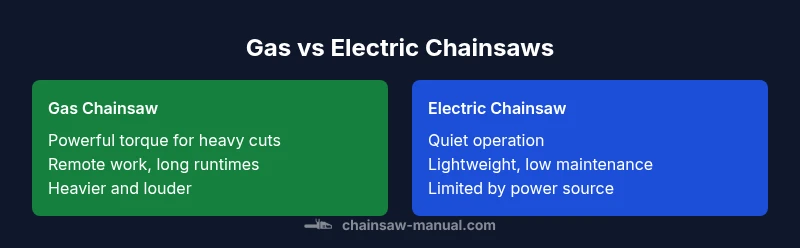
Gas vs electric chainsaws each have strengths. Gas models offer power, portability, and longer runtimes, but louder, heavier, and require more maintenance. Electric chainsaws are lighter, quieter, easier to start, and cheaper to operate, but need an electrical source or battery life limits. The best choice depends on job size, access, and safety priorities.
Why the Gas vs Electric Question Matters
For homeowners, DIYers, and professionals, choosing between a gas and an electric chainsaw isn't just about maximum cut speed—it's about work scope, environmental impact, and daily practicality. According to Chainsaw Manual, the decision often hinges on how large projects are, where you work, and how much maintenance you're prepared to handle. Gas chainsaws deliver raw power and portability for remote sites, thick hardwoods, and frequent felling. Electric chainsaws excel in domestic yards, pruning, and light-duty tasks where noise and emissions matter. In the real world, you’ll weigh fuel logistics, battery availability, and starting reliability against your typical workflow. If you work on a property with limited power access, a gas model may win; if your tasks are routine and near a power outlet, electric could be the smarter buy. The aim is to map your recurring tasks to the right tool to maximize safety and productivity.
Power and Performance: How They Differ
Power delivery matters with saws because it drives cutting speed and resilience under load. Gas chainsaws rely on a gasoline engine that can sustain peak power through demanding cuts, especially with hard woods or thick branches. Electric variants rely on an electric motor that delivers instant torque and steady RPM, which translates to predictable chain speed. In practice, gas models shine on large jobs and continuous work, while electric models excel in quick, precision cuts and long sessions around the home. For the reader of this guide, the key takeaway is that power is not just raw engine size; it’s how you apply it, the bar length you use, and the control you have during the cut.
Weight, Ergonomics, and User Fatigue
Weight distribution and ergonomics become a deciding factor when you’re on a ladder, trimming hedges, or felling a small tree. Gas chainsaws tend to be heavier due to the engine, fuel tank, and air intake system, which can increase fatigue during long sessions. Electric chainsaws are typically lighter and better balanced, reducing arm strain and enabling more precise control during vertical cuts. The practical implication is simple: for extended pruning or delicate work, the lighter electric option may reduce fatigue and improve accuracy; for large-diameter wood or chained cutting on uneven terrain, the heavier gas model can provide the leverage you need with a strong grip and steady posture.
Fuel, Emissions, and Environmental Considerations
Fuel logic is a critical factor for many buyers. Gas chainsaws burn gasoline, produce exhaust, and require periodic maintenance that includes refueling, oil mixing, and carburetor balancing. Electric chainsaws generate no direct emissions during operation, which makes them appealing for odor-sensitive environments and urban settings. However, the environmental impact of electric models is linked to grid energy, battery recycling, and manufacturing emissions. Chainsaw Manual analysis suggests that, overall, owners should consider both direct emissions and life-cycle costs when evaluating long-term environmental impact. If air quality and noise are top concerns, electric models often come out ahead, especially for backyard projects and quiet neighborhoods.
Maintenance and Reliability
Maintenance is a major factor in total ownership experience. Gas engines require routine service: spark plugs, air filters, fuel mix, carburetor tuning, and chain lubrication. Reliability hinges on proper storage discipline and fuel quality. Electric saws have fewer moving parts and less routine maintenance, but batteries, chargers, and electronic components can still wear out. Battery life declines with age and use, and improper charging can shorten lifespan. In both cases, choosing reputable components, following the manual, and performing regular lubrication and chain tension checks improves reliability.
Start-up, Operation, and Runtime
Starting a gas chainsaw usually involves a pull start and choke settings, which can be cumbersome after a period of inactivity or in cold weather. Electric models start with a button or trigger and typically provide immediate torque, which reduces start-up friction and allows for rapid work bursts. Runtime is another critical variable: gas models run as long as you have fuel, but you must refill and mix oil; cordless electric models depend on battery capacity, which can limit long sessions away from power sources. If you anticipate long, continuous work in remote locations, gas may be preferable; for quick, intermittent cuts, electric offers speed and convenience.
Noise, Vibration, and PPE Considerations
Noise and vibration are frequently cited concerns. Gas chainsaws are notably louder and generate higher vibration levels, which elevates the need for hearing protection and anti-vibration gloves. Electric models are quieter and produce less vibration, which can improve comfort during extended use. Regardless of choice, PPE such as ear protection, eye protection, gloves, and a helmet shield are essential. Understanding vibration indices and choosing models with anti-vibration handles can reduce fatigue and improve precision in challenging cuts.
Cost of Ownership: Upfront and Ongoing Costs
Upfront costs vary by model and power source. Gas chainsaws often carry a higher initial cost due to engine components and durability, while electric saws may be cheaper to purchase but require battery and charger investments for cordless options. Ongoing costs include fuel and oil for gas models and electricity or battery replacements for electric models. In practical terms, homeowners with occasional needs may find electric models cheaper over time, especially if they already have a power source; professionals with heavy daily use may justify the long-term benefits of gas performance.
Work Scenarios: When Each Shines
Different tasks demand different tools. For heavy, remote work—especially felling or processing thick logs—a gas chainsaw delivers sustained power, robust torque, and shorter refueling downtime once you’re away from outlets. For light-to-mid tasks such as trimming, pruning, and yard cleanup around homes or in urban settings, an electric chainsaw provides enough cutting power with quiet operation and minimal maintenance. The practical decision is context-driven: evaluate your typical projects, accessibility to power, and comfort with maintenance when choosing between gas and electric.
Safety Considerations and Best Practices
Safety remains paramount regardless of power source. Always inspect the chain, bar, and chain brake before use; maintain proper stance and footing; and ensure you are wearing PPE. Gas engines demand extra caution with fuel storage and ventilation, whereas electric models require awareness of battery charging safety and cord management for corded versions. Establish a routine: perform pre-cut safety checks, keep a clear work area, and never cut above shoulder height without a secure stance. Chainsaw safety is about consistent habits as much as tool choice.
Buying Guide: What to Look For
When shopping, prioritize bar length, chain pitch, and chain brake design to match your typical wood size. For gas models, consider engine displacement, maintenance requirements, fuel availability, and starting reliability. For electric models, examine motor power, battery voltage, charging time, and run-time estimates. Look for features like anti-vibration systems, tool-less chain tensioning, automatic oiler, and ergonomic handles. Reading user reviews and consulting the buying guide can help you identify models with strong after-sales support and spare parts availability.
Quick-start Tips and Practical Hacks
Begin with a safety check and chain tension adjustment before every use. For gas saws, keep your fuel fresh and follow proper mixing ratios; for electric, keep batteries charged but avoid extreme temperatures. Invest in a good chain file or a sharpener to maintain cutting efficiency, and practice safe cutting techniques on branches at waist height first. Finally, store tools in a cool, dry place to extend life, and schedule regular maintenance reminders to stay productive and safe.
Comparison
| Feature | Gas chainsaw | Electric chainsaw |
|---|---|---|
| Power source | Gasoline engine | Corded or battery-powered electric motor |
| Run time / runtime | Unlimited by fuel supply (with refuel), long sessions remote | Limited by cord length or battery capacity |
| Weight and balance | Heavier with fuel and engine components | Lighter and better balanced |
| Noise and vibration | Loud with higher vibration | Quieter with lower vibration |
| Emissions | Produces direct exhaust emissions | No direct emissions during use |
| Maintenance | Regular maintenance (spark plug, carburetor, fuel system) | Fewer moving parts; battery and electronics care |
| Initial price range | Typically higher upfront cost | Often lower upfront cost, plus battery/charger options |
| Best for | Heavy-duty, remote work, continuous runtime | Light-to-mid tasks, urban or small properties |
Strengths
- High cutting power and portability on gas models
- No cord or range limit for gas models
- Electric models are lighter and quieter
- Lower ongoing fuel costs for electric models
- Fewer maintenance points for electric
Drawbacks
- Gas engines require regular maintenance and fueling
- Gas emits fumes and is louder
- Electric requires access to power or battery management
- Corded models limit reach; cordless require battery planning
Gas is best for heavy, remote work; electric wins for small to mid tasks with quiet operation
Choose gas if you need sustained power away from outlets. Choose electric if you prioritize low noise, low maintenance, and shorter, frequent tasks. The right choice depends on your typical workload and access to power.
FAQ
What is the main difference between gas and electric chainsaws?
Gas chainsaws rely on a gasoline engine for power and are suited to heavy-duty, remote work. Electric chainsaws use a motor powered by electricity or a battery, offering lighter weight and quiet operation for small to mid tasks. Your choice should align with work scale and accessibility to power.
Gas models are better for big jobs and remote work, while electric models suit lighter tasks with quiet operation. Choose based on your typical projects and power access.
Are electric chainsaws powerful enough for heavy felling?
Electric chainsaws can handle many heavy-duty tasks, but they may lag behind high-capacity gas models for very large trees or continuous heavy cutting. For most homeowners and mid-sized professional work, a well-rated electric model paired with the right bar length is sufficient.
Electric saws work well for most home tasks; for very large trees, gas might be more reliable.
Do electric chainsaws require more maintenance due to batteries?
Electric chainsaws involve battery or cord management, and batteries need proper care and occasional replacement. Other components—chain, bar, and oiler—still require routine maintenance, but overall service needs are typically lower than gas models.
Battery care matters, but overall maintenance is often simpler than with gas.
Can gas chainsaws be used indoors or in enclosed spaces?
Gas chainsaws should not be used in enclosed spaces due to carbon monoxide and fumes. They require outdoor ventilation or well-ventilated areas, and always follow manufacturer guidance and local safety codes.
No, gas chainsaws aren’t suitable for indoors due to exhaust fumes.
What should I consider about battery life for cordless models?
Battery life depends on voltage, capacity, bar length, and cutting load. For larger properties, look for higher voltage batteries and swap options. Plan for spare batteries if you need longer sessions away from charging.
Higher voltage and extra batteries help reduce downtime.
Is starting a gas chainsaw difficult in cold weather?
Cold-weather starting can be more challenging due to fuel mixture and engine temperature. Use proper choke positions, warm the saw if possible, and perform regular maintenance so the carburetor and fuel system respond reliably in winter.
Cold starts may need extra warm-up and correct fuel mix.
The Essentials
- Assess your usual task profile before buying
- Gas offers raw power and runtime; electric emphasizes ease and quiet
- Consider access to power and maintenance capacity
- Factor total cost of ownership beyond sticker price
- Prioritize safety features and proper PPE for any choice