Electric versus Gas Chainsaw: A Practical 2026 Comparison
A data-driven, objective comparison of electric vs gas chainsaws, covering power, runtime, maintenance, safety, and cost to help homeowners, DIYers, and pros choose the right tool.


Electric versus gas chainsaws each have a distinct niche. For homeowners and DIYers, electric models offer lighter weight, quieter operation, and minimal maintenance, while gas chainsaws provide unbounded runtime and raw cutting power for heavy-duty tasks. The right choice depends on job size, access to electricity, and safety preferences. This quick comparison helps you decide quickly.
Power sources and performance differences
Choosing between an electric versus gas chainsaw starts with how power is delivered and how that power translates into cutting performance. The phrase electric versus gas chainsaw captures the core trade-off: electric units draw power from a wall outlet or a battery, delivering clean, steady torque with predictable starts; gas units rely on a two-stroke engine that can surge with heavier cuts and maintain peak speed under load. Corded electric saws often weigh less and require no fuel mixing, but they tether you to an outlet or extension cord. Cordless models trade runtime for mobility, with performance that approaches light- to medium-duty tasks when the battery is sized for the job. Gas engines shine when you need raw, continuous power for large-diameter logs, remote sites, or prolonged cutting sessions. The decision hinges on access to electricity, typical wood size, and how much you value portability versus low-maintenance operation. The Chainsaw Manual team emphasizes that choosing the right tool starts with clearly defining your typical projects and job site constraints.
Runtime, battery life, and fuel considerations
Runtime is often the make-or-break factor when weighing electric versus gas chainsaws. Corded electric models run as long as you have power, making them excellent for long sessions near a outlet, but extension cord management can slow progress. Cordless electric saws rely on battery capacity; a larger amp-hour rating translates into more cuts before recharging, but heavier packs add to weight. Gas chainsaws offer the advantage of continuous runtime, limited only by fuel tank size and operator stamina. However, you must plan for refueling, mix ratios for two-stroke engines, and occasional maintenance like spark plug changes. From a practical standpoint, consider the type of tasks you perform: occasional firewood, trimming, or storm cleanup may align well with electric tools, while heavy felling or large-diameter carving favors gas power. The goal is to match run time to the job, then factor recharging or refueling time into your workflow.
Emissions, noise, and environmental impact
Electric chainsaws produce zero exhaust and generally lower noise. Corded models tend to be quiet enough for residential backyards, and cordless designs keep emissions near zero at the point of use. Gas chainsaws emit fumes and generate significantly more noise, especially under heavy load. If you work close to neighbors, in concealed spaces, or in urban settings, electric options reduce disturbance and avoid fuel odors. Beyond comfort, reduced emissions can matter for small landscapes with frequent cutting sessions. Chainsaw Manual’s perspective emphasizes evaluating local requirements, homeowner association rules, and personal sensitivity to fumes when making a choice.
Maintenance and reliability: gas vs electric
Low-maintenance operation is a hallmark of electric chainsaws. Regular tasks include keeping the chain sharp, ensuring adequate bar oil, and storing the tool with a charged battery (if cordless). Corded models depend on standard electrical reliability, with fewer moving parts and no fuel system. In contrast, gas chainsaws require more routine care: fuel mixing, carburetor adjustments, air filter cleaning, spark plug replacement, and more frequent bar-and-chain maintenance due to higher running speeds and dirt exposure. Reliability can vary with climate, maintenance discipline, and frequency of use. Chainsaw Manual notes that while gas engines provide consistent power for heavy-duty work, the ongoing upkeep can add to total ownership costs and downtime.
Safety implications of each type
Both types require PPE, proper training, and safe handling, but the safety profile differs. Electric models have instant start capability and typically lighter weight, reducing fatigue and the chance of losing control during gentle cuts. Gas units may produce more kickback under high torque and can be heavier, potentially increasing fatigue and risk if technique is poor. Chain brakes, anti-kickback features, and user education play critical roles for both. Regardless of type, never operate a saw without protective gear, keep bystanders clear, and follow manufacturer guidelines for maintenance and safe storage. The Chainsaw Manual team stresses training and deliberate practice for new users.
Practical use cases: when each shines
For light-to-medium tasks such as trimming, pruning, and routine firewood, electric chainsaws outperform gas in terms of noise, upkeep, and ease of use. Cordless variants deliver mobility for jobs without immediate power access, while corded options suit shop work and long sessions near a power source. Gas chainsaws excel when you tackle large-diameter wood, storm cleanup, or remote sites without reliable electricity. In commercial settings, mixed-tool fleets often rely on both electric and gas tools to handle different tasks efficiently. The choice should reflect the typical wood size, site accessibility, and whether you value ongoing fuel management versus plug-in reliability.
Cost of ownership: upfront vs long-term
Upfront costs for electric chainsaws are often lower for basic models, and total operating costs tend to be lower due to minimal maintenance and no fuel. Corded options avoid battery cost entirely but require careful cord management. Cordless tools carry a higher initial price because of batteries, but operating costs can be competitive if you perform many small jobs. Gas chainsaws generally have higher upfront costs and ongoing fuel and maintenance expenses, but they deliver exceptional runtime for continuous, heavy-duty work. When evaluating cost, include purchase price, battery replacement cycles, fuel, oil, repairs, and the time spent on maintenance.
Cutting efficiency and wood types
Cutting efficiency depends on power-to-weight ratio and RPM stability. Electric saws excel with rapid, clean cuts in softwood and small-diameter material, while gas engines provide sustained torque for hardwoods and larger diameters. The type of wood—pine, oak, cedar, or maple—affects sharpening frequency and available cutting speed. For abrasive species, gas engines may maintain power longer, but electric tools can be more than adequate when matched with the right bar length and chain pitch. Consider your common wood species and whether you prioritize daily throughput over peak power.
Handling and ergonomics
Ergonomics matter for fatigue and control. Electric chainsaws are typically lighter and better balanced, especially cordless models, which reduces shoulder and arm strain during extended use. Gas saws often have longer handles and heavier bars, which can improve leverage for big cuts but increase fatigue on long days. When choosing, test balance, vibration levels, anti-vibration features, and overall grip comfort. Real-world testing—holding the saw for a few minutes in typical postures—helps determine what feels sustainable on the job site.
Accessories and maintenance intervals
Both saw types benefit from sharp chains, clean bar oil, and appropriate storage. Electric options, particularly cordless, require battery care and storage in cool, dry conditions. Gas models demand regular fuel stabilization, air filter cleaning, carburetor checks, and spark plug replacement. Keep spare chains, bars, and sharpening tools on hand, and establish a routine for lubrication and chain tension. Documentation from Chainsaw Manual recommends recording maintenance intervals to prevent unexpected downtime and to extend tool life.
Choosing between corded, cordless, and gas
Your decision should start with work conditions: access to power, typical wood size, required run time, and acceptable weight. Corded electric is best for near-outlet tasks with minimal mobility needs. Cordless electric trades some run time for mobility and is ideal for yard work away from outlets but within a battery’s life. Gas is the pick for heavy-duty, long sessions, and remote sites where power is unavailable. In some cases, a hybrid approach—using electric for light tasks and gas for heavy cuts—delivers the best balance of efficiency and flexibility.
Quick-start tips for beginners
If you’re new to chainsaw work, start with a small electric model for pruning and small logs. Practice safe cutting techniques, chain sharpening basics, and proper maintenance habits before moving to heavier work. Always wear PPE and consult the owner’s manual for each model’s safety features and recommended fuel or charging practices. If in doubt, rent a model to learn before committing to a purchase.
Feature Comparison
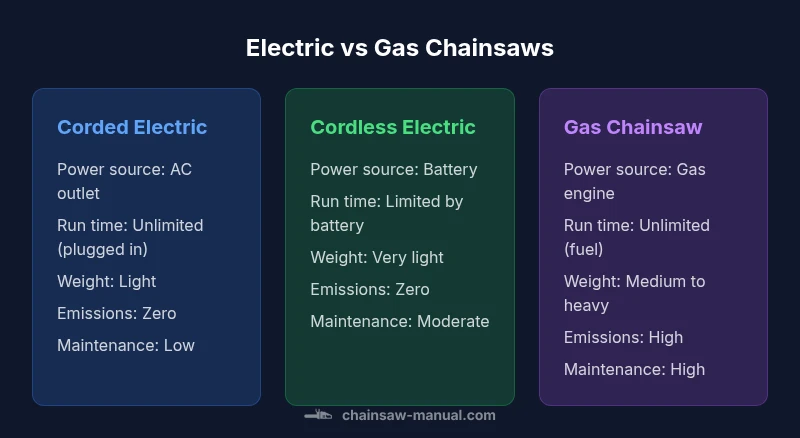
| Feature | Corded electric chainsaw | Cordless electric chainsaw | Gas chainsaw |
|---|---|---|---|
| Power source | AC power | Battery-powered | Gasoline engine |
| Run time | Unlimited when plugged in | Limited by battery | Unlimited until fuel exhausted |
| Weight (approx.) | Light to mid-weight | Very light to mid-weight depending on battery | Medium to heavy |
| Emissions/noise | Zero emissions; low noise | Zero emissions (quiet) | High emissions; loud under load |
| Maintenance | Low maintenance | Moderate maintenance (battery care, chain) | High maintenance (fuel, carburetor, spark plug) |
| Best for | Light-duty home tasks | Versatile for mobile use | Heavy-duty, remote-site work |
| Price range | Low to mid | Mid to high (batteries add cost) | Mid to high (fuel, parts) |
Strengths
- Lower noise and maintenance make electric models ideal for residential use
- Gas models deliver higher torque and longer run times for heavy-duty work
- Cordless options offer mobility without power outlets
- Electric tools are easier to store and start with less fatigue
Drawbacks
- Electric tools require access to power or battery recharges
- Gas models require more maintenance, fuel handling, and generate emissions
- Corded electric limits range due to cord length and extension management
- Cordless batteries add upfront cost and weight with charging times
Gas chainsaws excel in heavy-duty, remote-site work; electric chainsaws dominate for light-to-medium tasks and daily home use.
For small yards and tasks close to power, electric is the clear winner. For large, ongoing construction or remote sites, gas offers sustained power and independence from outlets. A mixed fleet often provides the best balance.
FAQ
What are the main differences between electric and gas chainsaws?
Electric chainsaws are lighter, quieter, and require minimal maintenance, with power supplied by electricity or a battery. Gas chainsaws deliver peak power for heavy-duty tasks and unlimited runtime at the cost of higher maintenance and emissions.
Electric saws are lighter and easier to use; gas saws handle heavy cuts without worrying about battery life.
Is a cordless chainsaw strong enough for heavy-duty cutting?
Cordless chainsaws can handle many medium-to-large tasks when equipped with a high-capacity battery and appropriate bar length, but for very large logs or continuous heavy use, gas may still be preferred.
Cordless works for many jobs, but gas is better for big, ongoing cuts.
Can I convert a gas chainsaw to electric?
Converting a gas chainsaw to electric is not practical; it would require replacing the engine with an electric motor and controller, effectively creating a different tool. A purpose-built electric model is usually the better choice.
Converting isn’t practical; you’re better off getting an electric model designed for that purpose.
Are electric chainsaws safer than gas chainsaws?
Electric chainsaws typically have simpler starts and lighter weight, which can reduce initial kickback risk and fatigue. Gas models may pose higher kickback potential and require more handling care due to weight and fuel.
Electric saws are generally safer to start and lighter, but proper technique matters for both.
What maintenance does each type require?
Electric chainsaws require chain sharpening, bar oil, and battery care for cordless models. Gas chainsaws require fuel management, air filters, spark plugs, and regular carburetor maintenance.
Electric needs less upkeep overall; gas needs more ongoing engine maintenance.
How should I decide between corded, cordless, and gas for my home yard?
Consider yard size, power access, and how often you cut. For near-power-outlet tasks, corded is simplest. For mobility, cordless is best. For heavy, frequent cutting, gas is often worth the extra effort.
Think about your yard, access to power, and how heavy the work is.
The Essentials
- Assess your typical wood size and job-site constraints.
- Prioritize power availability and battery life for cordless options.
- Gas shines in heavy-duty, remote tasks; electric shines in quiet, low-maintenance work.
- Factor maintenance, emissions, and noise into total ownership.
- Consider renting a model to test before buying.