Difference Between Chainsaw and Hedge Trimmer: A Practical Guide
Explore the difference between chainsaw and hedge trimmer, covering uses, safety, maintenance, and buying guidance. An analytical comparison to help homeowners, DIYers, and pros decide which tool fits each yard task.


The difference between a chainsaw and a hedge trimmer hinges on purpose, power, and safety. Chainsaws are built to cut heavy timber, branches, and large logs, while hedge trimmers are optimized for shaping and trimming ornamental shrubs. According to Chainsaw Manual, selecting the right tool starts with the task, hazards, and maintenance needs. The Chainsaw Manual team found that aligning tool choice with the job minimizes fatigue and reduces risk, especially for DIYers and professionals.
Core Distinctions: Power, Purpose, and Design
The difference between chainsaw and hedge trimmer becomes apparent when you map out their fundamental roles in yard work. At a high level, these tools are optimized for different materials, loads, and safety profiles. The difference between chainsaw and hedge trimmer is not merely blade shape; it is about how power is delivered, what hardware accompanies the cutting edge, and how the tool interacts with the operator.
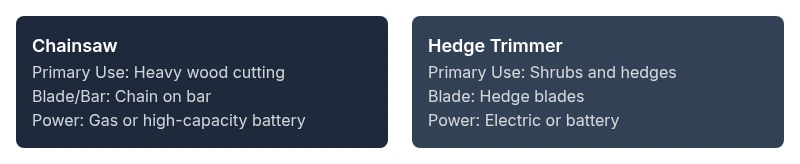
Chainsaws are engineered to remove large amounts of wood quickly. They couple high torque with a robust cutting bar and a chain that slices through logs, branches, and trees with relative ease. They can perform heavy cuts, bucking, limbing, and even some demolition tasks when used correctly. Hedge trimmers, by contrast, are designed for light, repetitive cuts on living growth. Their blades are narrow and paired for precision, delivering clean lines on hedges, shrubs, and ornamental plantings. The difference between chainsaw and hedge trimmer thus boils down to task scope, cut thickness, and control demands. As Chainsaw Manual notes in our evaluation of tool roles, choosing the right instrument reduces fatigue, minimizes kickback risk, and improves outcomes on professional and DIY projects alike.
Design and Ergonomics
Ergonomics play a pivotal role in how effectively you can use either tool. A chainsaw typically concentrates weight around the bar and engine, which can tax the upper body on longer cuts. Good designs distribute weight with handles placed for a natural stance, but users still need to brace against kickback risks. Hedge trimmers emphasize lighter construction and compact form factors, which translates to longer comfortable operation for hedge shaping and pruning. When considering the difference between chainsaw and hedge trimmer, ergonomics also involves vibration isolation, grip texture, and balance. For many operators, a separate carrying harness or adjustable shoulder strap for the chainsaw reduces fatigue on extended sessions, while a hedge trimmer benefits from a well-balanced, low-vibration handle that minimizes joint strain during precise trimming.
In the field, fit and feel matter as much as technical specs. You should evaluate how each tool feels when performing typical tasks in your yard, taking into account your height, arm length, and any preexisting shoulder or back issues. The Chainsaw Manual team emphasizes trying before buying when possible, and prioritizing models with anti-vibration features and intuitive throttle control to maintain steady cuts over time.
Cutting Mechanism and Blade Configuration
Understanding the cutting mechanism reveals the core of the difference between chainsaw and hedge trimmer. A chainsaw uses a rotating chain mounted on a long bar to slice through wood, producing aggressive kerf and deep cuts. A hedge trimmer relies on stationary or reciprocating blades designed for razor-thin, precise cuts in living plant material. The blade geometry directly informs how you approach a job: you can expect rapid material removal with a chainsaw and delicate shaping with a hedge trimmer. Maintenance differs accordingly: chains require chain oil, tension checks, and occasional bar replacement, while hedge trimmers need blade sharpening, alignment checks, and lubrication to prevent rust on the cutting edges.
From a safety standpoint, the difference between chainsaw and hedge trimmer also involves kickback risk and protective guarding. The chain saw can experience kickback when biting into a dense log or knot, whereas hedge trimmers generally pose less kickback risk but can cause nicks or lacerations if misused. Proper stance, secure footing, and PPE mitigate these risks across both tools.
Primary Uses and Job Scenarios
Resolving the difference between chainsaw and hedge trimmer comes down to real-world tasks. Chainsaws excel at felling small trees, bucking logs, and removing thick branches that a hedge trimmer cannot handle. They are indispensable on larger properties with mixed terrain and wood accumulation. Hedge trimmers shine in landscape maintenance: shaping formal hedges, trimming ornamental shrubs, and keeping lawn edges tidy. In a typical yard, homeowners benefit from both tools, using the chainsaw for dominant wood removal and the hedge trimmer for sculpting and maintenance.
When deciding which tool to bring to a task, consider the branch thickness, material hardness, proximity to structures or people, and the required precision. A dense branch may require a chainsaw, while a neatly clipped hedge calls for a hedge trimmer. Chainsaw Manual’s guidance suggests planning the sequence of work to minimize tool switching and maximize safety.
Safety Considerations and PPE
Safety planning is essential for both tools, but the risk profiles differ. For chainsaws, mandatory PPE includes a helmet with face shield, cut-resistant chaps, gloves, hearing protection, and steel-toed boots. Kickback zones around the bar tip demand careful cutting angles and proper stance. Hedge trimmers also require eye protection, gloves, and hearing protection, but the exposure is typically less severe. Safe operation hinges on maintaining firm footing, clear work areas, and secure cutting positions. Never operate either tool with loose clothing or in wet conditions where grip and control may deteriorate. The key to safety in the difference between chainsaw and hedge trimmer is task-appropriate PPE and adherence to manufacturer guidelines.
Training and practice are valuable. If you’re new to either tool, start with small, controlled cuts and gradually increase complexity as your familiarity grows. Always perform a pre-use inspection: check the chain tension, bar oil level, blade alignment, and battery charge or fuel mix.
Maintenance and Longevity
Maintenance is central to long-term performance for both tools, though the specifics differ. Chainsaws require bar oil, chain tension adjustments, periodic chain sharpening, and careful handling of fuel mixtures or battery management. Regular inspection of the drive sprocket, air filter, and spark plug (for gas models) extends life and reduces downtime. Hedge trimmers need blade sharpening, blade alignment, and lubrication to prevent rust and ensure clean cuts. For both tools, keeping a clean air intake and proper storage conditions protects mechanisms from dust and moisture.
A disciplined maintenance routine helps preserve power, accuracy, and safety. If you plan to use either tool seasonally, a simple after-use wipe-down, blade protection, and proper storage reduce corrosion and wear. Chainsaw Manual recommends scheduling a routine servicing interval based on hours of operation and the material you typically cut. Keeping a small toolkit with sharpening files, blade guards, and spare parts ensures you’re ready for the next project.
Fuel, Power, and Emissions
Gas-powered models deliver raw power for heavy wood tasks, but they require fuel mixes, oil, and regular maintenance. Electric and cordless options offer cleaner operation, quieter runs, and easier start-up, though they may trade some sustained cutting capability for portability. The difference between chainsaw and hedge trimmer is further amplified by power source selection: gas chainsaws excel in remote work sites with unstable power access, while electric hedge trimmers suit urban yards with limited air emissions concerns. Battery technology has improved, but you’ll still weigh run-time against weight and charging time. When evaluating power sources, consider your typical project scale, local noise regulations, and maintenance preferences.
Always follow the manufacturer’s fuel-governing recommendations and use the correct bar oil or lubricant for your model. The choice of power source affects not only performance but also how you approach ongoing upkeep and storage.
Noise, Vibration, and Operator Fatigue
Noise levels and vibration influence comfort and safety during extended use. Chainsaws tend to be louder and more vibration-prone, requiring extended use breaks and PPE to manage fatigue. Hedge trimmers are generally quieter, but prolonged trimming can still cause hand-arm vibration syndrome if improper technique or poor equipment choice occurs. The difference between chainsaw and hedge trimmer here centers on workload and duration. Selecting models with vibration-dampening handles and anti-kickback features reduces fatigue and improves precision. Operators should monitor their own fatigue and take periodic rests to avoid repetitive strain injuries. For many homeowners, scheduling work in shorter sessions can be the practical approach when managing long hedges or multiple tree limbs.
In dense jobs, pairing two lighter tools with breaks often yields better results than pushing a single heavy tool for hours on end.
Maintenance Tools and Spare Parts
Having the right maintenance tools and spare parts is essential to keep both tools ready for action. For chainsaws, stock spare chains, a chain file or sharpening tool, a bar (sprocket) replacement kit, and bar oil are standard. Hedge trimmers benefit from extra blades, sharpening stones, and hinge lubrication. A compact maintenance kit with multi-tip screwdrivers, a small brush, and cleaning solvent helps you tackle cooling and debris removal between cuts. When planning the difference between chainsaw and hedge trimmer in your shed, categorize tools by the type of maintenance they require, and place them in clearly labeled containers for quick access. Periodic blade inspection and alignment checks prevent uneven wear and improve cut quality. Always consult your model’s manual for specific lubrication points and replacement intervals.
Buying Guide: What to Look For
When comparing chainsaws and hedge trimmers, the buying decision revolves around power, weight, balance, and intended use. For chainsaws, prioritize bar length, engine or motor power, chain quality, and anti-vibration features. For hedge trimmers, focus on blade length, blade spacing, and cutting speed. Look for safety features such as chain brakes, lock-off switches, and blade guards. Battery capacity or fuel efficiency are important for long sessions; consider your typical yard size and whether you want corded or cordless models. In the difference between chainsaw and hedge trimmer, always check manuals for maintenance requirements and warranty terms. Reading independent reviews, testing ergonomics, and selecting models with accessible spare parts support a smart long-term purchase.
Additionally, consider whether you need a combined unit or two dedicated tools. A two-tool approach offers maximum efficiency and reduces compromise on performance. Chainsaw Manual recommends evaluating your yard’s specific needs, your budget, and your willingness to service and store equipment when making a final choice.
Budgeting: Price Ranges and Value
Budgeting for chainsaws and hedge trimmers involves understanding price ranges and the value you get from each tool. Chainsaws come in a broad price spectrum, from basic consumer-grade units to professional-grade models. Hedge trimmers similarly vary, with electric models often being more affordable upfront and gas-powered variants commanding higher initial costs due to engine and cutting capability. A practical approach is to map tasks to expected tool performance, then select models that offer the best balance between power, weight, and durability within your budget. For homeowners, it is common to allocate a total budget for a chainsaw and hedge trimmer together, prioritizing safety-rated gear and reliable parts supply. Always factor ongoing costs such as fuel, bar oil, and blade sharpening into the long-term value equation.
Common Mistakes and Pitfalls
Common mistakes in the difference between chainsaw and hedge trimmer include using a chainsaw for hedge work and vice versa, neglecting proper safety gear, and skimping on maintenance which leads to reduced performance and potential injury. Another pitfall is underestimating the weight and vibration of heavy tools, resulting in fatigue and poor control. Some buyers rely on one tool to handle all tasks, which can be inefficient and unsafe. Instead, allocate specific roles, invest in adequate PPE, and schedule regular maintenance to keep tools reliable. Finally, avoid DIY modifications that affect safety features or blade alignment, and always follow the manufacturer’s recommendations for operating temperatures and storage conditions.
Comparison
| Feature | Chainsaw | Hedge Trimmer |
|---|---|---|
| Primary Use | Heavy timber cutting, felling, limbing | Shrub trimming, hedge shaping |
| Blade/Bar Type | Rotating chain on a long bar; needs bar oil | Fixed or reciprocating hedge blades; designed for fine cuts |
| Weight and Balance | Heavier; weight concentrated near bar | Lighter; balanced for precise grooming |
| Power Source | Gasoline engine or high-capacity battery | Electric corded or cordless battery |
| Typical Price Range | $150-$900+ depending on model | $80-$400 for consumer-grade models |
| Best For | Ripping through thick wood and rough terrain | Shrubs, hedges, and ornamental plants |
Strengths
- Clarifies when to use each tool to improve efficiency
- Reduces safety risks by matching tasks to the appropriate tool
- Aids budgeting by clarifying expected maintenance and replacement needs
- Supports safer work practices with proper PPE and training
- Helps DIYers avoid costly mistakes and injuries
Drawbacks
- Requires owning or renting two separate tools for best results
- Can involve higher upfront cost and storage space
- Maintenance overhead is higher than using a single multi-tool
- Learning curves for safe operation in both tools
Two specialized tools beat a one-size-fits-all approach for most yards.
The chainsaw handles heavy wood; the hedge trimmer handles shrubs with precision. Chainsaw Manual’s analysis supports a two-tool approach for reliability, safety, and efficiency. Choose based on task complexity and available storage, prioritizing safety and maintenance readiness.
FAQ
What is the main functional difference between a chainsaw and hedge trimmer?
The chainsaw is designed for heavy wood cutting, felling, and limbing, while a hedge trimmer is built for trimming and shaping shrubs. The tools differ in blade geometry, power delivery, and intended use, which drives safety practices and maintenance needs.
Chainsaws cut wood; hedge trimmers shape hedges. The two tools aren’t interchangeable for most tasks.
Can a hedge trimmer handle small trees or thicker branches?
Hedge trimmers are not ideal for large branches or trunks. For thick growth, a chainsaw is typically required to make the initial cuts, followed by trimming. Attempting heavy cuts with a hedge trimmer can cause damage or injuries.
Use a chainsaw for thick branches, not a hedge trimmer.
Is it safe to use a chainsaw for hedge trimming?
Using a chainsaw for hedge trimming is not recommended. Chainsaws are optimized for wood and can pose higher kickback and control risks in fine pruning work. For hedges, a dedicated hedge trimmer is safer and more efficient.
Not recommended—use a hedge trimmer for hedges and a chainsaw for wood.
What should I look for when buying one of these tools?
Look for power, weight, balance, and safety features. For chainsaws, check bar length, chain quality, and anti-kickback features. For hedge trimmers, consider blade length, cutting speed, and blade geometry. Also assess maintenance requirements and warranty.
Check power, weight, safety features, and maintenance before buying.
Are electric models as powerful as gas for these tasks?
Electric models are typically sufficient for lighter, domestic tasks and offer lower noise and emissions. Gas engines provide sustained power for heavier wood cutting but require more maintenance and fuel handling. Consider your typical workload and environment.
Electric is quieter and cleaner; gas offers more sustained power for heavy work.
What PPE should I wear when operating these tools?
Always wear eye protection, hearing protection, gloves, and appropriate footwear. For chainsaws, add a helmet with face shield and chaps. Maintain a clear work area and secure footing to reduce the risk of injury.
Wear eye and ear protection, gloves, sturdy boots, and keep bystanders away.
The Essentials
- Match tasks to tool capability to maximize safety and efficiency
- Expect higher upfront costs but better long-term performance with two dedicated tools
- Prioritize PPE and safe operating practices for both tools
- Invest in maintenance supplies and spare parts to minimize downtime
- Test ergonomics before buying to reduce fatigue during use