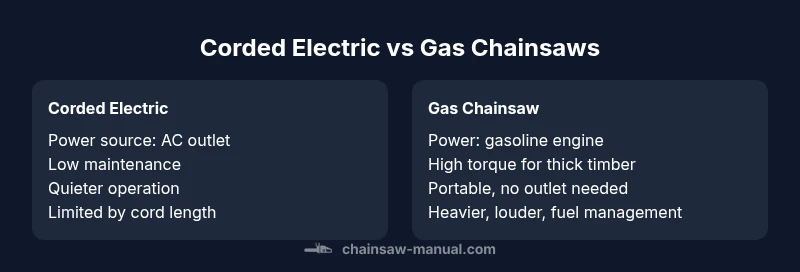
Corded Electric Chainsaw vs Gas: A Comprehensive Comparison
A practical, analytical comparison of corded electric chainsaws and gas-powered models for homeowners, DIY enthusiasts, and pros. Explore power, cost, maintenance, safety, and best-use scenarios to decide which tool fits your jobs.


Corded electric chainsaws excel for light-to-medium yard work with minimal maintenance and no fuel mixing, while gas chainsaws deliver raw cutting power and complete portability for remote sites. Your choice hinges on workload, access to outlets, and long-term usage expectations. This comparison helps you select the right tool for common home projects.
Understanding the Landscape
For many users evaluating a corded electric chainsaw vs gas, the deciding factors are how and where you work. A corded electric model taps into mains power, delivering steady torque with virtually zero fuel handling or emissions on site. This setup shines for light- to medium-duty tasks around the home, such as pruning, limb removal, and small timber projects, where quick starts and predictable performance are valued. The Chainsaw Manual team notes that heavy, remote-duty cutting is typically better served by a gas model. Gas chainsaws offer portability and sustained power for longer sessions or locations without convenient outlets. When weighing options, consider job size, proximity to power, extension-cord practicality, and whether you prioritize consistent performance or raw force. This article analyzes these dimensions with practical examples to aid decision-making.
wordCountBlock1:undefined
Comparison
| Feature | Corded electric chainsaw | Gas chainsaw |
|---|---|---|
| Power source | AC outlet (corded) | Gasoline engine |
| Cutting power (peak) | Consistent torque from electric motor | Raw cutting power from internal combustion engine |
| Run time | Unlimited by fuel, limited by cord length and outlet load | Limited by fuel tank and engine capacity |
| Weight and ergonomics | Typically lighter, compact form factors | Usually heavier, robust handles for longer use |
| Starting and maintenance | One-button start, minimal maintenance | Choke/start procedure, routine maintenance (oil, spark plug) |
| Noise and emissions | Lower noise, near-zero on-site emissions | Higher noise, audible exhaust, emissions |
| Best use case | Light-to-medium yard tasks, quick cycles | Heavy-duty cutting, remote sites without power |
| Price range (buying)** | $100-$300 | $200-$700 |
| Best for | Homeowners, DIY projects, smaller properties | Pro-grade work, land clearing, fence posts, rough timber |
Strengths
- Low maintenance and no fuel mixing
- Quiet operation and instant starts
- Cleaner emissions and simpler storage
- Lightweight and easier to maneuver for small jobs
Drawbacks
- Limited by cord length and outlet availability
- Less power for heavy-duty cutting
- Potentially shorter reach without extensions
- Gas models offer portability but require regular maintenance
Gas chainsaws deliver superior raw power for heavy-duty work; corded electric chainsaws win for light-to-medium tasks with lower upkeep and emissions.
Choose corded electric for small yards, pruning, and quick tasks where you have reliable outlet access. Opt for gas when you face long sessions, remote sites, or thicker timber that demands higher torque and portability.
FAQ
What is the biggest difference between corded electric and gas chainsaws in everyday use?
The most noticeable difference is power delivery and mobility. Corded models are simple to start, quiet, and best for smaller tasks near power sources, while gas models provide raw torque and portability for thick timber or remote sites.
The main difference is power and portability: electric is quiet and easy to start, gas is tougher and more portable for heavy jobs.
Are corded electric chainsaws powerful enough for demanding cutting?
Yes, for many home projects, corded electric chainsaws deliver sufficient torque for limb removal and pruning. They may struggle with very thick, knotty timber compared with high-output gas models.
They work well for most home tasks but may not match the raw power of gas for the toughest cuts.
Can I use a corded electric chainsaw indoors?
Yes, provided you have a properly rated outdoor extension cord and adequate ventilation. Always follow safety guidelines and avoid enclosed areas with poor airflow to minimize dust and debris exposure.
You can use them indoors if you have the right extension cord and ventilation, but be careful with dust.
Do gas chainsaws require more maintenance than electric ones?
Gas chainsaws generally require more routine maintenance, including fuel management, air-filter cleanings, and spark plug checks. Electric cords require less ongoing service beyond blade and chain care.
Gas saws need more upkeep than electric ones, which mainly need blade care.
What safety gear should I use with either type?
Always wear PPE: helmet, eye protection, hearing protection, gloves, and chainsaw chaps. Clear the work area, secure the limb, and follow manufacturer safety instructions for both electric and gas models.
Wear proper PPE and follow safety guides for both types.
How do I choose between models if I have occasional cutting needs?
Assess expected job size, access to power, budget, and tolerance for loud operation. For light tasks near outlets, pick electric. For irregular, thick or remote work, gas is often better.
Match your typical job size and site access to the tool’s strengths, electric for light tasks, gas for heavy or remote work.
The Essentials
- Prioritize work scale: electric for light-to-medium tasks; gas for heavy chores.
- Factor outlet availability and cord management into planning.
- Consider total ownership: fuel, maintenance, and downtime differ significantly.
- Electric options reduce noise and emissions while simplifying storage.
- Gas tools excel where portability and endurance matter most.