Gas Chainsaw vs Electric: Which Is Best for Your Yard?
Compare gas chainsaws and electric models to decide where each shines. This Chainsaw Manual guide covers power, runtime, maintenance, safety, and best-use scenarios for home and professional yards.


Gas chainsaws offer raw power and independence from outlets, ideal for large jobs on remote sites. Electric models shine in quiet operation, low maintenance, and near structures where fumes or noise must be minimized. Your choice boils down to runtime, power access, and portability. For heavy-duty remote work, gas wins; for smaller yards, electric shines.
Core Differences by Use Case
For homeowners, DIY enthusiasts, and professionals evaluating gas chainsaw vs electric, the most important question is: where will you be cutting, and how power-intensive are your jobs? Gas chainsaws offer portability and sustained power for remote sites and heavy-duty tasks, while electric models—especially corded variants—shine in built-up yards with ready power access. According to Chainsaw Manual, the choice hinges on access to outlets, required runtime, and tolerance for noise and emissions. In practical terms, gas is typically preferred for larger properties, thick hardwoods, and long days between refuels; electric models excel for pruning, routine limb work, and work near structures where fumes and noise must be minimized. As you read, consider job length, terrain, and maintenance preferences, because those factors determine which tool delivers the best value and safety outcome.
Power and Performance: Gas vs Electric
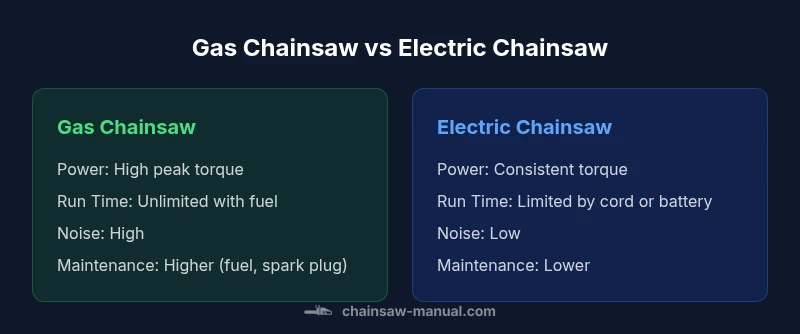
Power output and cutting speed shape how quickly you can clear brush. Gas chainsaws typically deliver higher peak horsepower and raw torque, enabling clean cuts through thick hardwood and heavy-duty felling. They maintain strong performance under heavy load and during extended cuts, when engine speed can be sustained with continuous refueling. Electric chainsaws, including corded and battery-powered variants, rely on motor torque that remains steady at rated speed but may taper as battery charge drops or with cord length constraints. In practice, gas models excel on large properties or jobs that require long runtimes and frequent logging; electric models excel for lighter tasks, precision pruning, and situations where consistent speed and control matter. Chainsaw Manual analysis shows that for most home-yard tasks under 2-3 inches, electric power is often sufficient, but for thicker limbs and larger trees, gas remains the more capable option.
Weight, Fatigue, and Handling
Weight and balance influence fatigue and control during long cuts. Gas chainsaws tend to be heavier, with more vibration, particularly on older or high-powered models. This can elevate fatigue on multi-hour tasks, demanding a firmer grip, anti-vibration features, and steady stance. Electric chainsaws, especially corded variants, are lighter and offer smoother handling with less vibration, which translates into longer comfortable operation for trimming and limb work. Battery-powered options sit between gas and corded electric in weight, depending on the battery size. For professional users who move through dense material or frequent branches, the handling characteristics can determine speed and precision as much as raw power. Chainsaw Manual’s guidance emphasizes ergonomic balance and grip support as key factors for productivity and safety.
Run Time, Refueling, and Battery Life
Gas chainsaws offer essentially unlimited runtime as long as you have fuel, but you must stop to refuel and mix fuel in some two-stroke designs. This can be advantageous for large jobs in remote locations where electrical access is limited. Corded electric chainsaws run indefinitely, provided you have an outlet and a long extension cord; they sacrifice reach and convenience for simplicity. Battery-powered models provide portability with a finite runtime per charge; modern high-capacity packs can handle longer sessions, but you’ll typically plan work around charging breaks or have extra batteries on hand. Chainsaw Manual notes that recharge time and battery capacity are now optimized to minimize downtime in typical yard work, but the trade-off remains between mobility and runtime.
Noise, Emissions, and Safety Considerations
Gas engines produce noticeable noise and exhaust, which can be a concern in residential settings or near neighbors. Electric chainsaws operate quietly with minimal emissions, making them preferable for confined spaces, indoor use near structures, or areas with strict noise restrictions. In terms of safety, gas models expose operators to fuel handling risks and more maintenance hazards (oil leaks, spark plug wear). Electric models reduce fuel handling risks and typically require less routine maintenance, but the absence of a true power source can lead to reliance on extension cords or battery life. Chainsaw Manual highlights the trade-offs between environmental impact, safety, and long-term use in choosing a model for your space.
Maintenance and Upkeep: Gas vs Electric
Gas chainsaws demand regular maintenance: fresh fuel, oil mixing for chainsaw lubrication, air filter cleaning, spark plug inspection, and carburetor tuning. This ongoing upkeep can extend downtime but is part of managing a reliable heavy-duty machine. Electric chainsaws simplify maintenance with fewer moving parts and no fuel mixing; battery care, charger health, and cord integrity (for corded versions) are the primary concerns. The maintenance burden typically guides buyers toward electric or battery-powered options for light-to-moderate work, while gas remains appealing for professionals who need endurance and off-grid capability. Chainsaw Manual emphasizes routine inspection of chain tension, bar oil delivery, and chain lubrication to prevent heat buildup and kickback.
Cost of Ownership and Fuel Availability
Total ownership costs blend upfront price, maintenance, fuel, and potential repairs. Gas chainsaws generally have a lower upfront price for some entry-level models but incur ongoing fuel and maintenance costs. Electric chain saws usually cost more initially, particularly in battery-powered variants, but fuel and maintenance costs over time are lower. Availability of fuel and replacement parts varies by region, with some rural areas facing limited access to fresh fuel and bar oil. Chainsaw Manual notes that the long-term cost picture depends on job frequency, model durability, and local fuel prices, so buyers should model typical projects before deciding.
Corded vs Cordless: Practical Considerations
Corded electric chainsaws offer near-unlimited runtime but tether you to outlets and extension cords, which can complicate movement across the yard. Cordless/battery-powered models remove the cord but introduce the need to manage battery swaps and recharge times. Gas chainsaws are unconstrained by electrical outlets but require fuel, seasonal storage, and more frequent service. The best choice depends on your access to power, job length, and convenience priorities. Chainsaw Manual recommends listing your typical tasks, yard layout, and storage capacity to determine which format delivers the most reliable results.
Best Use Cases for Gas Chainsaws
Gas chainsaws shine when you lack reliable power access, work on large trees, or need sustained top-end performance in rugged terrain. They are often favored by professional users for felling, large-diameter limbing, and remote-site work where extension cords are impractical. If you frequently run long, heavy cuts and value independence from outlets, gas is likely your best fit. Chainsaw Manual emphasizes keeping a gas model well-tuned, using fresh fuel, and storing fuel correctly to avoid performance dips and safety hazards.
Best Use Cases for Electric Chainsaws
Electric chainsaws excel in urban yards, maintenance tasks near homes, and light-to-moderate cutting where noise and emissions must be minimized. Corded models provide steady power for pruning and trimming, while cordless options offer portability without cords for quick, maneuverable work around landscaping and fences. If your projects are regular but not heavy-duty, and you have ready power access, electric is the most convenient choice. Chainsaw Manual notes that electric models reduce maintenance workload and are safer for novices due to smoother throttle control and less kickback risk in well-designed units.
Battery-Powered Middle Ground and Hybrid Approach
Hybrid or modular approaches combining battery flexibility with powerful motors aim to bridge the gap between gas and electric. Battery performance has improved with higher energy density and faster charging, enabling longer work sessions without frequent downtime. For some homeowners, a mid-range battery-powered model paired with a spare battery can handle typical seasonal work without the complexity of fuel or cords. Chainsaw Manual highlights evaluating battery chemistry, charging infrastructure, and warranty support when adopting a middle-ground solution.
Safety and PPE Essentials
Regardless of the power source, proper safety gear is essential. This includes a certified helmet with face shield, cut-resistant gloves, hearing protection, chaps or pants rated for chainsaw use, and sturdy boots with good traction. Inspect your chain, tension, and bar oil before use; ensure the chain brake is functional and that you follow proper starting procedures. Gas engines require careful handling of fuel and exhaust, while electric models mandate attention to cord safety or battery care. Chainsaw Manual emphasizes training and safe operating procedures to minimize kickback and injury risk.
Real-World Scenarios: Case Studies
In a suburban lot with a mix of scrub brush and a few mature branches, a battery-powered chainsaw provided adequate performance with shorter sessions and minimal setup. A rural property with several fallen trees and thick hardwood required a gas chainsaw with robust torque and unlimited runtime, despite higher noise and maintenance. In a city park setting, a corded electric chainsaw offered quiet operation and quick cleanup, proving ideal for limb trimming near pathways. These examples illustrate that the best choice depends on job scope, location, and safety priorities. Chainsaw Manual observes that many pros keep both options on hand to cover diverse tasks.
Conclusion: Making the Final Choice
The gas chainsaw vs electric decision hinges on power needs, environment, and workflow. For remote areas and heavy-duty cutting, gas is often indispensable; for clean, low-noise work around structures, electric wins. Consider your yard size, access to outlets, preferred maintenance level, and budget when choosing. Chainsaw Manual recommends building a task profile and, if possible, testing both styles to determine the optimal fit for your typical projects.
Feature Comparison
| Feature | Gas Chainsaw | Corded Electric Chainsaw | Battery-Powered Chainsaw |
|---|---|---|---|
| Power and Cutting Speed | High peak torque; excels under load | Steady torque; dependent on outlet availability | Moderate to high torque; best for light-to-medium jobs |
| Weight | Heavier; more vibration | Lighter; easy to maneuver | Mid-weight; battery adds bulk |
| Run Time / Runtime | Unlimited with fuel; refuel to continue | Unlimited if plugged in; limited by cord | Finite per charge; swap/charge as needed |
| Noise and Emissions | Loud; emits fumes | Low noise; no emissions | Low-to-moderate noise; no fumes; depends on battery |
| Maintenance | Regular maintenance: fuel, air filter, spark plug | Minimal maintenance; cord or battery care | Minimal maintenance; battery care |
| Best For | Large properties, remote work, thick hardwood | Small yards with outlets, pruning near structures | Portable light-to-medium tasks with no outlet access |
| Cost of Ownership | Higher ongoing fuel/maintenance; varied upfront | Low ongoing costs; higher upfront for corded options | Moderate upfront; ongoing battery costs |
Strengths
- Gas chainsaws deliver peak power and sustained performance for heavy-duty work
- Electric chainsaws offer quiet operation and low maintenance
- Battery-powered models provide portability without cords
- Lower ongoing maintenance for electric compared to gas
Drawbacks
- Gas engines require regular fuel and maintenance; emissions and noise
- Corded electric chainsaws are limited by cord length and outlet availability
- Battery models have finite runtime and need charging or extra batteries
- Electric options may lack the endurance of gas in very large, remote jobs
Gas wins for heavy, remote work; electric wins for quiet, indoor-friendly tasks
Choose gas for raw power and long, unpowered jobs. Choose electric for low maintenance, near-structure work, or where noise and fumes must be minimized.
FAQ
What is the main difference between gas and electric chainsaws?
Gas chainsaws provide more raw power and independence from outlets, ideal for heavy-duty or remote work. Electric chainsaws are quieter, require less maintenance, and work well in yards with reliable power supply. The best choice depends on job size, access to power, and tolerance for noise and emissions.
Gas chainsaws offer more power and independence; electric chainsaws are quieter and easier to maintain. Your choice depends on job size and power access.
Which is better for thick hardwood or large trees?
Gas chainsaws generally outperform electric models on thick hardwood and large-diameter cuts due to higher torque and sustained power under load. Electric models can handle medium to light-duty cuts effectively, especially with proper blade and chain selection.
Gas is typically better for thick hardwood; electric handles lighter work well with the right blade.
How loud is a gas chainsaw compared to an electric one?
Gas chainsaws are noticeably louder and emit fumes, which can be disruptive in residential settings. Electric chainsaws are much quieter and produce no exhaust, making them preferable for near-neighbor environments and indoor-friendly tasks.
Gas is loud and fumes; electric is quiet with no exhaust.
Can I use a gas chainsaw indoors?
Using a gas chainsaw indoors is generally not recommended due to exhaust and safety concerns. If needed, it should be done in a well-ventilated area and with proper respiratory protection, but electric variants are often a safer indoor choice.
Gas chainsaws are not ideal indoors; prefer electric when working inside or near living spaces.
Do battery chainsaws have enough power for heavy-duty jobs?
Battery-powered chainsaws have improved significantly but may still fall short for the heaviest, nonstop heavy-duty work. They suit mid-size yards and regular pruning best, especially when paired with spare batteries for longer sessions.
Battery chainsaws work well for mid-size tasks; for heavy-duty, gas often wins.
What maintenance does each type require?
Gas models require fuel management, oil mixing, air filter cleaning, and spark plug checks. Electric models demand less routine maintenance, focusing on battery care, charging equipment, and occasional wiring checks for corded variants.
Gas needs fuel and tune-ups; electric needs battery care and basic checks.
The Essentials
- Assess yard size and power access before choosing
- Gas is best for heavy-duty, remote work
- Electric is best for quiet operation and near structures
- Battery power offers portability with careful runtime planning