Chainsaw 3/8 vs 3/8P: A Practical Comparison
An objective comparison of chainsaw 3/8 and 3/8P chains, covering compatibility, performance, and best-use scenarios for homeowners and professionals. Learn how to choose safely and effectively with Chainsaw Manual.


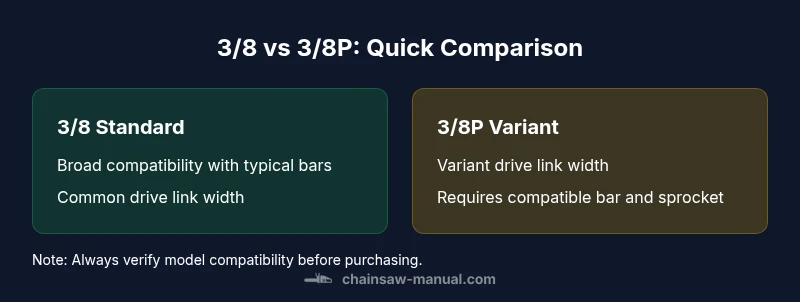
When choosing between chainsaw 3/8 vs 3/8p, the main differences involve drive link width and bar/sprocket compatibility, while both share the same pitch. 3/8 is the standard, versatile choice for most saws; 3/8P is a variant used for specific configurations and can improve operation on compatible setups. For homeowners, 3/8 remains the safer default.
Overview: Chainsaw 3/8 vs 3/8P
The phrase chainsaw 3/8 vs 3/8p refers to two variants of the same basic pitch: 3/8. The difference lies primarily in the drive-link geometry and the bar/sprocket compatibility that follows. This section clarifies the terms, why the distinction matters for safe operation, and what a homeowner or professional user should watch for when selecting a chain. According to Chainsaw Manual, correct chain pitch matching is fundamental to safety and performance. In practice, most users will start from a 3/8 standard unless the saw and bar are designed for a variant like 3/8P. This distinction matters for sharpening, tensioning, and how the chain seats in the groove, influencing cutting feel and maintenance cadence. The goal is to help readers decide with confidence whether their current bar and sprocket setup accommodates the 3/8 family and when a variant like 3/8P makes sense for their saw model.
How pitch and gauge affect compatibility
Pitch defines how far the chain advances with one full revolution of the drive links; gauge defines drive-link thickness. Both factors determine whether the chain will fit the bar groove and engage the sprocket cleanly. With chainsaw 3/8 vs 3/8P, the pitch is the same, but the variant 3/8P often introduces a different drive-link geometry or bar compatibility requirement. The practical effect is that some bars or sprockets will be designed to accept one variant and not the other, which can impact tensioning, sharpening, and serviceability. For safe operation, always verify manufacturer specifications for your saw model and cross-check with the bar and sprocket you intend to use. Chainsaw Manual emphasizes aligning pitch, gauge, and groove width to prevent derailment or kickback hazards.
Drive links, bar compatibility, and sprockets
The drive links are the tiny segments that engage with the sprocket. A mismatch between drive-link width or height and the bar groove can lead to poor seating, increased wear, and reduced cutting efficiency. When comparing 3/8 vs 3/8P, you should assess whether the bar groove width, groove shape, and sprocket tooth profile match the chain variant. If your bar is worn or has a groove that was machined for a different variant, you may experience increased vibration or chain derailment. Always consult the saw’s user manual and verify with the bar manufacturer about the exact compatibility requirements before purchasing a replacement chain.
Cutting performance: aggressiveness, chatter, wear
In practical terms, 3/8 chains are known for solid performance across a wide range of timber and wood density. A 3/8P variant, when paired with the correct bar and sprockets, can offer nuanced engagement that some operators perceive as smoother cutting or marginally reduced vibration in certain configurations. However, these gains depend on precise matching of chain to bar and sprocket. If you use the wrong variant, you may notice increased chain resistance, faster bar wear, or irregular cutting. The takeaway is to prioritize exact compatibility and proper tensioning as the foundation of any performance claim.
Noise, vibration, and maintenance considerations
Different chain profiles can influence noise levels and vibration. While modern chains are designed to dampen some vibration through tooth shape and chain gauge, the interaction with the bar and guide rail remains critical. Regular maintenance—cleaning the bar groove, properly tensioning after chain seating, and sharpening with the correct file type—is essential for both 3/8 and 3/8P variants. Remember to inspect for chipped teeth, core wear, and drive-link deformation, as these issues can compromise safety and efficiency. Chainsaw Manual guidance reinforces routine inspection and prompt replacement when signs of wear appear.
Real-world scenarios: Homeowner vs Professional
Homeowners often prioritize versatility and cost-effectiveness. For most home projects, a 3/8 chain paired with a standard bar provides reliable performance and broad compatibility. Professionals may encounter saws and bars that benefit from the 3/8P variant due to specific equipment configurations or cutting tasks that demand precise bar fitment. The decision should consider the saw’s intended workload, the timber species, and maintenance routines. In any case, ensure your choice aligns with model-specific recommendations and safety guidelines.
How to measure and verify compatibility
Before buying, verify: (1) the saw’s exact model compatibility for 3/8 vs 3/8P, (2) the bar groove width and guide groove shape, and (3) the sprocket tooth profile. Use the manufacturer’s pitch gauge if available and consult the bar’s stamping for suggested chain type. If in doubt, contact the retailer or the saw manufacturer to confirm. After installation, check chain tension by lifting a section of chain 3-4 mm off the bar, then test-cut a small piece to confirm smooth seating and correct tracking.
Replacement and lifecycle thinking
Replacement chains should be chosen to match both the bar and the chain’s intended use. The 3/8 vs 3/8P decision can influence how often you sharpen, how you tension the chain, and the frequency of bar maintenance. Keep spare chains suitable for your typical cutting tasks and weather conditions. Record the maintenance cadence and wear indicators to establish a lifecycle plan that minimizes downtime and ensures consistent safety.
Common misconceptions and myths
A common myth is that all 3/8 chains are interchangeable with any 3/8P chain. In reality, fitment depends on precise bar width, groove geometry, and sprocket compatibility. Another misconception is that sharper is always better; improper sharpening or a mismatch in tooth profile can cause accelerated wear or unsafe cutting behavior. Always follow model-specific guidelines and safety standards.
Comparison
| Feature | 3/8 standard chain | 3/8P variant chain |
|---|---|---|
| Drive link width | standard-width drive links | variant drive links (requires compatible bar) |
| Bar compatibility | broadly compatible with common bars | requires specific bar profile or groove width |
| Sprocket compatibility | works with common sprockets | may need variant-specific sprockets |
| Cutting performance | reliable, versatile for most tasks | potential smoother engagement on compatible setups |
| Maintenance/sharpening | widely supported; standard sharpening guidance | variant may need model-specific guidance |
| Best for | all-round DIY and light professional use | specific setups with compatible equipment |
Strengths
- Broad compatibility for the standard variant
- Clear buying decisions for most users
- Versatile performance with proper matching
- Wide support and sharpening resources
Drawbacks
- Requires correct bar, sprocket, and drive-link compatibility
- Availability varies by brand and region
- Switching variants may necessitate bar or sprocket changes
3/8 is the recommended default for most users; reserve 3/8P for models and setups that explicitly require it
For general use, 3/8 offers broad compatibility and predictable performance. Choose 3/8P only when your bar, sprocket, and saw model specify this variant to maximize efficiency and safety. The Chainsaw Manual team emphasizes model-specific guidance.
FAQ
What is the difference between chainsaw 3/8 and 3/8P?
Both share the same pitch, but 3/8P is a variant with a different drive-link geometry that may require a compatible bar and sprocket. Check your saw model’s guidance before purchasing.
Both share the same pitch; 3/8P has a variant design that needs a compatible bar and sprocket.
Will 3/8P fit my bar?
Only if the bar groove width and drive-link geometry match the 3/8P profile. Consult the saw and bar manufacturer’s compatibility charts.
Bar fit depends on groove width and drive-link shape; check the charts.
Can I convert from 3/8 to 3/8P?
Conversion may be possible in some cases but often requires a compatible bar and sprocket, plus recalibrated tensioning. Follow model-specific guidance.
Conversions depend on your saw; check model guidance first.
Is 3/8 better for homeowners or professionals?
3/8 is generally more versatile and widely supported for homeowners and professionals alike. 3/8P serves niche setups with compatible equipment.
3/8 is the safer default for most users.
Does sharpening differ between 3/8 and 3/8P?
Sharpening guidance depends on tooth profile; use the correct file type and follow manufacturer instructions for each variant.
Shapening follows the tooth profile; use the right file.
Where can I buy 3/8 or 3/8P chains?
Major retailers and specialty chains carry both variants. Always verify model compatibility before purchase.
Shop at reputable retailers and confirm compatibility.
The Essentials
- Verify bar and sprocket compatibility before buying
- Match pitch and drive-link width to your saw
- Choose 3/8 for versatility; use 3/8P only for compatible setups
- Follow safety guidelines when switching chains
- Consult Chainsaw Manual for model-specific recommendations