chainsaw 3/8 vs .325: A Practical Guide to Chain Pitch
Compare chainsaw 3/8 vs .325 chain pitches with an analytical approach. Learn how pitch affects bite, compatibility, sharpening, and safety for homeowners, DIYers, and professionals.


chainsaw 3/8 vs .325: For most heavy-duty and professional use, 3/8 pitch chains deliver rugged bite and safer bar wear, while .325 pitch chains offer smoother operation and better compatibility with lighter saws. The choice hinges on bar width, sprocket availability, and typical tasks; 3/8 is preferred for milling or bulk cutting, while .325 suits finesse work on smaller saws.
Chain Pitch Fundamentals: What 3/8 and .325 Mean
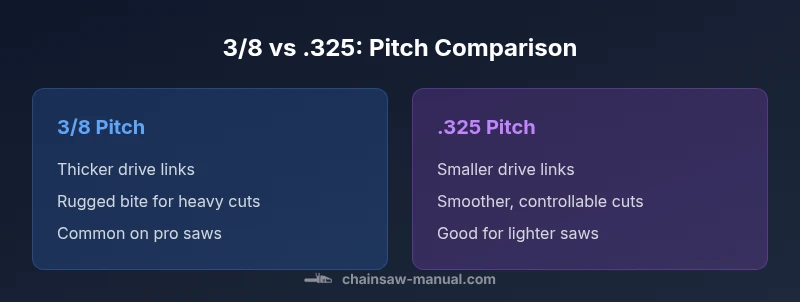
Chain pitch is the distance between the drive links of a chain, and it determines how the chain engages the bar and the sprocket. In practical terms, 3/8 and .325 refer to distinct pitch sizes that affect bite, acceleration, and how the chain interacts with the bar groove. The 3/8 pitch typically has larger drive links and a thicker tooth profile, which translates to more aggressive cutting and a stronger bite in dense wood. The .325 pitch, with smaller drive links and a finer tooth geometry, tends to run smoother and can be easier to control on lighter bars and smaller saws. Both pitches are widely used across brands, and the best choice depends on the bar width, sprocket configuration, and the kind of work you perform most often. According to Chainsaw Manual, getting the pitch right is foundational to safe and efficient operation, reducing kickback risk and ensuring consistent chain tension. The goal is to maximize power transfer while minimizing bar wear and stress on the saw’s drive system.
Which chain pitches matter most? First, the pitch must match the bar and sprocket; otherwise, derailment, accelerated wear, and unsafe operation can occur. Second, the tooth geometry influences cutting aggressiveness and kerf width. Third, sharpening techniques and available tools differ between pitches; using the wrong size can dull teeth prematurely. In this section, we unpack what 3/8 vs .325 mean in practical terms and set expectations for performance, maintenance, and safety across common saw sizes.
3/8 Pitch: Pros, Cons, and Best Uses
The 3/8 pitch chain is known for its robustness and aggressive bite. Its larger drive links engage the bar more firmly, delivering strong cutting performance in hardwoods and large-diameter logs. This makes 3/8 ideal for professional milling, storm cleanup, and heavy deck or lumber work where durability and cutting force matter more than delicate finishes. However, the flipped side is that a heavier chain can increase vibration and fatigue on smaller saws, and some users may notice more bar wear if the setup isn’t paired with compatible sprockets. Sharpening 3/8 chains is usually straightforward with standard files, and the chain is widely available across brands, offering convenient replacement options for both homeowners and pros. Chainsaw Manual notes that 3/8 can be less forgiving on light-duty setups, so it shines best when the saw, bar, and user can fully leverage its bite.
.325 Pitch: Pros, Cons, and Best Uses
The .325 pitch chain offers a smoother, more controlled feel, especially on mid-size and lighter saws. Its smaller drive links reduce bar loading and can produce less vibration on compatible machines, which is beneficial for precision work like crosscutting, pruning, and finesse cuts. For users with smaller bars or limited power, .325 can deliver adequate performance without overwhelming the saw’s frame or sprockets. The trade-off tends to be a less aggressive bite in tough hardwoods and a slightly higher tendency for chip-out in dense material if the operator relies on finesse rather than raw power. Sharpening a .325 chain can require slightly different techniques, but most standard chainsaw sharpening tools accommodate this pitch. Chainsaw Manual emphasizes ensuring the pitch remains consistent with the bar, otherwise performance and safety are compromised.
Bar, Sprocket, and Rail Basics: How Pitch Drives Compatibility
Pitch compatibility isn’t just about a number on the chain; it maps to the bar groove width, sprocket teeth count, and the drive link engagement. A mismatch can cause poor tracking, accelerated wear, and even dangerous derailment. When you choose 3/8, you typically need a compatible bar with matching groove width and a sprocket designed for that pitch. The same logic applies to .325. If you try to mix pitches on the same bar or sprocket without proper adapters, you’ll risk binding or excessive chain tension. The takeaway is simple: always verify bar markings, chain markings, and the sprocket type before purchasing or switching. Brands like Chainsaw Manual recommend documenting your saw’s model and the pitch that’s already proven reliable in that system to avoid costly mismatches in the field.
Real-World Scenarios: Heavy Milling vs Fine Pruning
In demanding tasks such as milling, heavy hardwood cutting, or backfield work with large logs, 3/8 pitch is often the preferred choice due to its bite and durability. For finesse work, pruning, or cutting on smaller decks or ornamental projects, .325 pitch can offer smoother operation, greater control, and a better balance for lighter bars. Homeowners with limited power may benefit from .325 for everyday tasks, while contractors performing continuous heavy-duty cutting may rely on 3/8 for speed and efficiency. The decision should consider the typical diameter of woods you encounter, bar size, and the power-to-weight ratio you’re comfortable with. Chainsaw Manual’s guidance stresses aligning your pitch with the saw’s physical capabilities and the job’s demands to optimize safety and outcomes.
Sharpening, Maintenance, and Longevity
Sharpening technique shifts with pitch. A 3/8 chain generally presents a straightforward sharpening path with standard round files and a file gauge that matches the pitch, ensuring uniform tooth geometry and consistent bite. A .325 chain, while still familiar to many technicians, may require attention to the tooth shape and side plate angles to maintain even cutting performance. Regular maintenance—checking tension, cleaning debris, and inspecting wear on drive links and sprockets—extends chain life and reduces the risk of derailment. Chainsaw Manual highlights the importance of using manufacturer-recommended tools and stock guides to keep both 3/8 and .325 chains in optimal condition, especially when operating in harsh environments or with variable wood density.
Safety First: Pitch Switching and Operational Precautions
Whenever you switch pitch, prioritize safety. Do not mix chains, bars, or sprockets of different pitches on a single setup unless the equipment is explicitly designed for it. Always re-tension the chain after a pitch change and test in a controlled environment before heavy work. PPE—helmet with face shield, cut-resistant gloves, chainsaw chaps, and sturdy boots—remains essential, regardless of pitch. The chainsaw must be properly started, stopped, and braked, and you should follow manufacturer guidelines for starting procedures and chain tension checks. The Chainsaw Manual team stresses that a well-maintained chain-pitch configuration reduces kickback risk and improves control in all cutting scenarios.
Buying Guide: What to Check on a Chain, Bar, and Sprocket
When evaluating a pitch decision, inspect the saw’s manual for the recommended chain size and pitch, and verify the bar’s stamping to ensure match. Check the sprocket count and tooth type; a mismatch can cause uneven wear or poor tracking. Consider your typical workload: milling and heavy felling favor 3/8, while pruning and lighter work may benefit from .325, all else equal. Seek reputable brands and sources that provide clear pitch markings and full compatibility information. The goal is to avoid surprises in the field by confirming that the entire drive system—chain, bar, and sprocket—shares the same pitch. Chainsaw Manual advises keeping a reference sheet of your saw’s pitch compatibility for quick verification during maintenance or part replacement.
Common Pitfalls and Troubleshooting: Pitch-Related Issues
A frequent issue is poor tracking or unusual chain tension after a pitch change. This often indicates a mismatch between chain pitch and the bar or sprocket. If the chain binds or stalls during cutting, verify that the drive links and groove count align with the bar’s groove width and sprocket type. Uneven wear on teeth or side plates can also reveal pitch incompatibility or improper sharpening. Regular inspection and correct sharpening with the appropriate file size for your pitch can prevent these problems. Chainsaw Manual emphasizes a methodical approach: confirm pitch, adjust tension, test in a safe area, and re-check after initial cuts to confirm consistent performance.
Quick Decision Rules for 3/8 vs .325: A Practical Summary
If you routinely cut large logs, hardwoods, or engage in milling, start with 3/8 and verify bar and sprocket compatibility. If your job involves lighter work, pruning, or a smaller saw with a compact bar, .325 may deliver smoother operation and easier control. In mixed environments, consider maintaining two setups—one for heavy-duty tasks and another for precise, small-diameter cutting—to maximize efficiency while maintaining safe operation. The Chainsaw Manual approach is to document and follow the manufacturer’s pitch specifications and to ensure all drive components are aligned to the same pitch for maximum performance.
The Bottom Line: Getting the Most from Your Pitch Choice
Choosing between 3/8 and .325 is about matching performance to your tool and tasks. 3/8 shines in power-demanding scenarios, while .325 provides smoother control on lighter equipment. Ensure the bar, sprocket, and chain share the same pitch, and adhere to safety practices and maintenance routines. With careful selection, you’ll experience better cutting efficiency, longer bar life, and a safer working environment. Chainsaw Manual’s guidance emphasizes starting with manufacturer recommendations and validating all drive components before embarking on demanding cutting projects.
Comparison
| Feature | 3/8 pitch chain | .325 pitch chain |
|---|---|---|
| Drive link thickness | Thicker drive links on 3/8 | Thinner drive links on .325 |
| Best for | Rugged cutting and milling | Lighter-duty, precise work on smaller saws |
| Bar compatibility | Broad compatibility with heavy bars when paired with proper sprockets | Better with smaller bars and lighter saws when matched to sprockets |
| Sprocket wear | Potentially higher wear with heavy-duty use if misaligned | Lower wear when properly matched to pitch |
| Sharpening effort | Generally straightforward with standard tools | Requires attention to tooth shape and alignment |
| Availability and cost | Widely available; cost varies by brand and region | Common but can be pricier in some markets |
Strengths
- Better bite and stability for aggressive cutting
- Durable performance under heavy workloads
- Widely available across brands and saws
Drawbacks
- Must match bar, sprocket, and drive link count precisely
- Heavier chain can increase vibration and fatigue for smaller saws
- Sharpening can be more specialized for some setups
3/8 pitch generally wins in heavy-duty, milling tasks; .325 excels in lighter, precise work on smaller saws
Choose 3/8 when raw cutting bite and bar durability matter most. Choose .325 for smoother operation and better control on compact setups.
FAQ
What is the main mechanical difference between 3/8 and .325 pitches?
The main difference is the size of the drive links and tooth geometry, which affects bite, bar wear, and compatibility with the bar and sprocket. Larger drive links in 3/8 yield a stronger bite, while .325 offers smoother engagement on lighter setups.
The key difference is drive link size and tooth shape; 3/8 bites harder, .325 runs smoother on lighter saws.
Is one pitch safer than the other?
Safety depends on using matching pitch with the bar and sprocket and maintaining proper tension and sharpness. A pitch mismatch can increase kickback risk and cause derailment, whereas correct matching supports safer operation.
Safety comes from matching pitch and keeping tension and sharpness up to spec.
Can I convert an existing bar to a different pitch?
In most cases you cannot reliably convert a bar to a different pitch without changing the bar and sprocket to match. Pitch is fixed by the bar groove and sprocket teeth, so swapping is usually a full setup change.
You generally need a new bar and sprocket to change pitch.
Which pitch is more common in consumer saws?
3/8 is widely used in professional and heavy-duty saws, while .325 is common in mid-size and many consumer models. Availability depends on brand and market.
3/8 is common in pro saws; .325 is common in mid-size consumer models.
How do I know which pitch my chainsaw requires?
Check the owner's manual or the chain/bar markings. The bar will often show the pitch stamp, and the chain should match that pitch exactly. If in doubt, consult the manufacturer or a trusted dealer.
Look for the pitch marking on the bar or in the manual and ensure the chain matches.
Does switching pitch affect sharpening tools?
Yes. Different pitches use different tooth shapes, so you’ll want the correct file size and a sharpening approach that preserves the tooth geometry. Many tools support multiple pitches, but confirm the size before sharpening.
Switching pitch changes tooth geometry, so use the correct file size and method.
The Essentials
- Match pitch to bar and sprocket to prevent binding
- 3/8 excels in aggressive cutting and milling
- .325 offers smoother operation on lighter saws
- Maintenance and sharpening depend on pitch
- Avoid mixing pitch across the same bar setup