Why Is My Chainsaw Smoking? A Practical Troubleshooting Guide
Learn how to diagnose and fix smoking chainsaws quickly. This practical guide covers common causes, safety steps, and a step-by-step plan from Chainsaw Manual to prevent recurrence.


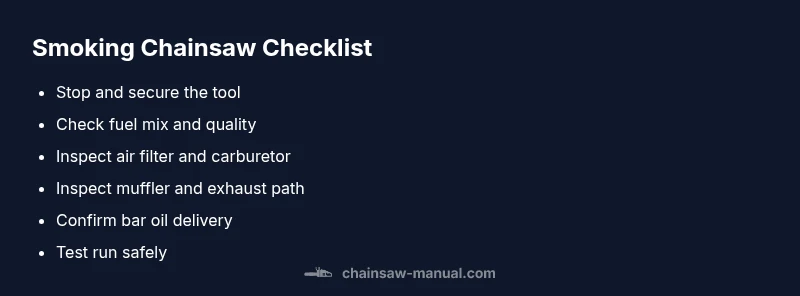
Most smoke from a chainsaw signals an issue with fuel, air, exhaust, or overheating. The quickest fix is to stop the saw, drain the old fuel, and fill with fresh mix at the correct two-stroke ratio. Clean or replace a dirty air filter, inspect the muffler for obstructions, and avoid running it until the issue is resolved. If smoke persists, seek professional help.
What this guide covers and safety first
If you’re wondering why is my chainsaw smoking, you’re likely dealing with one of several issues. Smoke can come from fuel problems, an air-intake or exhaust obstruction, or overheating. The goal is to diagnose quickly, fix safely, and prevent recurrence. This guide walks you through a practical, step-by-step approach designed for homeowners and professionals alike, with clear safety reminders from Chainsaw Manual. Whether you’re tackling a stubborn emission of smoke or performing routine maintenance, staying methodical reduces risk and saves time on the job.
According to Chainsaw Manual, a thoughtful, safety-first method helps you identify root causes without guessing. The guidance here is written for real-world use, including quick checks and deeper diagnostics when needed.
Common triggers: why a chainsaw might smoke
Smoke in a chainsaw is most often linked to four root causes: a rich fuel mix or old fuel, restricted air intake, exhaust or muffler obstruction, and overheating due to heavy use or cooling-system issues. Less common but possible are oil burning from worn seals or damaged piston components. By prioritizing the most likely issues first, you can avoid unnecessary disassembly and keep yourself safe. Chainsaw Manual emphasizes starting with simple checks before opening any engine compartments.
That said, smoking can indicate a safety risk. If you smell burning electrical insulation or see melting components, stop work immediately and power down the tool. This guidance aligns with Chainsaw Manual’s safety stance for both DIYers and professionals.
Reading smoke color and odor: clues to the problem
Color and smell offer valuable diagnostic hints. Blue or light-gray smoke typically points to burning oil, white smoke may indicate coolant or rich fuel, and black smoke almost always signals a fuel-to-air imbalance. If the odor is sharp or acrid, plant matter or motor oil burning can be involved. Capturing these cues helps you prioritize checks such as fuel mix, air filter, and exhaust paths, reducing trial-and-error time. Remember, color alone isn’t definitive; combine it with performance symptoms for a reliable assessment.
This nuance is why a structured approach matters, as Chainsaw Manual notes: correlating smoke characteristics with fuel, air, and exhaust systems yields the clearest path to resolution.
Fuel and fuel-quality checks: first steps
Start with the simple fixes: verify you’re using fresh fuel and the correct two-stroke oil mix as specified by the manufacturer. Even small deviations can cause smoke and poor combustion. Inspect the fuel cap vent for clogging and ensure the fuel line isn’t kinked or leaking. If fuel has ethanol, consider ethanol-free options or stabilizers to prevent varnish buildup. In many cases, a quick drain and refill resolves the issue, especially if old fuel has degraded.
According to Chainsaw Manual, a clean fuel system is foundational. If smoke remains after a fresh fill and proper mix, you’ll need to widen the diagnosis to air and exhaust elements.
Air intake, air filter, and carburetor sanity check
A clogged air filter starves the engine of clean air, causing a rich mixture and smoke. Remove the cover, inspect the filter, and clean or replace if dirty or oil-soaked. Then inspect the carburetor for stuck jets or varnish deposits; if you’re comfortable, remove and clean the carburetor or have a professional service it. Remember to reassemble with a snug gasket to prevent air leaks that worsen symptoms.
Chainsaw Manual highlights that air intake integrity and proper carb tuning are frequent culprits. A simple filter cleaning can often restore balance without deeper disassembly.
Exhaust path and muffler maintenance
Blocked exhaust ports or a carbon-clogged muffler cause smoke and performance loss. Inspect the muffler for carbon buildup; a bent or damaged exhaust can also impede flow. Use a small brush or compressed air (with care) to clear obstructions. If the muffler is severely damaged, replacement is safer than patchwork. A clear exhaust path reduces backpressure and smoke, improving combustion efficiency.
As Chainsaw Manual notes, muffler maintenance is a common, approachable fix for many smoking symptoms.
Lubrication system and chain oil considerations
Improper bar oil levels or a leaking lubrication system can deposit oil into the combustion path, generating smoke. Check the bar oil reservoir and oil lines for leaks. Use the recommended oil type and ensure the oil pump is delivering lubricant to the chain during operation. A dripping bar oil line or a clogged oil port can lead to oil burning and smoky exhaust.
Quality lubrication reduces friction and heat, which in turn limits smoke generation. Chainsaw Manual stresses keeping the chain properly tensioned and oiled for safe, efficient operation.
Overheating and cutting technique: how use affects smoke
Extended, heavy-duty cutting or operating in hot conditions without breaks can cause overheating. Allow the saw to cool between long sessions and avoid forced deep cuts that tax the engine. Cutting through dense wood for extended periods increases load and heat, leading to smoke from excessive combustion temperatures. Take regular rest breaks and use proper technique to reduce heat buildup.
Chainsaw Manual’s practical guidance emphasizes pacing work and choosing appropriate bar length and chain speed for the task, which helps prevent overheating and smoke.
Safety, when to pause and seek help
If smoke is accompanied by a strong chemical smell, melted plastics, or visible oil leaks, stop immediately and disconnect power or spark to prevent injury. Do not continue cutting if you’re unsure about the issue. When in doubt, consult a qualified technician or your local service center. Early professional assessment can prevent severe engine damage and safety hazards.
The Chainsaw Manual stance is clear: prioritize safety and avoid risky DIY fixes when unfamiliar with engine internals.
Prevention: routine maintenance to avoid future smoking
Create a simple maintenance routine: use fresh fuel, follow the correct mix ratio, replace air filters regularly, check the muffler and exhaust, and test the lubrication system before and after use. Keep the cooling fins clear of debris and store the saw in a dry, temperature-controlled area to prevent varnish formation or moisture ingress. Regular checks reduce smoking incidents and extend tool life.
Chainsaw Manual’s prevention tips are designed for homeowners and pros alike, helping you keep your saw reliable and safe over time.
Steps
Estimated time: 60-90 minutes
- 1
Stop and secure the saw
Power down the engine and remove the spark plug boot to prevent accidental starting. Move the saw to a safe location away from flammables. Let the engine cool if it’s hot before touching hot components. Inspect for obvious signs of leaks.
Tip: Wear heavy gloves and eye protection when handling hot parts. - 2
Check fuel and oil mix
Drain the current fuel and replace with fresh fuel mixed at the manufacturer’s recommended ratio. If you’re unsure, consult the owner’s manual. Discard old fuel that’s older than 30 days or shows varnish. Refill and test for smoke.
Tip: Use a clean funnel to avoid introducing debris into the tank. - 3
Inspect air filter and carburetor
Remove and inspect the air filter for oil saturation or heavy dirt. Clean or replace as needed. If the air path is clear but smoke persists, consider inspecting the carburetor jets for varnish and cleaning or servicing the carburetor.
Tip: Always reseal the air filter housing to maintain proper air sealing. - 4
Inspect exhaust and muffler
Check the muffler for carbon buildup or obstructions. Use a small brush or compressed air to clean it, being careful not to damage internal components. If damaged, replace the muffler to restore proper exhaust flow.
Tip: Do not use metal tools that could scratch the muffler’s protective coating. - 5
Check lubrication system and chain oil
Inspect the bar oil reservoir and lines for leaks. Confirm the pump delivers oil to the bar during operation. Refill with recommended oil and replace worn hoses if needed.
Tip: Test run with the saw resting on a non-flammable surface to observe油 flow. - 6
Test run and verify smoke cessation
After performing checks, start the saw in a safe area and idle briefly to confirm smoke has reduced or ceased. If smoke returns under load, plan for professional service. Document any abnormal sounds or smells for the technician.
Tip: Operate at low throttle initially to ensure safe testing.
Diagnosis: Chainsaw emits smoke during operation
Possible Causes
- highFuel system running rich (incorrect fuel-to-oil mix or poor-quality fuel)
- mediumExhaust/muffler obstruction or damaged exhaust components
- mediumOverheating from heavy use or restricted cooling fins
- lowWorn piston rings or worn seals allowing oil into combustion chamber
Fixes
- easyVerify and adjust the fuel mix to the manufacturer's specification and use fresh, high-quality fuel
- mediumInspect and clean the air filter; clean or rebuild the carburetor if necessary
- mediumInspect muffler for carbon buildup or obstructions; clean or replace as needed
- easyEnsure cooling fins are unobstructed and allow adequate airflow; remove debris
FAQ
Why is my chainsaw smoking black smoke during operation?
Black smoke usually means the fuel mix is too rich or the carburetor is not properly adjusting. Stop and check the fuel ratio, carb settings, and air intake before continuing.
Black smoke often means the fuel is burning rich; check the fuel mix and carb settings.
Is it safe to continue using a smoking chainsaw after minor checks?
If smoke persists after basic checks, pause operation and assess further. Continuing can cause engine damage or fire risk. When in doubt, stop and consult a professional.
If smoke continues after basic checks, stop and seek professional help.
What fuel mix ratio should I use for my chainsaw?
Follow the owner’s manual for the exact ratio. Common ranges in modern saws sit around 40:1 to 50:1, but always use the recommended specification for your model.
Check your manual for the exact fuel mix ratio; typical modern saws use around 40 to 50 parts oil per 1 part gas.
How often should I replace or clean the air filter?
Check the air filter before each use in dusty conditions and replace when dirty or oil-soaked. A clean filter improves air flow and reduces smoking.
Clean or replace the air filter regularly; a dirty filter causes smoking and poor performance.
When should I take the chainsaw to a professional?
If smoke persists after cleaning and fuel checks, or you notice leaks, unusual noises, or overheating, seek professional service to avoid internal damage.
If smoking continues after basic checks or you hear odd sounds, get a professional to inspect.
Watch Video
The Essentials
- Stop operation when smoke appears.
- Prioritize fuel mix, air intake, and exhaust checks.
- Regular maintenance prevents most smoking issues.
- Consult a professional if symptoms persist after checks.