Why Is My Chainsaw Cutting Crooked? A Practical Troubleshooting Guide
Learn practical steps to diagnose and fix crooked cuts from your chainsaw. From bar alignment to chain tension and safety considerations, Chainsaw Manual provides clear, actionable guidance for homeowners and pros.


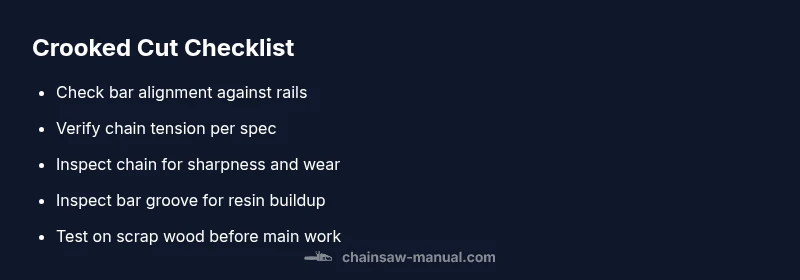
Most crooked cuts stem from bar misalignment, uneven chain tension, or a dull chain. Start by checking bar alignment against the chassis rails, set tension per the manufacturer, and inspect the chain for wear. If adjustments don’t fix it, stop cutting and seek professional help. These quick checks cover the most common causes and buy time while you decide next steps.
Common causes of crooked cuts
According to Chainsaw Manual, the question why is my chainsaw cutting crooked often points to three root issues: bar alignment, chain tension, and chain sharpness. When the teeth are not aligned with the bar, the saw can pull to one side, producing a skewed kerf. A dull chain also bites unevenly, especially in dense wood. Inspect the bar rails for bends or wear, and verify that the chain sits correctly in the groove. Regular maintenance, including cleaning the bar groove and sharpening the chain, helps prevent crooked cuts during routine work. If you’re asking why is my chainsaw cutting crooked, this usually means one of these issues is at play. Then address it with a targeted fix rather than random adjustments. Also consider your stance and work surface—stability matters as much as hardware.
Inspecting the bar and chain
The first diagnostic step is a careful inspection of both the bar and the chain. Look for a visibly bent or warped guide bar, check that the chain sits evenly in the groove, and confirm there are no missing drive links. Rotate the chain slowly and observe whether it tracks true in the bar groove. A misaligned chain will often sit high or low in the groove, indicating rotation issues. Clean the bar groove to remove resin build-up that can throw off tracking. If the chain is dull, sharpen it to restore square cuts. As Chainsaw Manual analysis shows, even small inconsistencies in the groove or teeth can translate into crooked kerfs on wood.
Bar wear vs. bar alignment: telling them apart
Bar wear and misalignment produce similar symptoms but require different fixes. A worn bar edge or a barrels-and-rails misalignment can cause uneven cutting forces, resulting in a crooked kerf. To differentiate, inspect the bar rails for shiny wear, flatness, and any visible bending. A bent bar is often obvious when you sight along the edge or roll the saw on a flat surface. In contrast, a worn bar may show rounded or cupped rails but still sit fairly straight. Knowing which issue you face helps you choose the correct remedy, whether that means realigning the bar or replacing it.
Chain tension and sharpness impact kerf direction
Uneven chain tension can pull the saws into one side, especially when the chain tightens on one portion of the bar. Check tension by lifting the chain away from the middle of the bar and ensuring a slight, uniform give with no sag. A dull chain can also cause pulling, as the teeth struggle to bite; always verify that teeth are sharp with uniform edge wear. Chain pitch, gauge, and lubrication all influence performance, and neglecting any one of these can lead to crooked cuts. Chainsaw Manual notes that regular sharpening and proper lubrication improve tracking and cut quality, reducing the tendency to wander off true.
The role of the guide bar and saw head geometry
Even with a sharp chain, geometry matters. A misaligned saw head or a bar not perfectly perpendicular to the engine axis can skew the cut. Ensure the bar is square to the body and that the front and back guide surfaces sit flush on the wood. Test with light plunges into scrap material to observe kerf direction without risking kickback. If the bar’s mounting surfaces are worn or cracked, replace the bar to restore correct alignment and tracking. The combination of a true bar and a properly aligned saw head is essential for straight, predictable cuts.
Safe testing methods to verify fixes
Before applying changes to a live project, test your fixes on scrap wood. Make small, shallow cuts and inspect the kerf sides for uniformity. If the cut still travels left or right, re-check tension, alignment, and chain sharpness. Use a straightedge or square against the bar to verify perpendicular alignment to the wood face. Always keep hands away from the chain and wear protective gear during any test. If you notice kickback or unusual vibration, stop and reassess safety procedures.
Common fixes you can perform in the shop
Start with the simplest corrections: retension the chain per manufacturer specs and re-check bar alignment. If the bar is bent, replace it; if the chain is dull or damaged, replace or properly sharpen. Clean the bar groove and drive links to remove resin buildup that can affect tracking. Verify fuel and oil delivery if the engine or chain lubrication seems inconsistent. Apply even pressure and maintain a steady stance during cuts to reduce skewing. Chainsaw Manual emphasizes gradual, deliberate adjustments over forceful attempts at correction.
When to seek professional help and safety considerations
If after basic checks the problem persists, seek professional service. A bent bar, a warped bar rail, or a warped chassis can require factory alignment tools. Do not continue cutting when the saw behaves unpredictably—wrong fixes can worsen the issue or cause injury. Always disconnect the spark plug or remove the battery before inspecting, cleaning, or disassembling the bar-and-chain assembly. The safest path is to consult a trained technician for a thorough inspection and service.
Preventive maintenance to avoid crooked cuts
Preventing crooked cuts starts with a routine maintenance schedule. Regularly inspect bars for wear and straightness, sharpen chains consistently, and replace worn components before they affect performance. Clean the bar groove, verify chain tension, and ensure lubrication is unobstructed. Store the saw in a dry, stable location to prevent corrosion and maintain alignment. Chainsaw Manual suggests documenting maintenance checks so you can track wear patterns and address issues before they translate into crooked cuts.
Steps
Estimated time: 25-40 minutes
- 1
Power off and secure saw
Disconnect the spark plug or power source and place the saw on a stable work surface. Ensure the bar cannot move during inspection.
Tip: Lock the chain brake before touching moving parts. - 2
Inspect the bar for bend
Visually inspect the bar rails for any bending or curvature. If you see deformity, prepare for possible replacement rather than adjustment.
Tip: Compare the bar against a straight edge to confirm alignment. - 3
Check bar alignment to chassis
Place the bar in its mounting position and verify it sits square to the saw head. Correct any misalignment by loosening mounting hardware and reseating.
Tip: Do not overtighten; ensure consistent contact along the mounting surfaces. - 4
Test chain tension
With the chain off the bar, check tension by gently pulling on a mid-link. Reinstall the chain and ensure slight play without sag.
Tip: Follow manufacturer spec for tension, usually a small amount of give is acceptable. - 5
Sharpen or replace chain
Inspect teeth for dullness, chipped edges, or excessive wear. Sharpen evenly or replace if teeth are uneven or rounded.
Tip: Keep chain files sharp and maintain uniform edge length. - 6
Lubricate and test on scrap
Apply chain oil and run the saw over scrap wood to observe kerf direction. Make any final adjustments to tracking.
Tip: Use proper PPE and keep hands clear of the bar path.
Diagnosis: Chainsaw cuts skewed to one side during straight cuts
Possible Causes
- highBar alignment issue
- highUneven chain tension
- mediumBent or warped guide bar
- mediumDull or damaged chain
- lowBar rail wear or guide alignment
Fixes
- easyCheck and realign bar to chassis; ensure square to the saw head
- easyAdjust chain tension to manufacturer spec and recheck tracking
- easySharpen the chain or replace if teeth are rounded or chipped
- mediumInspect bar rails for bends; replace bar if warped or cracked
- easyLubricate chain and verify oil delivery to bar groove
- hardIf issue persists after checks, consult a professional technician
FAQ
What causes a chainsaw to cut crooked?
Common causes include bar misalignment, uneven chain tension, worn or dull chain teeth, and bar wear. Address each factor methodically to restore straight cuts.
Common causes include bar misalignment, uneven chain tension, and worn chain teeth. Address each factor to restore straight cuts.
How do I check chain tension correctly?
With the chain on the bar, there should be slight slack in the middle. Pull the chain away from the bar slightly; it should snap back without sagging. Re-tension if needed per the manufacturer’s spec.
There should be a little slack in the middle; adjust until it snaps back without sagging.
Can a dull chain cause crooked cuts even if the bar is fine?
Yes. A dull or chipped chain can pull or wander during cutting, especially in tougher wood. Sharpen or replace the chain to restore even tracking.
A dull chain can cause wandering; sharpen or replace it.
When should I replace the guide bar?
Replace the bar if it’s bent, cracked, or excessively worn. A damaged bar can prevent proper tracking and cause crooked cuts.
Replace the bar if bent or cracked to ensure proper tracking.
Is it necessary to seek professional service for crooked cuts?
If basic checks don’t fix the issue, professional service is advised. Complex misalignment or a warped chassis requires specialized tooling.
If basic checks fail, seek professional service for a thorough inspection.
Watch Video
The Essentials
- Start with bar alignment and chain tension checks
- Replace worn bars or dull chains promptly
- Always test on scrap material before real work
- Prioritize safety: disconnect power and wear PPE