Why Chainsaw Cuts Crooked: Fast Diagnosis and Fixes
Discover why a chainsaw cuts crooked and how to diagnose it quickly. This guide covers common causes, safe fixes, and prevention tips for homeowners, DIY enthusiasts, and professionals.


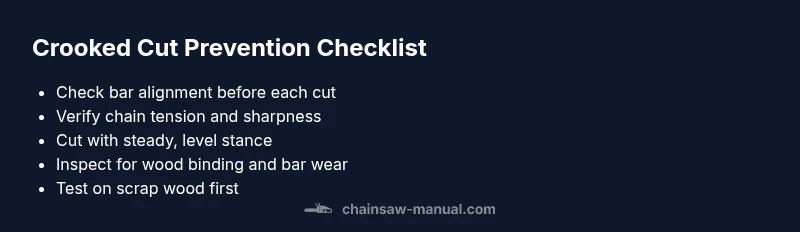
Most crooked cuts come from a misaligned bar, a dull or uneven chain, or improper technique. Quick fix: realign the bar, tension and sharpen the chain, and cut with a steady, level stance. If drift persists, inspect the groove, bar wear, and any binding wood before proceeding. A quick bar realignment and proper chain care usually restore straight cuts.
Understanding why the chainsaw cuts crooked
When the chainsaw seems to wander during a cut, the root cause is almost always mechanical or technique related. In plain terms, crooked cuts happen when the bar is not perfectly straight, the chain is not tracking correctly on the bar, or the operator feeds the saw with uneven force. According to Chainsaw Manual, the most common culprits are bar alignment, chain tension, and sharpening condition. When you fix these three areas, you dramatically reduce drift and improve accuracy on both simple firewood tasks and professional felling work. This page addresses why a chainsaw cuts crooked, how to diagnose it, and how to repair it safely. The goal is to empower homeowners, DIY enthusiasts, and professionals to cut cleanly without compromising safety.
Common causes of crooked cuts: bar alignment, chain condition, and technique
The first place to look is the bar itself. A bent guide bar, worn side rails, or a bar that is not parallel to the ground will produce a drifting cut. Next, test the chain condition. A dull or uneven chain will pull on the wood more on one side, forcing the bar to follow a crooked path. Finally, your cutting technique matters. A forceful, uneven feed rate or cutting at an angle can push the bar off true. Regular maintenance and correct technique work together to minimize crooked outcomes, even when working with knotty wood or dense species.
Diagnosing the issue: quick checks before you cut
Start with a visual alignment check: lay the guide bar on a flat surface and verify that both rails sit flush. Inspect the chain for missing or chipped cutters and ensure the drive links engage evenly in the bar groove. Check chain tension by pulling the chain away from the bar; it should snap back without sagging. Look for bar wear at the tip and in the groove. If anything looks worn, replace or service the component before proceeding. Finally, assess wood conditions such as knots or resin pockets that may cause binding and drift.
Step-by-step fixes for common causes (highly effective for crooked cuts)
- Realign the bar: Loosen the bar mounting nuts, inspect the bar mounting surface for burrs, and ensure the bar is parallel to the chainsaw housing. Tighten to the recommended torque. Pro tip: use a straightedge to confirm the bar rails sit evenly against the bar studs.
- Check chain tension and sharpness: The chain should have slight lash but not sag. Sharpen or file each guide tooth evenly and verify uniform depth gauges. Pro tip: rotate the chain to ensure even wear and avoid over-sharpening on one side.
- Confirm bar and chain compatibility: Use the correct chain pitch for your bar and verify sprocket compatibility. Pro tip: mismatched components can cause tracking problems and drift.
- Inspect for wood binding: Knotty wood or dense fibers can grab one side of the chain. Reduce feed pressure and guide the saw along natural grain paths. Pro tip: make shallow, controlled cuts to establish a true line before deeper cuts.
- Test on scrap material: Run a shallow, straight test cut across a scrap piece to verify straightness before resuming the main job. Pro tip: reset and recheck alignment after every few cuts during a long session.
- Reassemble and recheck: After adjustments, reassemble the bar and chain, re-tension, and recheck the track by running a short cut on clean wood.
Safety tips and common mistakes to avoid
Always wear PPE: helmet, eye protection, ear protection, gloves, and cut-resistant chaps. Never force the saw through wood; instead use steady, consistent pressure and let the chain do the work. A common mistake is adjusting tension with the engine idling; always apply tension with the chain rotating under gentle load. If you hear abnormal grinding, see excessive smoke, or feel unusual kickback, stop and inspect immediately.
Prevention: maintaining straight cuts over time
Create a simple maintenance ritual: inspect the bar and chain before every job, sharpen the chain after every few hours of use, and check tension when the chain is cool. Keep bar oil at the correct level to reduce bar wear and ensure the chain tracks evenly in the groove. Store your saw in a dry place to prevent corrosion that changes alignment.
Steps
Estimated time: 30-60 minutes
- 1
Inspect bar alignment
Place the bar on a flat, level surface and check that the rails sit flush with the support surfaces. Look for any bend or burrs. If misaligned, loosen the bar nuts, adjust, and re-tighten.
Tip: Use a straightedge or metal ruler to verify true alignment across the bar edge. - 2
Check chain tension and sharpness
With the saw off, manually lift the chain away from the bar and ensure it returns snugly. Sharpen or replace as needed and verify uniform tooth height.
Tip: Avoid over-tightening the chain; it should have a small amount of slack when cold. - 3
Verify compatibility and wear
Confirm that the chain pitch matches the bar and that the sprockets engage smoothly. Inspect the groove for wear or deformation.
Tip: If the groove is worn, replace the bar to restore proper tracking. - 4
Assess cutting technique
Adopt a steady stance, avoid side-to-side movement, and feed wood evenly with the saw perpendicular to the cut line.
Tip: Let the chain do the work; don’t push too hard, especially with knots. - 5
Test with scrap wood
Make a shallow cut on scrap to confirm straight tracking. If drift persists, recheck alignment and tension before proceeding.
Tip: Record any persistent drift to troubleshoot subsequent steps. - 6
Finalize and monitor
After fixes, perform a final straight cut on clean wood and monitor for any drift. If issues recur, consider professional inspection.
Tip: A consistent routine reduces drift across projects.
Diagnosis: Chops drift left or right, producing a crooked cut even on straight stock
Possible Causes
- highBar alignment issue
- highDull or uneven chain wear
- mediumImproper cutting technique or uneven feed
- lowBar wear or groove binding
Fixes
- easyRealign the bar so rails are parallel and bar is true to the housing; tighten mounting nuts to spec
- easyTighten or replace the chain; sharpen evenly and ensure uniform depth gauges
- easyAdjust cutting stance and feed pressure for a steady, level cut
FAQ
Why does my chainsaw cut crooked even when the bar looks straight?
Crooked cuts are usually caused by bar misalignment, chain tracking issues, or uneven technique. Check bar alignment, tension, and sharpening first, then reassess with a test cut.
Crooked cuts often come from a misaligned bar or a dull chain. Start by aligning the bar, tightening and sharpening the chain, and testing on scrap wood.
Can a dull chain cause drift to one side?
Yes. A dull or uneven chain pulls on one side as it cuts, causing drift. Sharpen evenly and replace if necessary to restore true tracking.
A dull chain can make the cut drift; sharpen evenly or replace to restore straight tracking.
How do I verify the bar is truly aligned?
Place the bar on a flat surface and check that both edges rest evenly. Look for any tilt of the nose or side rails and adjust as needed.
Verify bar alignment by placing it on a flat surface and checking that both rails sit evenly.
Is crooked cutting dangerous?
Crooked cuts can increase kickback risk and wood binding. Stop, inspect, and fix alignment before continuing to cut safely.
Crooked cutting raises kickback risk; stop and fix alignment before continuing.
When should I replace the bar or chain?
If wear is evident on the bar rails or the chain becomes unevenly worn beyond sharpening limits, replace components to restore safety and performance.
Replace worn bar or chain when sharpening no longer restores straight tracking.
Does wood type affect crooked cuts?
Yes, knotty or dense wood can deflect the chain and cause drift. Adjust technique and cut more slowly through difficult sections.
Hardwood with knots can steer the cut; slow down and adjust technique.
Watch Video
The Essentials
- Inspect bar alignment before each cut
- Keep chain sharp and properly tensioned
- Use a steady, level cutting stance
- Test progress with scrap wood first
- Create a maintenance routine to prevent drift