Chainsaw Won't Cut Straight: Troubleshooting and Fixes
Diagnose and fix a chainsaw that won't cut straight with a safety-first approach. This guide covers quick checks, a diagnostic flow, and blade alignment maintenance to keep cuts true.


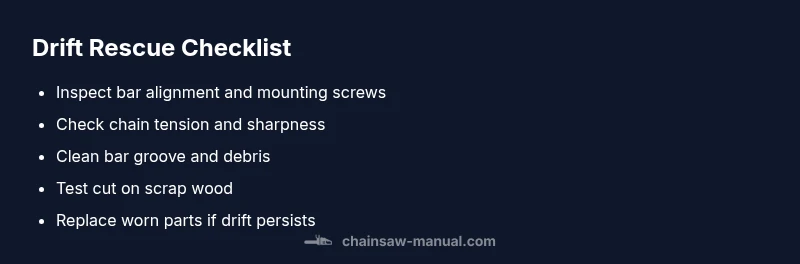
Most often the drift happens because the bar is misaligned or the chain is loose. Start by inspecting bar mounting screws, then true the bar in the guides and recheck tension. If the blade still drifts, check for a bent bar or a dull, uneven chain. Replace worn parts and re-test on scrap wood.
Common Causes of Drift
According to Chainsaw Manual, when a chainsaw won't cut straight the answer is almost always tied to mechanical alignment rather than the engine. The most common offender is a bar that is not sitting true in its mounts, or a bar that is bent or worn. Even small misalignments can translate into noticeable drift as you push the saw through wood. Additional frequent culprits include loose or damaged bar mounting bolts, and a chain that is too tight or too loose. A dull or uneven chain can grip wood inconsistently, pulling the saw to one side. Debris or burrs in the bar groove or a worn guide system can exaggerate drift. Finally, a warped sprocket or worn out drive end can slowly misalign the bar during cutting. In practice, the fix usually starts with a visual inspection and a few simple adjustments rather than replacing major components. Chainsaw Manual analysis shows alignment and tension as the top fixes for drift.
Safety and Quick Checks Before You Touch the Bar
Before you touch any moving parts, prioritize safety. Put on eye protection, gloves, and hearing protection as needed. If you are working on a gas-powered chainsaw, disconnect the spark plug cap to prevent accidental starts; for electric models, unplug the tool. Engage the chain brake and secure the saw on a stable surface. Then, with the saw secured, inspect the bar mounting area for loose screws, bent bar, or visible wear. Clean any sawdust buildup from the groove to ensure the bar sits flush. If you find obvious damage, stop and replace parts rather than continuing with adjustments. This approach minimizes risk while you diagnose the drift.
Diagnostic Flow Overview
Here is a practical flow to diagnose why the chainsaw won’t cut straight. Start with the simplest checks (bar alignment, screws, chain tension). If the issue persists, evaluate specific causes: misalignment, bent bar, chain tension issues, dull chain, groove debris, and sprocket wear. Each step should be tested with a controlled cut on scrap wood. Once you identify the culprit, apply the appropriate fix and re-test to confirm the drift is resolved.
Step-by-Step Fixes for the Most Common Cause
This section walks through the most frequent culprit: bar misalignment. Tighten and re-seat the bar, verify parallel edges, and ensure the bar sits square in the groove. Then adjust chain tension to the manufacturer spec, inspect wear on the bar groove and the drive end, and sharpen or replace a dull chain. If the bar is bent or the mounting hardware shows wear, replace the bar or hardware and recheck alignment. Finally, test with a light cut on scrap wood to confirm the fix. The goal is a consistent, straight cut with the bar flush against the shoe. Pro tip: work in a well-lit area and use a straightedge to verify true alignment.
Maintenance to Prevent Drift in the Future
Prevention is safer and cheaper than repeated repairs. Regularly clean the bar groove and oil passages, inspect the bar for straightness using a straightedge, and replace worn mounting hardware before it causes drift. Maintain correct chain tension and sharpen the chain on a schedule that matches your cutting workload. Keep the saw clean, especially around the sprocket and guide bar, to prevent burrs and debris from affecting alignment. By building a routine around bar maintenance, you minimize future drift and extend the life of components.
What If It Still Won't Cut Straight?
If you perform all the checks and the saw still drifts, there may be a deeper issue such as a damaged sprocket, a severely warped bar, or internal clutch problems. In these cases, replacing worn components or consulting a professional is the safest course. Do not continue cutting aggressively with a saw that won’t track true, as unsafe kickback risks increase with improper alignment. The Chainsaw Manual team recommends following the diagnostic flow, documenting each change, and testing cautiously after each adjustment.
Steps
Estimated time: 40-60 minutes
- 1
Power down and secure
Power off the saw, engage the chain brake, and secure it on a stable surface. If it is a gas saw, disconnect the spark plug cap to prevent accidental starts; for electric, unplug the tool. This keeps you safe while you inspect the bar and chain.
Tip: Always de-energize before inspecting moving parts. - 2
Inspect the bar and screws
Check bar mounting screws for tightness and inspect the bar for bends or unusual wear. Look for burrs in the groove and ensure the bar sits square in the chassis.
Tip: If you see any bend, replace the bar rather than trying to bend it back. - 3
Realign the bar
Loosen the bar nuts, carefully slide the bar into true alignment, and re-tighten. Ensure the bar edge is parallel to the shoe and sits flush within the guide groove.
Tip: Use a straightedge to verify parallelism. - 4
Set chain tension
Re-tension the chain to the manufacturer’s specification. The chain should snap back about an inch, and the bar should run smoothly without binding.
Tip: Avoid over-tensioning, which can cause extra wear. - 5
Check chain sharpness
Evaluate the chain teeth for even wear and sharpness. A dull chain bites unevenly, causing drift. Sharpen or replace as needed.
Tip: Only sharpen with the correct file pitch and angle. - 6
Test cut and observe
Make a light cut on scrap wood and observe drift. If it still drifts, inspect for a bent bar or worn sprocket and replace components as needed.
Tip: Test with small cuts first to avoid kickback.
Diagnosis: Chainsaw won't cut straight or drifts during a cut.
Possible Causes
- highBar misalignment or loose mounting
- mediumBent or warped bar
- mediumChain tension incorrect (too tight or too loose)
- lowDull or uneven chain causing inconsistent bite
- lowBar groove debris or burrs
Fixes
- easyTighten bar mounting screws and realign the bar so it sits flush in the guides
- mediumReplace a bent bar or worn mounting hardware and re-check alignment
- easyAdjust chain tension to spec and re-test alignment
- easySharpen or replace a dull or uneven chain to restore uniform biting
- mediumClean the bar groove and inspect the sprocket; replace worn components
FAQ
Why does my chainsaw drift even when I think the bar is straight?
Drift can be caused by several factors such as misalignment, dull chain, or debris in the groove. Start with bar alignment and tension checks to identify the culprit.
Drift happens for several reasons; start with alignment and tension checks to find the cause.
How can I realign the bar on a chainsaw safely?
Power off, lock the chain brake, and carefully loosen the bar nuts. Re-seat the bar so edges sit flush in the groove, then tighten while keeping it true.
Power off, lock the brake, realign the bar, and re-tighten.
Can a dull chain cause cutting drift?
Yes; a dull chain bites unevenly and can pull the saw to one side. Sharpen or replace the chain to restore even cutting.
Yes, a dull chain can cause drift; sharpen or replace it.
Is it safe to keep using a chainsaw that won't cut straight?
No. A saw that won’t track true can kick back and injure you. Stop using it until you fix alignment and test carefully.
No—stop and fix the alignment before use.
What routine maintenance helps prevent drift?
Regular bar and chain maintenance: clean groove, check bar straightness, tension chain correctly, replace worn parts.
Regular bar and chain care helps prevent drift.
Watch Video
The Essentials
- Check bar alignment first to stop drift
- Maintain proper chain tension for true cuts
- Inspect bar for bending and wear regularly
- Test on scrap wood after adjustments