Should Chainsaw Bar Get Hot? A Practical Troubleshooting Guide
Discover why a chainsaw bar overheats and how to troubleshoot safely. Learn common causes, quick checks, fixes, and prevention tips for homeowners, DIYers, and pros.


Most likely cause: poor lubrication or a dull chain causing excessive friction. Quick fix: 1) Stop the saw and check bar oil level and oil passage; 2) Clean the oil holes and inspect the pump; 3) Sharpen or replace the chain and re-lubricate; 4) Inspect bar for wear and correct tension. If it still overheats, consult a pro.
Understanding what makes a chainsaw bar overheat
According to Chainsaw Manual, bar temperature naturally rises during use, but persistent heat that lingers after short bursts is a warning sign. Should chainsaw bar get hot? It’s normal for the bar to feel warm after heavy cutting, yet sustained heat indicates friction and lubrication issues that deserve attention. The bar, chain, and oil work together to transfer heat away from the cutting edge; when lubrication fails, or the chain is dull, heat builds quickly. In addition, an improper fuel mix or engine problems can contribute to extra friction and heat. Always minimize peak loads, and avoid forcing the saw through material that exceeds its design. By understanding what heat means in real use, you can make safer decisions before the bar reaches unsafe temperatures.
Common causes of bar overheating
Overheating a chainsaw bar is rarely caused by one issue alone. The most frequent culprits include insufficient bar oil or clogged oil passages, a dull or damaged chain that creates extra friction, incorrect chain tension, and bar wear that alters the contact surface. Cutting in dirty, abrasive material or under heavy load without sufficient rest also raises heat. Cold weather or using oil with too high viscosity can hinder lubrication flow, too. Finally, a poorly tuned engine or air intake restrictions can contribute to overheating by reducing the saw’s ability to shed heat through normal operation. Addressing these causes often resolves the problem without expensive repairs.
Quick checks before digging into fixes
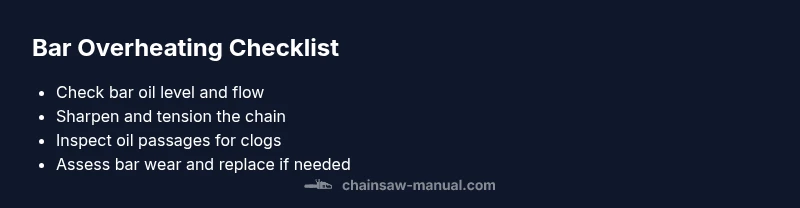
Before diving into fixes, perform quick, safe checks that cover the most common issues. First, verify bar oil level and confirm that oil is flowing to the bar during operation. Second, inspect the oil passages and pump for blockages or leaks. Third, assess chain sharpness and tension; a dull, overly tight, or loose chain increases friction and heat. Fourth, examine the bar for wear, burrs, or misalignment, and replace if necessary. These checks are inexpensive and often resolve overheating instantly. Always ensure the saw is cool and disconnected from power before touching internal components.
Diagnostic flow at a glance
This section outlines a practical flow to diagnose bar overheating. Start with symptom observation, then rule out lubrication and chain issues, followed by bar wear or tension problems, and finally engine-related heat management. For each step, move to the next only after confirming and addressing the preceding item. The goal is to identify the simplest fix first, reducing downtime and risk. Remember: if you cannot safely identify or resolve the issue, seek professional service promptly.
Step-by-step: Fixing the most common cause
The most common cause of bar overheating is inadequate lubrication combined with a dull chain. This section provides a structured approach to fix this issue, validate improvements, and prevent recurrence. The steps below assume basic maintenance tools and a standard gasoline chainsaw. If any step feels risky or uncertain, stop and consult a pro.
Steps
Estimated time: 30-60 minutes
- 1
Check lubrication system
Power down the saw, disconnect the spark plug cap (gas saw) or remove the battery (electric). Check the bar oil level and ensure the oil reservoir is filling when the throttle is engaged. If there is little or no oil flow to the bar, inspect the oil line for kinks, clean the oil filter, and test the pump.
Tip: Keep a clean container to catch any drips and note oil color for signs of contamination. - 2
Clean oil passages
Remove the bar and inspect oil holes on both the bar and the clutch drum area for clogs. Use a fine wire or dental pick to clear obstructions without enlarging the holes. Reassemble and run briefly to confirm oil flow reaches the bar.
Tip: Do not use metal tools that could scratch the bar surface; gentle probing works best. - 3
Sharpen and tension the chain
A dull chain increases resistance and heat. Sharpen to manufacturer spec using proper files or a sharpener. Check chain tension; it should seat snugly in the groove but still move freely by hand.
Tip: Always wear eye protection and avoid over-sharpening; a sharp chain should cut cleanly without wobble. - 4
Inspect the bar for wear
Look for curved or peened rails, burrs, or deep grooves. Replace the bar if wear is excessive or if there are burrs that cannot be deburred safely. Make sure the bar is properly aligned and not warped.
Tip: If bar rails are polished or grooved, consider a replacement to restore heat dissipation. - 5
Test under light load
Reassemble the chain, run the saw under light load to monitor heat, lubrication, and cutting behavior. Avoid prolonged heavy cuts until you’re confident the fuel/oil mix and speed are correct.
Tip: Take a short break between tests to prevent surprise overheating. - 6
Document maintenance
Record when lubrication parts were last serviced and set a maintenance reminder. Regular checks reduce overheating risk and extend bar/chain life.
Tip: Set alerts for oil changes, chain sharpening, and bar inspection intervals.
Diagnosis: Bar or chain becomes hot quickly during normal cutting
Possible Causes
- highInadequate bar oil or clogged oil passage
- highDull or damaged chain causing excessive friction
- mediumIncorrect chain tension or bar wear
- mediumCutting heavy load or prolonged operation without rest
- lowCold oil or improper viscosity
Fixes
- easyCheck bar oil level, confirm pump operation, and clean oil passages
- easySharpen the chain, adjust tension, and clean or replace the bar if necessary
- mediumReplace worn bar/chain components and consider adjusting oil viscosity for weather
- easyReduce cutting load, take shorter passes, and allow cooling breaks
FAQ
What causes a chainsaw bar to overheat?
The main causes are insufficient lubrication, a dull chain, incorrect tension, bar wear, or heavy cutting loads. Environmental factors like cold oil can worsen the problem. Start with lubrication and chain maintenance before exploring deeper issues.
Overheating usually comes from lubrication or chain problems. Check oil flow and sharpen the chain first.
Can using old oil contribute to bar overheating?
Yes. Old or thick oil can reduce lubrication efficiency, increasing friction and heat. Always use fresh bar oil suitable for your climate and temperature.
Old oil can thicken and clog, causing more friction and heat. Use fresh oil suitable for the weather.
Is overheating a sign of deeper engine problems?
Most bar overheating is due to lubrication or chain issues. If the engine runs hot beyond normal stops, inspect air filters, muffler, and cooling passages or consult a professional.
Usually not engine problems, but if it keeps heating, check air flow and cooling parts and consider a pro.
How often should I sharpen the chain to prevent overheating?
Keep the chain sharp by inspecting it before each use and sharpening when you notice slower cutting or increased effort. Regular sharpening reduces friction and heat buildup.
Check before use and sharpen when cutting slows down; sharper chains cut cleaner and stay cooler.
When should I replace the bar or chain?
Replace the bar or chain when wear, warping, or burrs are beyond spec. Worn components increase heat and reduce cutting efficiency.
Replace worn parts when they can’t be repaired; worn bars and chains cause heat and poor cuts.
Watch Video
The Essentials
- Identify heat causes early with quick checks
- Keep bar oil flowing and chain sharp
- Replace worn bars or chains when necessary
- Schedule regular maintenance to prevent overheating