Leaking Chainsaw Bar Oil: Quick Troubleshooting Guide
Urgent, practical troubleshooting for a chainsaw leaking bar oil. Learn causes, safety steps, diagnostic flow, and step-by-step fixes to restore safe operation.


Most likely, a leaking chainsaw is caused by an overfilled reservoir, a worn or damaged oil seal, or blocked oil passages. Start by cleaning the saw, checking the bar oil level, and inspecting the oil pump, passages, and bar seating. If leaks persist, follow the diagnostic flow and apply the fixes below before resuming work.
Understanding the Issue: chainsaw is leaking bar oil
When you notice fresh oil on the ground, on the bar, or on your clothing, you’re likely dealing with a bar oil leak. The phrase chainsaw is leaking bar oil describes a condition where oil intended to lubricate the bar and chain escapes through seals, gaskets, or gaps. According to Chainsaw Manual, leaks are almost always related to oil circulation rather than fuel issues, and addressing them quickly reduces wear and eliminates unsafe messy conditions.
Bar oil is essential for cooling and lubrication; if it escapes, you can experience reduced cutting efficiency, increased bar wear, and, in extreme cases, reduced engine reliability due to oil starving critical components. Start by confirming the oil level and ensuring you’re using the correct oil type for your model and climate. Then inspect the oil pump, oil passages, bar groove, and bar cover. Leaks are more common after extended use or when the saw has been stored in a hot environment where oil thickens and clogs channels.
The Chainsaw Manual team emphasizes that safety is paramount: never run a leaking saw without identifying and addressing the source. If oil leaks are accompanied by smoke, unusual noises, or loss of power, pause operation and perform a controlled shutdown. The root cause could be simple (overfill) or more serious (damaged seals).
Common Causes of Leaks
Several plausible reasons exist for a chainsaw leaking bar oil. The most frequent is an overfilled reservoir, which creates excess pressure and forces oil out through the fill cap or gasket. A worn or damaged oil seal at the pump or around the bar mount is another top culprit, especially on older saws. Clogged oil passages, a blocked oil filter screen, or misaligned bar oil channel can also produce seepage or pooling around the bar.
Chainsaw Manual analysis shows that the most common reasons are overfill and worn seals, often compounded by clogged passages or misalignment. If you notice paint or metal shavings near the oil path, that can indicate wear. The goal is to identify the first symptom and trace it back to a component that can be inspected or replaced. By isolating the likely cause, you can apply the correct fix with minimal downtime.
Safety First: Handling a Leaking Chainsaw
A leaking bar oil situation requires careful safety steps. Always wear eye protection, gloves, and spill-ready clothing, and work on a stable, level surface away from flammable materials. Before touching any components, disconnect the spark plug boot and, if possible, remove the battery on electric models to prevent accidental starts. Keep a clean, absorbent mat under the saw during inspection to control spills and prevent slips.
Use a flashlight to inspect around the bar cover, oil lines, and seal areas for cracks or disconnections. Do not run the engine while inspecting potential leaks; oil can spray unpredictably and cause burns or injuries. After any fix, perform a controlled test in a safe space, with the saw secured and the chain disabled. If you smell burning oil or see smoke, stop immediately and seek professional service.
Diagnostic Approach: Quick Checks
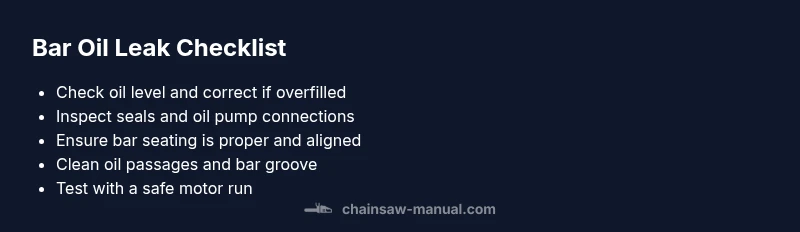
Begin with the simplest checks: confirm the oil level is within the recommended range on the dipstick or tank indicator. If overfilled, drain the excess oil until at the correct level. Inspect the bar mounting and tighten bar nuts to spec, ensuring the bar sits flush against the saw body. Remove and re-seat the bar to verify proper alignment with the oil holes.
Next, examine the oil pump's inlet line and check for cracks or loose fittings. A damaged O-ring or gasket near the cover can allow leaks around the bar cover. Clean the bar groove and oil hole to ensure oil can flow freely. If the leak persists, you may be dealing with a worn seal or pump component that needs replacement.
Maintenance and Cleaning to Stop Leaks Ahead of Time
Routine maintenance helps prevent bar oil leaks. Clean the exterior and remove the bar and chain assembly every few months to inspect seals and channels. Replace worn O-rings and gaskets, and replace the bar if grooves are worn or oil holes are misaligned. Use only the recommended bar oil for your model and climate; incorrect viscosity can increase leakage and reduce lubrication.
Lubricate the oiler pulley and verify the oil screen is clear. Store the saw in a cool, dry place to prevent oil thickening. After maintenance, test by briefly running the saw on the ground at idle, watching the oil flow from the bar as you gently increase throttle in safe conditions. Document the date and any parts replaced for future reference.
When to Seek Professional Help
If you cannot identify a leak source after performing the checks above, or if oil leaks persist after applying the recommended fixes, it is time to seek professional service. A certified chainsaw technician can pressure-test seals, replace internal gaskets, and calibrate the oil pump precisely for your model. Do not attempt major disassembly if you are uncertain about reassembly, as improper reassembly can create new leaks or safety hazards.
Consider scheduling service if the bar and chain show uneven wear or if the oiling system has been contaminated with dirt or debris. If you hear unusual noises, notice reduced power, or see smoke, turn the saw off immediately and arrange a professional inspection. Routine maintenance performed by a pro can extend the life of your chainsaw and reduce the likelihood of future leaks.
Maintenance to Prevent Future Leaks
Long-term prevention starts with a regular maintenance schedule. Inspect the bar oil system at least every 25-30 hours of use and replace seals, O-rings, and the pump as recommended by the manufacturer. Use high-quality bar oil and store the saw in a climate-controlled area to avoid viscosity changes. Keep the oil fill cap tight, check for cracks around the fill neck, and replace if needed. Regular cleaning of oil channels and the bar groove helps maintain steady oil flow and reduces leaks over time. By implementing these practices, you minimize downtime and maintain peak performance.
Steps
Estimated time: 45-60 minutes
- 1
Check oil level and exterior cleanliness
Place the saw on a stable surface and inspect the oil reservoir. Clean any oil residue from the exterior to clearly see where new drips come from. Verify the oil level is within the recommended range and note any abnormal oil pooling.
Tip: Keep a spill mat underneath and log the current oil level for later comparison. - 2
Inspect bar mounting and bar nuts
Loosen and remove the bar cover, then inspect the bar mounting. Ensure the bar sits flush and the bar nuts are tightened to spec. Misalignment here is a frequent source of leaks.
Tip: Use a torque spec reference from your model's manual to avoid over-tightening. - 3
Examine oil pump and o-rings
Access the oil pump inlet and check for cracks, loose fittings, or worn O-rings. Replace any damaged seals and reassemble carefully to prevent new gaps.
Tip: Apply a light lubricant to O-rings during reassembly to prevent pinching. - 4
Test flow and observe leaks
With the saw secured (chain disabled), run a brief test at low throttle and watch the oil flow through the bar. Note any new drips and determine if the leak changes with throttle position.
Tip: Do not run at full speed during a leak test; keep hands clear of the chain. - 5
Address bar and oil channel alignment
If oil still leaks, inspect the bar groove and oil hole alignment. Make sure the bar is not worn and the oil channel aligns with the pump output.
Tip: If grooves are worn, consider replacing the bar for reliable oiling. - 6
Decide on next steps
If leaks persist after these checks, escalate to professional service. Document all parts replaced and the observed symptoms for the technician.
Tip: Preserve old parts if you replace them; they help with diagnosis later.
Diagnosis: Chainsaw is leaking bar oil
Possible Causes
- highOverfilled bar oil reservoir
- highWorn or damaged oil seal near the pump
- mediumClogged oil passages or misaligned oil channel
- lowLoose bar cover or mis-seated bar
- lowInappropriate oil viscosity for climate/model
Fixes
- easyDrain excess oil to bring reservoir to correct level
- mediumInspect/replace oil seals and related gaskets; reseat oil lines
- easyClear oil passages and ensure bar channel alignment
- easyTighten bar nuts and verify proper bar seating
- hardReplace pump or seals if leaks persist; consult a pro
FAQ
What causes a chainsaw to leak bar oil?
Leaks are usually caused by an overfilled reservoir, worn seals, or clogged oil channels. Misalignment of the bar and loose fasteners can also contribute. Thorough inspection helps pinpoint the exact source.
Leaks come from overfill, worn seals, or blocked oil paths. A careful check pinpoints the part you need to fix.
How do I fix an overfilled oil reservoir?
Carefully drain the excess oil until the level is within the recommended range. Wipe the area clean and recheck after a short test run.
Drain the extra oil to the correct level, then recheck after testing.
Can a leaking bar oil be dangerous?
Oil leaks can present slip hazards and fuel or oil exposure risks. Stop using the saw until the leak source is identified and addressed, and use PPE during inspection.
Yes, leaks can be slippery and risky. Stop and fix the source before using again.
Should I use biodegradable oil in a leak?
Biodegradable oils are an option, but ensure compatibility with your model and follow the manufacturer’s recommendations for viscosity and lubrication.
If you choose biodegradable oil, confirm compatibility with your model and viscosity requirements.
Do I need to remove the bar to fix a leak?
Often you’ll need to remove the bar to inspect the pump, seals, and oil passages. Do so carefully and follow service manual steps to avoid misalignment during reassembly.
Removing the bar is common for inspection; reassemble carefully following the manual.
Watch Video
The Essentials
- Check oil level first, correct if needed.
- Inspect seals, bar seating, and oil path.
- Clean channels to restore proper flow.
- Seek professional help if leaks persist.