Repair Chainsaw Near Me: Safe, Practical Guide to Service
Learn how to locate safe, reputable chainsaw repair near you, evaluate common issues, and decide when to DIY or hire a pro with practical, safety-focused guidance from Chainsaw Manual.


This guide helps you locate a safe, reputable chainsaw repair option near you, evaluate typical failures, and decide when to DIY or hire a pro. Before you start, assemble basic safety gear, a clean workspace, and a short list of local service options. This article from Chainsaw Manual will help you vet technicians and avoid scams.
Safety First: Why Repairing a Chainsaw Near Me Needs Caution
If you search for repair chainsaw near me, your first step should be understanding that saws are powerful machines with moving parts and flammable fuels. The Chainsaw Manual team emphasizes safety first: wear eye protection, gloves, hearing protection, and sturdy boots; work in a well-ventilated, uncluttered area; disconnect power (remove spark plug on gas saws or unplug electric models) before touching components. This foundational caution helps prevent kickback, fuel leaks, and unexpected starts during inspection. By approaching local repair options with safety as a baseline, you’ll reduce risk and get more accurate assessments. According to Chainsaw Manual, a careful diagnostic is the most reliable path to a durable fix, especially when you’re searching for repair options near you.
Approach each step with a written plan and a clear emergency setup: have a fire extinguisher or water source nearby, keep fuel away from ignition sources, and never attempt repairs on a hot engine. If in doubt, stop and seek professional help. The end goal is to prevent injury and maintain the saw’s performance through proper maintenance and timely service.
Assess Your Chainsaw: Symptoms to Watch and How to Document Them
Before you contact a shop, observe and record specific symptoms: does the engine crank but fail to start, is there smoke, a burning smell, or a hard-start condition? Is the chain moving smoothly or slipping, is there unusual vibration, oil leaks, or loss of compression? Take clear notes about when problems occur (start-up, idle, under load) and any recent maintenance you performed. Photograph the spark plug, fuel lines, air filter, and any obvious wear on the chain and bar. Documentation helps a technician quickly diagnose issues and provide an accurate estimate. Chainsaw Manual analysis shows that lack of regular maintenance and delayed lubrication are frequent precursors to more serious repairs, so write down maintenance history as you evaluate symptoms. Include your location and preferred service options to streamline the search for repair near me.
If you are unsure about symptoms, compare your saw to the owner’s manual’s maintenance checklist and note deviations. This baseline will guide your conversations with mechanics and prevent unnecessary work.
How to Find a Reputable Repair Service Nearby
Locating a trustworthy chainsaw repair shop starts with transparent criteria. Start with local searches for “repair near me” and then vet options with a simple checklist: valid business licenses where applicable, clear warranty terms, and a physical address you can verify. Read recent customer reviews focusing on workmanship, turnaround times, and how the shop handles recalls or faulty parts. Ask questions about part sourcing, whether they service your brand (Stihl, Husqvarna, etc.), and what happens if the repair fails after service. Request written estimates and a breakdown of parts and labor. For larger repairs, ask about core exchanges or used parts policy. Chainsaw Manual analysis shows that shops offering posted warranties and clear, itemized estimates tend to deliver more reliable results and reduce the risk of hidden costs. Always confirm safety practices and whether a shop will demonstrate a test-start after service.
When you visit or call, verify the shop’s hours and the availability of a quick diagnostic check. If a shop refuses to provide estimates or cannot name the parts they will use, consider another option. A reliable technician will provide a clear plan and price range before performing any work.
When to DIY vs When to Hire a Pro
Certain routine maintenance tasks are accessible to DIYers with basic tools and careful attention, such as cleaning the air filter, replacing the spark plug, or checking chain tension. However, more complex repairs—like carburetor overhaul, fuel line replacement, or clutch and crank issues—often require specialized knowledge and safe handling practices. If you see signs of compromised safety features (damaged kickback primers, faulty chain brake, cracked bar), or the saw emits unusual noises, excessive vibration, or starts intermittently, it’s time to seek professional help. The Chainsaw Manual team recommends erring on the side of caution: when in doubt, consult a trained technician rather than risking personal injury or further damage. For many homeowners, a quick diagnostic from a reputable local shop is quicker and safer than a prolonged DIY trial.
If you decide to do minor maintenance yourself, allocate time for a thorough inspection and set up a safe, well-ventilated workspace. Always disconnect the spark plug and drain fuel before disassembling any components. If gas/oil mixture or seals look degraded, replace parts with appropriate OEM equivalents and follow the manufacturer’s torque specs—these details reduce the chance of leaks and performance issues after the repair.
What to Ask Before You Hire a Technician
Prepare a short list of questions to assess expertise and reliability: Do you have experience with my saw’s make and model? Can you show proof of certification or training? Do you provide a written estimate, warranty on repairs, and a parts guarantee? What diagnostic steps will you take, and how long will the repair take? Can you explain any recommended maintenance to prevent recurrence? A good shop will welcome questions and provide transparent answers. If possible, request a preliminary inspection and a rough price range before any work begins. Chainsaw Manual recommends evaluating shops by their communication clarity and warranty terms as a key indicator of quality service.
Also, inquire about after-service support: will they offer a post-repair test run and maintenance plan? If the saw must be shipped or transported, ask about shipping policies and insurance coverage. Documentation that accompanies the repair (receipts, parts used, service notes) helps with future maintenance and resale.
Common Repairs You Might Encounter
Most repair tasks fall into several familiar categories: chain tension and alignment, bar and chain replacement, air filter cleaning or replacement, spark plug replacement, fuel line inspection, carburetor cleaning, and ignition coil inspection. Chainsaw maintenance basics—oil rates, chain sharpening, and air-cleaning schedules—are the most common service items. Chainsaw Manual analysis shows that lubrication problems and air leaks account for a large share of service calls, so start with lubrication and seal checks for faster diagnosis. If you notice poor lubrication, take immediate steps to clean or replace the oiling system and inspect the bar oil reservoir. Deeper engine repairs, carburetor work, or crankcase issues should be left to a certified technician. Always request a written estimate before approving any non-emergency repairs and ask about parts availability and warranty terms. A well-documented repair history helps prevent recurring problems and keeps your saw performing reliably.
Pro tip: keep a maintenance log with dates, tasks, and any replaced parts so you know when to schedule future service and what to expect next time.
What to Expect During a Chainsaw Repair Visit
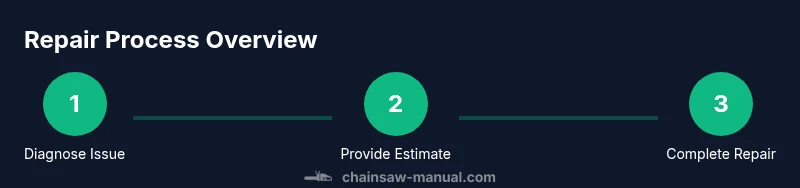
A typical repair visit starts with intake documentation: the technician records symptoms, reviews the service history, and notes the saw’s model and serial number. You will receive an itemized estimate that lists labor, parts, and any core charges. The shop will usually perform a diagnostic test, provide a recommended repair plan, and quote a price range. If parts are on backorder, ask how it affects timing and whether temporary substitutions are allowed. Reputable shops offer warranties on workmanship and parts—verify the coverage period and what it includes. Upon completion, you should receive a test-start and a demonstration of correct operation, including chain tensioning and proper lubrication. Chainsaw Manual emphasizes verifying safety features before handing back the tool and ensuring user instructions are clear for post-repair maintenance. Bring the saw, receipts, and a contact number for follow-up questions after service.
How to Prepare Your Chainsaw for Service
Preparation reduces turnaround time and protects the technician from hazards. Begin by draining fuel or disconnecting the spark plug, then remove the bar and chain and secure them in a labeled bag. Clean the exterior thoroughly and collect any small parts or screws to prevent loss. Photograph critical areas (spark plug, carburetor, fuel line connections) to show the technician exactly what you observed. Remove add-ons like the chain brake, scabbard, or vibration-damping accessories if the shop requests it. Pack the saw in a sturdy container with a note describing symptoms and any maintenance performed recently. By providing a clean, well-documented system, you can speed the diagnostic process and improve repair accuracy. Chainsaw Manual recommends maintaining a spare set of spark plugs and fuel filters for quick replacements during routine service.
Maintaining Your Chainsaw After Repair
After repair, follow a strict maintenance routine: clean air filters regularly, inspect and lubricate the chain, check bar wear, and ensure proper fuel mix and bar oil levels. Keep up with calendar-based checks for spark plug condition and ignition timing when applicable. Store your saw in a dry, ventilated place and avoid exposure to extreme temperatures. Establish a simple pre-use inspection checklist to catch issues before they escalate. A proactive maintenance plan reduces the risk of future breakdowns and extends the life of your chainsaw. The Chainsaw Manual team reinforces that consistent care is often cheaper than repeated emergency repairs and helps sustain peak cutting performance.
Tools & Materials
- Safety gear (gloves, eye protection, hearing protection)(ANSI-certified PPE recommended)
- Phillips head screwdriver #2 and flathead screwdriver(Essential for removing covers and screws)
- Socket wrench set and pliers(For fasteners and hose clamps)
- Spark plug wrench and replacement spark plug(Check compatibility with your model)
- Carburetor cleaner and compressed air(Useful for cleaning passages)
- Air filter replacement or cleaning kit(Keep spare filters on hand)
- Bar and chain oil, bar lubricant(Use the correct grade for your climate)
- Fuel and fuel container (gas/oil mix per manufacturer)(Mix ratio as specified in manual)
- Owner's manual for your model(Reference for torque specs and part numbers)
- Multimeter (optional)(Useful for ignition or sensor checks)
- Temporary parts kit (filters, seals, gaskets)(Keep on hand for common replacements)
Steps
Estimated time: 1-2 hours
- 1
Power down and secure equipment
Power down the saw and remove the spark plug to prevent accidental starts. Put the spark plug on a non-conductive surface and ground yourself to avoid static discharge. This step reduces risk during inspection.
Tip: Always verify ignition is isolated before touching any moving parts. - 2
Inspect chain brake and clutch
Check the chain brake for proper engagement and verify the clutch moves freely without binding. If the brake is sticky, lubricate lightly with manufacturer-approved lubricant after removing the bar. Confirm the chain cannot move unless the brake is released.
Tip: A seized clutch can cause chain slip or kickback; address it before testing power. - 3
Remove bar and chain for inspection
Remove the bar and chain and inspect for wear, tension, and alignment. Clean the bar groove and drive sprocket areas. Confirm the chain pitch and gauge match the bar and sprocket.
Tip: Take photos of alignment before removal to aid reassembly. - 4
Check air and fuel systems
Inspect the air filter; replace if clogged. Inspect fuel lines and filter for cracks or leaks and replace as necessary. Ensure fuel mix is correct and the oiling system delivers lubricant to the bar.
Tip: Avoid running saw on an empty air filter; lean mixtures can cause engine damage. - 5
Inspect ignition and electrical components
Inspect the spark plug for fouling or wear; clean or replace as needed. If your model has an electronic ignition, test continuity with a multimeter. Replace worn ignition parts to restore reliable starting.
Tip: Record plug type and gap size for future maintenance. - 6
Reassemble and perform a cautious start test
Reinstall the bar, chain, and covers. Reconnect the spark plug and fuel source. Perform a cautious start in a safe open area, watching for abnormal sounds or smoke.
Tip: Never test-start indoors or near flammable materials. - 7
Document service and schedule follow-up
Record the work performed, parts replaced, and any tests run. Note warranty terms and set a maintenance schedule to prevent future issues.
Tip: Keep written notes and part numbers for easy future reference.
FAQ
What should I do first if my chainsaw won't start?
Start with safety: unplug or remove the spark plug, then inspect the fuel and air filters. Check for obvious issues like a clogged carburetor or foul spark plug. If starting problems persist, seek professional help rather than forcing starts.
First, ensure safety, then check fuel and air filters, and inspect the spark plug. If it still won’t start, contact a professional.
Can I repair a chainsaw myself?
Basic cleaning, lubrication, and filter replacement are suitable for DIY. More complex issues—such as carburetor overhaul or ignition problems—require professional training and equipment for safety and to avoid further damage.
Basic maintenance is okay to tackle yourself, but complex repairs should be left to a pro.
How long does a typical chainsaw repair take?
Repair duration varies with the shop’s workload and parts availability. Some repairs are completed in a day, while others take several days. Always ask for an estimated timeline and keep in touch with the shop for updates.
Times vary; ask for an estimated window and stay in touch with the shop.
What credentials should I look for in a repair technician?
Look for certifications or formal training in chainsaw maintenance, brand-specific training (Stihl, Husqvarna, etc.), and a warranty on workmanship. Ask for references or customer reviews to confirm reliability.
Seek certified technicians with brand training and a warranty on work.
Should I bring my owner's manual to the repair shop?
Yes. The manual provides torque specs, part numbers, and safety tips that help the technician perform accurate repairs and avoid incorrect parts.
Bringing the manual helps ensure the correct parts and specs are used.
What are the most common signs a repair is beyond DIY?
Persistent starting issues, loss of compression, serious fuel leaks, or a cracked crankcase usually indicate professional intervention is needed. Do not attempt extensive disassembly or a carburetor repair without proper training.
If you notice major engine issues or leaks, consult a pro.
Watch Video
The Essentials
- Prioritize safety and proper diagnostics before any repair.
- Differentiate DIY-friendly tasks from major repairs.
- Seek written estimates and warranties to avoid surprises.
- Choose a shop with clear communication and proven maintenance practices.
- Document service history to guide future maintenance.