How to Prevent a Chainsaw From Getting Stuck Safely
Learn safe, practical steps to prevent a chainsaw from getting stuck, with pre-checks, proper technique, and maintenance tips from Chainsaw Manual. Improve cutting flow, reduce jams, and protect yourself with gear and best practices.


Goal: prevent jams by maintaining a sharp, properly tensioned chain, using correct lubrication, and cutting with controlled feed. Start with pre-checks on chain tension, bar condition, and wood moisture. Choose dry wood, avoid overfeeding, and use wedges to prevent pinching. When jams occur, stop safely, inspect, and free the wood with proper technique. This guide covers steps, tools, and safety tips.
Why Chainsaws Get Stuck and How to Think About It
According to Chainsaw Manual, jams happen when the saw encounters resistance it can't slice through smoothly. The most common culprits are dull or under-tensioned chains, improper bar oil, cutting across wet or knotty wood, and forcing the saw instead of letting the chain do the work. By understanding these dynamics, you can prevent many jams before they happen. In practice, jams are not a mysterious flaw; they are the result of friction, binding, and poor cutting geometry. This section explains the root causes and sets the stage for practical prevention.
When a jam begins, you may notice the chain's drive links seize, the throttle response feels mushy, or the bar teeth leave clean marks rather than a smooth cut. Weather conditions, wood species, and concealed knots can all contribute. The fix is rarely exotic: sharpen or replace dull teeth, re-tension the chain, ensure adequate bar oil, and adjust your approach. Chainsaws with poor lubrication or worn drive sprockets are especially prone to sticking under load.
Additionally, safe handling mindset matters. Do not force a stuck saw; stopping and diagnosing prevents kickback and injury. In this article, Chainsaw Manual outlines a practical framework for prevention: check equipment, adjust technique, maintain the bar and chain, and know when to pause the cut and reassess. This builds a safer, more efficient workflow for homeowners, DIYers, and professionals alike.
Pre-Operational Checks That Stop Sticking Problems
Before you touch the trigger, take a few minutes to verify critical conditions that predict and prevent jams. Start with the chain tension: the chain should just sag slightly on the side, with no excessive play. If it moves significantly, the drive links aren’t aligned and friction increases dramatically during rotation. Inspect the chain for dull teeth or chipped tips, and verify that the chain is properly sharpened using a file gauge or equivalent tool. Check the bar for uneven wear, a shiny or grooved rail, and oil holes that are clogged. Ensure bar oil reservoir is full and the lubrication path is clear. Clear debris from the underside of the bar and around the clutch housing. Confirm fuel mix and air filter condition for gas saws. By performing these checks, you minimize the chance of encountering a binding cut.
This discipline reduces surprises and helps you identify wear that could lead to a jam before you start cutting. The aim is to create a clean, lubricated, and properly tensioned cutting path from the outset. When in doubt, consult the manual’s maintenance section and carry a compact tool kit to address issues on site.
Proper Chain Tension and Sharpness
A properly tensioned chain reduces friction, improves cutting efficiency, and lowers jam risk. Start with a cool saw and a cool chain. The chain should move smoothly around the bar with only minor side-to-side slack. If the drive links either sit proud of the bar or sink into the groove, adjust tension accordingly. Most chains require a set tension when cold, and will expand slightly when warm. Use the correct file or sharpening method, and ensure uniform tooth height across the chain. A dull or nicked tooth increases resistance, leading to binding in tough wood or where the grain changes direction. Regular maintenance helps keep friction down and heat generation manageable.
For best results, schedule routine sharpening after a defined number of hours of operation or when you notice reduced cutting speed. Keep a log of when you sharpen and replace worn drive links as needed. Consistency here pays off across all job types, from small homeowner tasks to professional felling operations.
Wood Type, Cutting Angles, and Feed Rate
Different woods behave differently under a chainsaw. Fresh, green wood often binds more quickly than seasoned dry wood due to higher moisture and sap, while knotty wood can grab the chain unpredictably. When possible, avoid cutting across the grain in a way that binds, and adjust your angle to maintain a straight, predictable path. Use shallow cuts and wider kerf with care to avoid overloading the chain. Your feed rate matters: feeding too fast increases friction and can pinch the bar in wood that closes around the chain. Practice consistent, modest pressure and stop when you sense resistance rather than forcing through it. Create a micro-gap to prevent the wood from pinching the bar. This approach minimizes heat buildup and ensures smoother, safer operation.
Techniques to Avoid Pinching and Kickback
Pinching happens when wood closes in on the bar faster than the chain can remove it. One proven method is to use wedges at the underside of the cut early in the process, preventing the wood from squeezing the bar and causing a jam. Position yourself so you can observe both bar tips and the cutting line. Keep a clean chain path—remove sawdust, bark, and resin buildup regularly to reduce stickiness. When working on larger logs, plan back-cut and relief-cut strategies to avoid trapping the chain. If resistance increases, stop, squeeze the throttle gently for a moment to relieve pressure, and reassess the cut rather than forcing it.
Techniques to Free a Jam Safely and Restart
If a jam occurs, never yank or pry the bar aggressively. First, switch off the engine and disconnect if possible (spark plug boot for gas saws, unplug for electric models). Wear PPE and keep others away. Inspect the log and look for the reason of binding: is a knot preventing the cut, or has wood pinched the bar? Use wooden or plastic wedges to gently separate the kerf and create space. If the chain is seized, use the scrench or a flat screwdriver to free debris from under the bar plate. Avoid forcing the chain; once free, rotate the chain slowly by hand to verify it turns freely before restarting. After the jam is resolved, re-check chain tension and oil flow before continuing.
Maintenance Habits That Stop Jams Long-Term
Create a routine that covers cleaning, lubrication, and inspection. Clean the bar rails and drive sprocket after each heavy cut; remove resin and sawdust that can cause friction. Use fresh bar oil and remove any metal shavings from the clutch housing. Sharpen teeth regularly and replace any bent or chipped links. Inspect the spark plug (for gas saws) and the air filter, replacing as needed. Store the chainsaw in a dry area with the bar hanging or supported to avoid warping. A proactive maintenance habit reduces the likelihood of jam-inducing wear and delays. Additionally, consider using a light oiling between workdays and performing a full service after every major job. Keeping your chainsaw in top condition not only prevents jams but extends the tool life, which aligns with Chainsaw Manual’s safety-first philosophy.
Common Mistakes That Create Sticks and How to Fix
Common mistakes include rushing through cuts, failing to sharpen, over-oiling, or ignoring obvious signs of wear. Each mistake increases resistance and heat generation. Fixes include sharpening, adjusting tension, ensuring lubricant reaches the bar, and using wedges for controlled relief. When you encounter sticking on a routine basis, re-evaluate wood selection and technique, and consider changing to a narrower kerf if your chain is old. This reduces friction and makes the job safer and more efficient.
Quick Troubleshooting Flow When a Jam Occurs
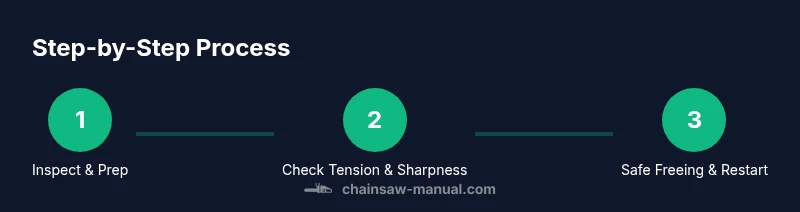
This section offers a practical decision tree for jams. Step 1: Stop the saw and secure the work area. Step 2: Check chain tension and sharpness; Step 3: Clear debris from the bar and drive sprocket; Step 4: Use wedges to relieve pressure and gently tilt the log to free the bar; Step 5: If the saw remains stuck, inspect for hidden knots or interlocked grain and adjust your cut; Step 6: Restart with light cuts and monitor oil flow. A calm, methodical approach prevents injuries and protects your tool.
Tools & Materials
- Chainsaw oil(Fill to recommended level before use; check level before each job)
- Bar oil(Keep reservoir full; ensure oiling path is clear)
- Screwer/Scrench (tensioning tool)(For tensioning bar nuts and minor adjustments)
- Wedges (plastic or wood)(Bring 2–4; place under kerf to prevent pinching)
- Chain sharpening file or kit(Maintain uniform tooth height; inspect for dull or chipped teeth)
- Personal protective equipment (PPE)(Helmet with face shield, eye protection, hearing protection, gloves, chainsaw chaps)
- Cleaning brush or rag(Remove debris from bar rails and drive sprocket after use)
- Spark plug wrench (for gas saws)(Useful for quick inspection during maintenance)
- Air filter cleaner(Keep air intake clear for efficient operation)
Steps
Estimated time: 45-60 minutes
- 1
Power down and secure area
Engage the chain brake, shut off the engine, and remove the fuel or spark source if safe. Secure the log and stand to avoid movement during investigation.
Tip: Engage chain brake immediately to prevent sudden bar movement. - 2
Check tension and sharpness
Inspect chain tension with the bar nose at neutral. Ensure teeth are sharp and uniform; file if needed. A loose or dull chain increases friction and jams.
Tip: Use a gauge or reference tool to confirm consistent tension along the bar. - 3
Inspect lubrication path
Verify bar oil flows freely and reservoir is full. Clear any clogs in oil holes and avoid oil-starved operation.
Tip: Keep the bar and chain clean to maintain even lubrication. - 4
Assess wood and cut layout
Look for knots, interlocked grain, or wet wood that may pinch. Plan a relief cut and straight path to reduce resistance.
Tip: Dry wood and straight cuts minimize binding risk. - 5
Make a relief cut or partial kerf
Start with a shallow relief cut to relieve pressure before deeper cuts, especially on large logs.
Tip: Relief cuts reduce the chance of sudden pinching. - 6
Use wedges to prevent pinching
Insert wedges early in the kerf to maintain space between wood and bar, especially on larger diameters.
Tip: Place wedges on the underside for best effect. - 7
Free jam safely
If the chain binds, stop the engine, remove fuel source, and gently free debris with a tool. Use wedges to ease pressure rather than prying with force.
Tip: Never yank the bar; force can cause kickback. - 8
Restart with controlled feed
After freeing, recheck tension and oil flow. Start with light cuts and progress gradually, avoiding overfeeding.
Tip: Test on scrap wood before resuming the main cut. - 9
Post-cut maintenance
Clean the bar rails, inspect the chain, and re-tension if necessary. Store in a dry place and log maintenance actions.
Tip: Establish a routine to prevent future jams.
FAQ
Why does my chainsaw get stuck even when the chain is sharp?
A sharp chain can still jam if tension is wrong, the wood is green or knotty, or the cut is not planned to avoid binding. Check tension, wood moisture, and cutting angle, then adjust the approach.
A sharp chain can jam if tension or wood conditions cause binding; check tension and wood moisture before continuing.
Can wedges prevent jams entirely?
Wedges greatly reduce pinching by creating space in the kerf, but they do not eliminate all jams. Use wedges with careful technique and always stop when needed.
Wedges help prevent jams but won't guarantee zero jams; use them with proper technique.
Is it safe to force the saw to cut through a jam?
No. Forcing a jam can cause kickback and serious injury. Stop, assess the obstruction, and free the bar using safe methods.
No, never force a jam; stop and fix the issue safely.
How often should I sharpen to prevent sticking?
Sharpen as soon as you notice slower cutting or visual dullness. Regular maintenance reduces friction and jam risk.
Keep the chain sharp as part of your routine maintenance.
What maintenance tasks most prevent jams?
Keep chain sharp and tension correct, clean the bar rails, ensure lubrication reaches the chain, and inspect the air filter and spark plug (gas saws).
Keep the chain sharp, tension correct, and lubrication clean for fewer jams.
Watch Video
The Essentials
- Maintain sharp, properly tensioned chain to minimize jams
- Use wedges early to prevent pinching
- Perform pre-cut checks on oil, tension, and wood moisture
- Pause and diagnose safely when resistance increases