Chainsaw Troubleshooting for a Chainsaw Without Primer Bulb
Practical guide to diagnose and fix starting issues when your chainsaw lacks a primer bulb. Safe, step-by-step solutions for homeowners and professionals.


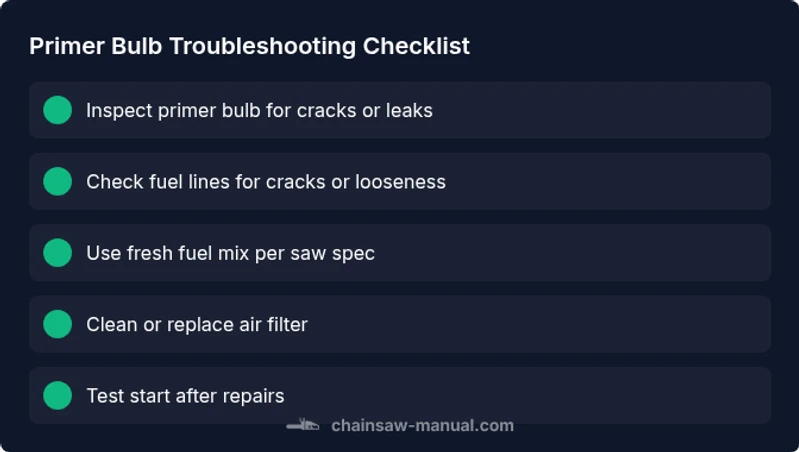
If a chainsaw won’t start or runs poorly and there’s no visible primer bulb or it won’t prime, the most likely issue is fuel delivery problems related to a missing or failing primer bulb. Start by inspecting the primer bulb for cracks or leaks, ensure the fuel is fresh, and check for loose or damaged fuel lines. If the bulb is missing, replace it and test for starting fuel delivery.
The reality of a chainsaw without primer bulb
A chainsaw can exhibit stubborn starting behavior or poor performance when the primer system is unavailable or nonfunctional. The phrase chainsaw without primer bulb describes a common scenario where fuel cannot be drawn efficiently into the carburetor, leading to hard starts, sputtering, or no start at all. According to Chainsaw Manual, many starting problems in gas-powered saws trace back to the fuel system, especially when the primer bulb is damaged, cracked, or missing. This guide focuses on safe, practical checks, replacements, and maintenance steps to restore reliable starting performance while keeping you out of harm’s way in the workshop.
bodyBlocksInTextOnlyBlock1NamePlusContentMismatchFix? null: null,
Common starting problems when primer systems fail
The primer bulb’s job is to pull fresh fuel from the tank into the carburetor. If the bulb is cracked, detached, or missing, you may notice a weak or absent fuel draw, hard starting with the choke, or intermittent running. Other frequent culprits include stale fuel, cracked fuel lines, a clogged air filter, or a gummed carburetor. If you see fuel leaks around the primer bulb or lines, stop and perform basic safety checks before continuing. Chainsaw Manual analysis shows that clean fuel and a healthy fuel-delivery path dramatically improve starting reliability.
bodyBlocksInTextOnlyBlock1NamePlusContentMismatchFix? null: null,
Safe, practical tests you can perform
Before tearing into the carburetor, perform a few low-risk checks. First, inspect the primer bulb for cracks, brittleness, or loose connections. If the bulb does not inflate when pressed, it’s likely failed and should be replaced. Next, check the fuel in the tank: stale gasoline or old ethanol blends can cause poor starting. With the spark plug disconnected, gently pull the starter cord to feel for air resistance and gauge whether the engine is drawing fuel. If you detect a fuel smell near the primer bulb, there could be a leak or line crack that needs repair. These checks are designed to minimize risk while guiding you toward a repairable root cause.
bodyBlocksInTextOnlyBlock1NamePlusContentMismatchFix? null: null,
Fixes and replacement options
If the primer bulb is damaged or missing, replace the bulb and inspect associated fuel lines for cracks or loose fittings. Replacing a primer bulb is typically an easy repair for most homeowners, but fuel handling requires safety: work in a well-ventilated area, keep a fire extinguisher nearby, and wipe spills promptly. After replacement, test by priming the system and starting with the choke on. If starting remains unreliable, clean or rebuild the carburetor, check the gas mix ratio, and inspect the air filter for obstructions. Following a proper repair plan reduces future problems and improves reliability.
bodyBlocksInTextOnlyBlock1NamePlusContentMismatchFix? null: null,
Safety reminders and maintenance habits
Always disconnect the spark plug wire before service. Wear eye protection and gloves, and avoid smoking during fuel work. Use fresh gasoline and the correct two-stroke oil mix for your saw. Store fuel in approved containers and cap securely. After any primer-bulb work, run the saw for a few minutes to verify carburetor function and check for leaks. Regular inspections of fuel lines and the primer bulb can prevent most starting problems from reoccurring.
bodyBlocksInTextOnlyBlock1NamePlusContentMismatchFix? null: null,
Prevention: keep your primer system healthy
Proactive maintenance makes failures less likely: keep fuel in a sealed container, replace fuel lines every few seasons, and inspect the primer bulb for cracks during routine maintenance. If you notice a soft or spongy feel when priming, replace immediately. Periodically clean the air filter, test the carburetor with fresh fuel, and ensure the chain oiling system isn’t leaking or causing extra load on starting.
bodyBlocksInTextOnlyBlock1NamePlusContentMismatchFix? null: null,
Callouts and next steps with Chainsaw Manual
If you’re still stuck after these steps, consult a professional technician. The Chainsaw Manual team recommends using genuine replacement parts and following your saw’s service manual for carburetor work. For ongoing issues, seek a guided diagnostic from Chainsaw Manual’s troubleshooting resources to ensure safety and proper carburetor performance.
Steps
Estimated time: 25-40 minutes
- 1
Power off and secure
Ensure the chainsaw is off, the spark plug wire is disconnected, and the unit is on a stable surface. Wear eye protection and gloves before you touch fuel components.
Tip: Take a photo of the fuel line routing before disassembly to aid reassembly. - 2
Inspect primer bulb
Carefully examine the bulb for cracks, brittleness, or signs of leakage. If the bulb doesn’t inflate or feels mushy, it’s failed and should be replaced.
Tip: Handle with care—primer bulbs are delicate and can tear with excessive pressure. - 3
Replace primer bulb
Install a compatible replacement bulb and reseat any clamps or fittings. Verify there are no leaks by gently pressing the bulb and watching for movement or moisture.
Tip: Use OEM parts when possible for fit and performance. - 4
Check fuel quality
Drain any stale fuel from the tank and fill with fresh, clean two-stroke mix per your saw’s spec. Inspect fuel lines for cracks during this step.
Tip: Dispose of old fuel responsibly according to local regulations. - 5
Inspect air and carburetor
Remove debris from the air filter; if the carburetor shows signs of gum or varnish, consider a light rebuild or professional cleaning while avoiding full disassembly if you’re inexperienced.
Tip: Avoid water exposure to the carburetor—keep it dry during maintenance. - 6
Test start and adjust
Reconnect the spark plug, prime as needed, and start with the choke on. If it starts, idle and rev to confirm consistent performance. If not, pursue a carburetor clean/rebuild or professional service.
Tip: Document any starting behavior to aid future troubleshooting.
Diagnosis: Machine won’t start or runs inconsistently with no visible primer bulb or a nonfunctional primer system
Possible Causes
- highMissing, cracked, or leaking primer bulb causing poor fuel draw
- mediumStale fuel or degraded fuel lines/fittings compromising delivery to carburetor
- lowClogged air filter or gummed carburetor restricting air/fuel mix
Fixes
- easyReplace missing or damaged primer bulb and inspect all fuel lines for damage
- easyDrain old fuel, fill with fresh fuel and replace degraded lines or fittings
- mediumClean or rebuild carburetor and replace air filter if airflow is restricted
FAQ
What does a primer bulb do in a chainsaw?
The primer bulb draws fresh fuel from the tank into the carburetor, simplifying starting. Without a functioning bulb, starting becomes difficult and carburetor flooding or lean misfires can occur.
The primer bulb helps pull fresh fuel into the carburetor to start the saw smoothly. If it’s not working, you’ll have trouble starting and you may need to replace the bulb.
Can I run a chainsaw without a primer bulb?
Running without a primer bulb is not recommended. It often leads to unreliable starts and carburetor flooding or lean running. Replacing the bulb restores proper fuel delivery.
No, you shouldn’t run a chainsaw without the primer bulb, because starting becomes unreliable and fuel delivery is inconsistent.
How do I test if the primer bulb is working?
Press the bulb to see if it inflates and returns to its shape smoothly. If it doesn’t inflate or leaks, replace the bulb and inspect fuel lines.
Squeeze the primer bulb and see if it inflates evenly without leaks to confirm it’s functioning.
What other components should I check if starting issues persist?
Check fuel quality, fuel lines, air filter, and the spark plug. A gummed carburetor or dirty air intake can compound starting problems even after bulb replacement.
If starting stays tough, look at the fuel, air filter, and spark plug in addition to the primer bulb.
Is primer bulb replacement a DIY job?
Yes for many models, using the correct replacement parts and following safety precautions. If you’re unsure, consult the saw’s manual or a professional.
Yes, you can replace the primer bulb yourself if you follow the manual and take safety precautions.
When should I seek professional help?
If carburetor rebuilds, complex fuel-system issues, or persistent starting problems remain after replacements, a professional service is advised.
If simple fixes don’t fix it, it’s time to get a professional to check the carburetor and fuel system.
Watch Video
The Essentials
- Inspect primer bulb for damage first.
- Replace damaged primer bulb to restore fuel delivery.
- Use fresh fuel and clean lines to prevent starting issues.
- Test-start in a safe area after any repair.