How to Fix a Chainsaw Cutting Crooked: Troubleshooting Guide
Discover why your chainsaw is cutting crooked and how to fix it safely. This practical, step-by-step guide from Chainsaw Manual covers alignment, tracking, and maintenance to restore true cuts.


A crooked cut is usually caused by a mis-tracked chain, a bent or worn bar, or a dull chain. Start by checking bar straightness and chain tension, then re-track the chain. If misalignment persists, replace or realign the bar and sharpen the chain. Safety first: disconnect power and wear PPE.
Immediate safety and initial observation
If you notice the chainsaw is cutting crooked, stop and reassess before continuing. Safety comes first: disconnect the spark plug on gasoline models or remove the battery on electric ones, then wear eye protection, cut-resistant chaps, gloves, and hearing protection. In many situations, crooked cutting points to a simple alignment or wear issue. According to Chainsaw Manual, starting here with bar and chain inspection reduces risk and speeds up a repair. This block outlines a practical, step-by-step approach to restore true tracking and safe operation. A careful assessment now can prevent more serious damage and potential injury on the job, whether you’re a DIYer or a professional logger.
Common causes of crooked cuts
There are several reasons a chainsaw may cut crooked. A bent or warped guide bar prevents the chain from tracking correctly. A worn or damaged chain, or improper tension, can cause the chain to ride off the guide and drift. If the drive sprocket or nose sprocket is worn, the chain may not align with the groove, producing a crooked cut. Misalignment can also arise from improper bar mounting, a loose bar clamp, or uneven bar rails. Finally, cutting technique and wood irregularity can exaggerate a minor tracking issue. By understanding these causes, you can target the right fix rather than guessing. As you troubleshoot, remember to keep the chain sharp and the bar clean; neglecting maintenance makes even simple adjustments unreliable.
Quick checks you can do before tools
Before you pick up any tools, perform quick, low-risk checks. Ensure the saw is powered off and fully cooled, and PPE is in place. Check chain tension by lifting it away from the bar: there should be a slight give but no sag. Inspect the bar with a straightedge or ruler along the face to verify straightness; a bent bar will show gaps. Set the chain tracking by adjusting the scuff plate and cover screws per the manufacturer’s manual; a mis-tracked chain will ride to one side. Run the engine and carefully observe whether the chain sits centered on the bar during light rotation, not during full cutting. These checks help you identify if the issue is bar alignment, chain tracking, or sharpening.
Diagnostic flow: symptom to solution overview
Symptom: the chainsaw is cutting crooked when making straight cuts. Diagnosis begins with simple physical checks: is the bar straight? is the chain properly tensioned and tracking? If the bar is visibly bent or if the chain appears to skip or drift on rotation, the balance is likely off. If not, inspect the bar alignment with the sprocket nose and ensure the bar is mounted square to the chassis. With each potential cause, apply a progressive fix: first confirm bar straightness; then re-track the chain; then sharpen or replace; finally verify lubrication and handle wear. If all basic checks fail, it may indicate a worn drive system or bar replacement is needed. This flow helps you avoid unnecessary part swaps and keeps you safe.
Step-by-step fixes for the most common causes
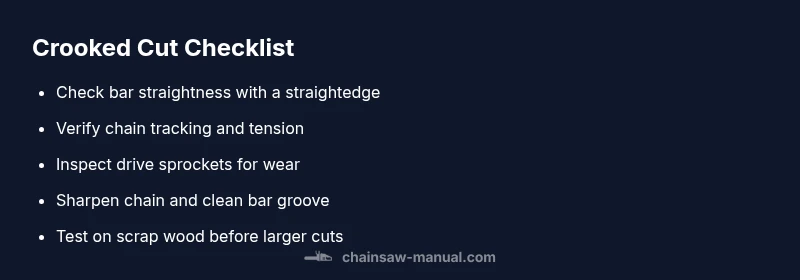
- Check bar straightness: Remove the bar, place a straightedge along its rails, and compare against a known flat reference. If the bar is bent, replace it and re-test. 2) Realign and reseat the bar: Unbolt the bar, square it to the nose, re-tighten, and verify the chain sits centered. 3) Re-tension and sharpen the chain: Loosen to set tension, then retighten per spec; file to correct height and check for burrs. 4) Inspect the drive sprocket: Look for wear, rounding, or missing teeth; replace if necessary. 5) Test cut on scrap wood: Use a clean, uniform block; observe tracking and cut direction. 6) Re‑evaluate lubrication: Confirm oil flow with a ribbon of oil on a test surface; fix clogged passages if required.
Safety tips and common mistakes to avoid
- Never operate a chainsaw with a bent or damaged bar; replacing the bar is often cost-effective compared with ongoing mis-tracking. - Always disconnect power and wear PPE; do not rely on gloves alone for protection. - Avoid forcing the saw; use smooth, steady strokes and let the chain do the work. - Do not rush to a fix; take time to correctly re-seat, align, and tension. - Keep the chain sharp; a dull chain not only cuts crookedly but increases kickback risk. - After any fix, run a shallow cut and observe the tracking in real wood before proceeding to larger cuts.
Prevention and maintenance to keep tracking true
Preventive maintenance is your best defense against crooked cuts. Schedule regular bar inspection for straightness and check the bar rails for burrs. Clean and lubricate the bar and chain daily and replace the oil passages if clogged. Keep the chain sharp with proper filing technique and maintain correct tension. Calibrate chain tension after every refill; measure tension by lifting the chain from the guide bar. For professionals, frequent calibration and track alignment checks can save time on site. Proper handling technique, safe cutting positions, and a consistent wood type reduce tracking variability. Chainsaw Manual recommends a routine that includes bar replacement timing and drive sprocket inspection to keep the chain centered.
When to seek professional service and what to expect
If basic checks do not resolve the issue, or you notice internal wear or alignment problems, it is time to consult a qualified repair technician. A bent bar, worn sprockets, or internal alignment issues may require factory-grade alignment or part replacements. A professional may also verify bar groove alignment and check the oil delivery system, which can affect tracking. Expect a diagnostic service that includes bar inspection, chain tracking test, and, if needed, parts replacement or bar upgrade. The ongoing crooked cutting issue is a safety hazard; avoid using the saw beyond minor fixes and seek expert help when in doubt.
Steps
Estimated time: 60-90 minutes
- 1
Assess safety and prepare
Power down the saw and remove any fuel or battery, then put on PPE. Clear your working area and inspect general condition of the saw to set safe boundaries before diagnosis.
Tip: Always start with safety checks; it prevents injuries and accidental starts. - 2
Check bar straightness
Remove the bar and use a straightedge along the rails. If you see a bend or warp, the bar is the likely culprit. Replace if bent beyond manufacturer tolerance.
Tip: Compare against a known-good bar if possible. - 3
Verify chain tracking and tension
Reattach the bar, ensure the chain sits centered on the bar, and tension to the recommended spec. Run the chain slowly to verify it tracks evenly.
Tip: A loose chain can ride off and create drift. - 4
Sharpen and clean the chain
Check for dull teeth or burrs; file per the chain’s pitch and depth gauges. Remove debris from the drive links and bar groove to improve tracking.
Tip: A sharp chain reduces resistance and improves control. - 5
Inspect drive components
Examine the drive sprocket and nose sprocket for wear. Replace worn sprockets or damaged gears to restore proper alignment.
Tip: Worn sprockets often masquerade as tracking issues. - 6
Test with scrap wood
Make a shallow cut on a scrap block and observe whether the cut remains centered. If it drifts, repeat steps or consider parts replacement.
Tip: Use uniform, clean wood to avoid confounding results.
Diagnosis: Machine pulls to one side and cuts off-center while making straight cuts.
Possible Causes
- highBent or damaged guide bar
- highChain not tracking properly
- mediumDull chain causing drift
- mediumChain tension incorrect
- lowBar nose sprocket wear
Fixes
- easyInspect bar straightness with a straight edge; replace if bent
- easyRe-track the chain and adjust tension per spec
- mediumSharpen/retune chain and remove burrs
- easyCheck bar oil flow; clean passages or replace reservoir
- mediumIf issues persist, replace bar or seek professional service
FAQ
Why is my chainsaw cutting crooked even after tensioning the chain?
Tension alone won’t fix tracking. The issue is more likely bar misalignment or a worn chain that doesn’t sit in the groove properly. Recheck bar straightness and tracking, then re-tension and test again.
Tension alone won’t fix tracing. Check the bar and chain tracking, then retest.
What is the first thing I should check when cuts are crooked?
Start with the bar. Ensure it is straight and mounted square to the body. Then verify chain tension and tracking before moving to more involved fixes.
First check the bar for straightness and proper mounting.
Can a dull chain cause crooked cuts?
Yes. A dull or nicked chain can drift or grab, making cuts feel crooked. Sharpen or replace the chain, then re-test tracking.
A dull chain can cause crooked cuts; sharpen or replace it first.
Is a bent bar always the culprit?
Often yes, but not always. A bent bar prevents proper tracking. If straightening isn’t possible, replace the bar.
A bent bar often causes crooked cuts; replace if straightening isn’t feasible.
When should I seek professional service?
If basic checks don’t fix the issue or you notice internal wear or alignment problems, a professional repair is advised.
If simple fixes fail or you see wear, get a professional check.
Can wood type affect tracking?
Hard or irregular wood can exaggerate tracking issues, but persistent crooked cuts usually indicate a mechanical fault requiring adjustment or part replacement.
Wood type can exaggerate tracking, but persistent crooked cuts point to a mechanical fault.
Watch Video
The Essentials
- Inspect bar straightness before anything else
- Ensure chain tracking and tension are correct
- Sharpen chain and clean bar groove regularly
- Replace worn bar/sprockets to restore true tracking
- Maintain PPE and safe procedure on every session