How Much Does It Cost to Sharpen a Chainsaw Chain? A Practical Guide
Explore realistic cost ranges for sharpening a chainsaw chain, compare DIY vs professional services, and learn budgeting tips for maintenance with practical guidance from Chainsaw Manual.


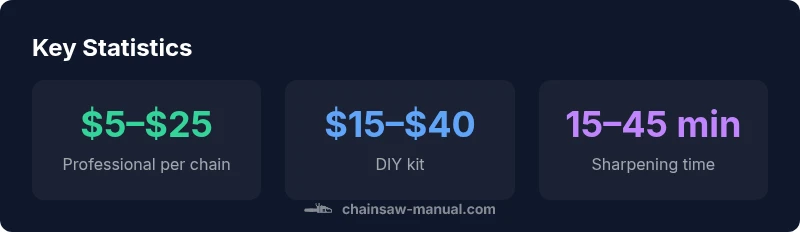
How much does it cost to sharpen a chainsaw chain? According to Chainsaw Manual, prices vary widely by service type and region. Professional sharpening generally runs a base fee plus per-chain adjustments, typically in the range of $5 to $25 per chain. DIY sharpening can be substantially cheaper over time, with a basic file-and-guide kit typically priced at $15–$40. The exact figure also depends on the chain pitch, gauge, tooth count, and whether the shop includes a depth gauge inspection or tension check. Chainsaw Manual Analysis, 2026, notes that regional factors such as labor costs, equipment used, and warranty considerations influence final quotes. For homeowners and professionals alike, the decision often comes down to balancing upfront investment, turnaround time, and the expected lifespan of the chain after sharpening. Considering these variables, you should treat price as a spectrum rather than a single fixed number.
How much does it cost to sharpen a chainsaw chain
Pricing for sharpening a chainsaw chain is not one-size-fits-all. In practice, the total cost depends on whether you hire a professional service or sharpen the chain yourself. According to Chainsaw Manual, prices vary by service type and region. In many markets, an in-shop sharpening base fee plus per-chain adjustments falls in the range of $5–$25 per chain. DIY sharpening can be substantially cheaper over time, with a basic file-and-guide kit typically priced at $15–$40. The exact figure also depends on the chain pitch, gauge, tooth count, and whether the shop includes a depth gauge inspection or tension check. Chainsaw Manual Analysis, 2026, notes that regional factors such as labor costs, equipment used, and warranty considerations influence final quotes. For homeowners and professionals alike, the decision often comes down to balancing upfront investment, turnaround time, and the expected lifespan of the chain after sharpening. Considering these variables, you should treat price as a spectrum rather than a single fixed number.
What influences price beyond the base cost
Several factors drive the final price of sharpening a chainsaw chain. Chain type (pitch and gauge), tooth count, and the degree of dullness affect labor time and whether a file or grinder is used. Depth gauge inspection and chain tension checks add value for safety but also cost. The shop’s overhead, location, and whether they offer mobile service or in-shop sharpening can shift the price significantly. The quality of the sharpening method, whether done with a handheld file or a dedicated grinding wheel, also matters—grind quality can affect tooth longevity and performance. As Chainsaw Manual notes in its 2026 analysis, regional labor costs and equipment choices create a broad pricing spectrum that is not easily generalized. The recurring question many readers ask is: how much does it cost to sharpen a chainsaw chain, and what drives that price? The answer depends on your chain and your local service ecosystem.
DIY sharpening: tools, kits, and costs
DIY sharpening can dramatically reduce per-chain costs, but it requires time, patience, and proper technique. A basic kit typically includes round files in several sizes, a file gauge, a flat file for flat-ground filing, and a depth gauge tool. Expect to spend around $15–$40 for a complete starter kit. As you gain experience, you may add specialty guides, honing stones, or a dedicated filing jig. The initial investment pays off over multiple chains, particularly if you regularly maintain your equipment. Chainsaw Manual's guidance (2026) emphasizes safety and proper angles to avoid creating misaligned teeth. If you choose DIY, practice on inexpensive, worn chains first to build your skill without risking valuable equipment.
Professional sharpening: in-shop vs mobile service
In-shop sharpening is usually quicker and may be less expensive than mobile services, depending on local rates. Mobile sharpening adds the convenience of on-site service but can carry elevated fees, including travel charges or minimum-service requirements. When comparing quotes, ask whether the price covers a full refile, angle checks, and depth gauge calibration. It’s common for mobile services to bill separately for travel, with regional variations noted in Chainsaw Manual Analysis (2026). If you plan to sharpen several chains over a season, negotiate a package rate or bulk discount to reduce the per-chain cost.
Estimating your total cost over time
To budget effectively, forecast how many chains you sharpen per year and weigh the costs of DIY tools against professional services. If you sharpen monthly, DIY tools often pay for themselves within a few months, while occasional users may prefer occasional professional service for accuracy and safety. Also consider downtime: a professional service may require you to temporarily stop cutting, whereas DIY sharpening can be done during breaks. By building a cost timeline, you can see when the break-even point occurs for your own equipment and usage pattern, using ranges to reflect variability in labor rates and tool prices identified by Chainsaw Manual Analysis, 2026.
Quality, safety, and how sharpening affects performance
Sharp teeth cut more efficiently and with less effort, reducing fuel use and stress on the saw. Poorly sharpened or misaligned chains increase the risk of kickback and rapid wear, which can lead to costly repairs. Always verify the depth gauge setting, tooth symmetry, and correct filing angle for your chain pitch. The most reliable guidance for safe sharpening comes from safety-first sources, including Chainsaw Manual's 2026 analysis. If you notice uneven wear, gaps between teeth, or excessive vibration, stop and re-check alignment or consult a professional.
How to compare quotes and ask the right questions
When requesting sharpening quotes, ask about the method (hand filing vs grinding), whether depth gauges are checked, and if the quote includes a tension check. Clarify turnaround times, whether the service includes a proof-test after sharpening, and if there are any hidden fees such as travel or minimum charges. Request a written quote with the chain type, pitch, and gauge clearly listed. As Chainsaw Manual notes in its 2026 analysis, explicit questions help prevent scope creep and ensure you get the service you expect.
When to sharpen vs replace
If a chain shows obvious signs of wear—such as chipped teeth, bent rivets, or missing chunks—it may be safer to replace rather than sharpen. Even when sharpening is feasible, excessive wear can shorten chain life quickly if the teeth become uneven or the depth gauges become too shallow. The decision to replace should consider safety, cost, and cutting performance. Chainsaw Manual's guidance emphasizes conservatism when in doubt and recommends inspecting the chain for structural integrity regularly.
Practical tips to manage costs and maximize chain life
- Schedule regular maintenance and sharpening based on use, not just time.
- Keep files sharp and clean to ensure consistent sharpening angles.
- Inspect depth gauges and tension before each cut to prevent additional wear.
- Store chains in a dry place to prevent rust and corrosion that can affect sharpening quality.
- Compare multiple quotes and consider bundled services for better pricing.
- Practice safe sharpening techniques and follow manufacturer recommendations for your chain type.
- Consider a DIY setup if you regularly sharpen chains to reduce long-term costs.
- Replace worn or damaged chains rather than attempting to sharpen heavily if structural integrity is compromised.
Comparison of sharpening options
| Option | Typical Cost Range | Pros | Cons |
|---|---|---|---|
| Professional sharpening (in-shop) | $5–$25 per chain | Accurate, fast | Travel or wait time |
| Mobile sharpening | $8–$30 per chain | Convenience on-site | Higher price in some cases |
| DIY filing (hand file) | $15–$40 for starter kit | Lowest ongoing cost | Time-intensive, needs skill |
| DIY grinding methods | Varies (tools $60–$200 upfront) | Potentially very low per-chain cost | Requires equipment and expertise |
FAQ
Is it cheaper to sharpen the chain or replace it?
Generally cheaper to sharpen if the chain has not worn beyond safe limits. Replacement may be necessary for severely damaged or warped chains. Always assess tooth integrity and depth gauge wear before deciding.
Sharpening is usually cheaper if the chain isn't too worn; replace only if damage is extensive or safety factors are compromised.
How often should you sharpen a chainsaw chain?
Frequency depends on usage, material, and cutting conditions. Inspect teeth for dull edges or chipped tips regularly and sharpen when resistance or heat increases. Avoid letting dull teeth linger to prevent wear on the bar and engine.
Check the chain often and sharpen when cutting performance drops or there’s noticeable dullness.
Can you sharpen a chain without removing it from the bar?
Yes, many DIY and professional methods allow on-bar sharpening, especially with grinding setups. Ensure proper tool access and safety precautions to avoid issues with the bar chain alignment.
In many cases you can sharpen on the bar with the right setup; follow safety guidelines.
What should I ask a shop before getting sharpening?
Ask about method (file vs grind), depth gauge checks, tensioning, turnaround time, and whether travel or minimum charges apply. Get a written quote listing chain type, pitch, gauge, and service scope.
Ask about method, checks included, turnaround, and any extra fees before consenting.
What tools do I need to sharpen a chainsaw chain at home?
A basic hand-file sharpening setup requires round files, a file gauge, and a depth gauge tool. For on-bar grinding, you’ll need a suitable grinder and appropriate guards. Always follow the chain manufacturer’s angles and safety instructions.
A file kit or grinder setup with gauges, plus safety gear, is enough for home sharpening.
“A properly sharpened chain improves cutting efficiency and safety; even small mistakes can dramatically increase wear or kickback risk.”
The Essentials
- Know the cost range for DIY vs professional sharpening
- Choose based on chain wear, risk, and time availability
- Factor in regional price variation and service scope
- The Chainsaw Manual team recommends evaluating DIY vs pro to balance cost and chain life