Chainsaw Chain Square File Sharpening: A Practical How-To
Learn to sharpen a chainsaw chain with a square file. This practical guide covers tool choices, angles, and a clear step-by-step routine for safer, cleaner cuts.


Learn to sharpen a chainsaw chain with a square file to restore edge quality and safer cutting. This quick guide covers the essential tools, correct filing angles, and a reliable pattern for consistent results. You’ll gain setup tips, a concise step-by-step technique, and common mistakes to avoid for a clean, efficient cut.
Why the square-file method matters for chainsaw chain maintenance
Sharpening with a square file is a traditional, reliable approach that preserves the geometry of each tooth while maintaining consistent height above the depth gauge. The square shape keeps the file’s edge aligned with the tooth’s bevel, reducing chatter and heat buildup during cuts. For homeowners, DIY enthusiasts, and professionals, this method offers a predictable arc of contact with the wood and a straightforward way to extend chain life. By following a deliberate, repeatable process, you can achieve uniform bite across all cutters, which translates to safer operation and smoother performance on tasks ranging from trimming to felling small trees. Throughout this guide, we emphasize practical, safety-first steps aligned with Chainsaw Manual’s guidance, aiming to empower you to work with confidence.
Anatomy of a chainsaw chain and file sizing
A chainsaw chain consists of cutters, depth gauges, tie straps, and drive links. The square-file method targets the cutters, ensuring the bevels maintain a consistent angle relative to the wood fibers. The file size and gauge should match the chain’s design, tooth geometry, and pitch. In practice, you will use a square file designed to sit square across the tooth face and a depth gauging tool to manage the correct protrusion above the gauge line. Understanding these parts helps you diagnose issues quickly—for example, if teeth drift unevenly, you may have filed too aggressively on one side or allowed the depth gauge to drag, which alters cutting efficiency.
Safety and setup before sharpening
Before you touch the file, prepare a stable workspace. Secure the chainsaw bar in a vise or clamp to prevent movement, and wear PPE: safety glasses or a face shield, cut-resistant gloves, and hearing protection. Clear the area of trip hazards and remove any loose clothing. Confirm the chain tension and ensure the bar and chain are clean and dry. A well-lit workspace helps you see subtle differences in tooth height, ensuring uniform results across all teeth. Proper setup reduces the risk of accidental slips that could injure hands or damage the chain.
Step-by-step overview of square-file sharpening technique
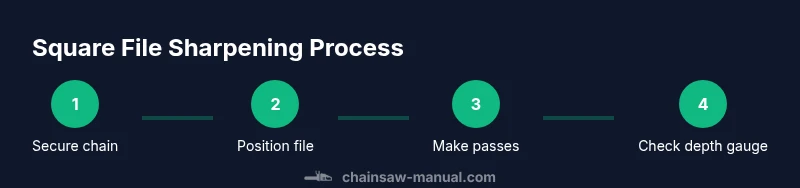
The square-file method follows a defined rhythm: orient the file so it sits square on each tooth face, engage the file with a light contact, and apply smooth, even strokes along the tooth toward the nose. Maintain a consistent height and angle to preserve the bevel. Work teeth in sequence on alternating sides to balance wear and avoid creating an asymmetrical edge. Periodically check depth gauge clearance to ensure the file doesn’t cut into the gauge. This overview sets the stage for the detailed steps that follow, guiding you through tool setup, careful filing, and final checks to keep your chainsaw performing safely.
Common sharpening mistakes and how to avoid them
Common errors include filing at inconsistent angles, taking too aggressive strokes, or neglecting paired teeth symmetry. Another pitfall is ignoring the depth gauge, which can cause overly long or short cutters and uneven cutting action. To avoid these issues, use a stable fixture, keep the file flat and square, and make uniform passes on each tooth. Regularly compare opposite sides for balance and pause to inspect tooth height and bevel consistency. A methodical approach reduces the need for rework and helps you maintain a sharper edge longer.
How to verify edge quality and test cuts
After filing, run a quick touch-test by lightly drawing the chain across a soft wood scrap. The edge should bite cleanly without tearing fibers or producing smoke on light contact. Check for uniform sound and resistance along all cutters. If you notice one side cutting excessively shallowly or aggressively, re-check your angles and take light, even strokes to balance the bevel. Periodic checks at the bench, rather than on the job site, help you catch issues before they affect a real cut.
Cleaning, lubrication, and storage after sharpening
Wipe the chain to remove filing debris and residue. A light blast of compressed air can help clear debris from the bar groove. Re-lubricate the chain with the recommended oil and ensure the bar groove is free of chips. Store the chain in a dry place, preferably on a rack, with coverage to prevent moisture exposure. Regular maintenance after sharpening extends overall life and keeps cutting performance consistent across tasks.
When to replace the chain vs. re-sharpen
Sharpening is effective when teeth retain a solid bevel and height, and when depth gauges are still within spec. If many cutters are chipped, heavily worn, or if the chain shows uneven wear that cannot be balanced with filing, replacement may be warranted. For professional use, periodically assess chain wear against manufacturer recommendations. In general, re-sharpening is a cost-effective maintenance step when edge integrity remains acceptable.
Choosing the right gear: file types, gauges, and guides
Selecting the correct square file, depth gauge tool, and any guides designed for your chain pitch is essential. A file that is too small or too large will distort tooth angles and shorten blade life. Use guides that preserve consistent angle and ensure smooth contact across each tooth. Having a well-chosen toolkit reduces guesswork and promotes faster, safer sharpening sessions.
Pro tips for professionals and seasoned users
For frequent sharpeners, develop a routine that includes a quick inspection, a consistent filing cadence, and a final check against the depth gauge. Keeping a small journaling approach—note which teeth were filed and the approximate time—helps you track wear patterns and schedule maintenance efficiently. Always prioritize safety and maintain a clean, well-lit workspace to prevent mistakes.
Tools & Materials
- Square-file chainsaw file(Choose a file designed for square filing; ensure the edge is sharp and free of burrs)
- Depth gauge tool(Used to maintain proper cutter height above the depth gauge)
- Chain vise or sharpening bench clamp(Secures the bar and chain for safe filing)
- Personal protective equipment (PPE)(Safety glasses, cut-resistant gloves, and hearing protection)
- Soft brush or cloth and degreaser(Clean components before and after sharpening)
- Marker or chalk (optional)(Mark dull teeth to track progress)
Steps
Estimated time: 40-60 minutes
- 1
Secure the chain
Clamp the bar securely in a vise or sharpening bench to prevent movement. Ensure the chain remains taut and the chain brake is off before starting. This stability is critical for accurate filing and personal safety.
Tip: Use a second clamp to stabilize the bar if needed; a wobble can skew angles. - 2
Inspect and mark dull teeth
Look for rounded or chipped tips and uneven wear. Mark dull teeth with a marker to ensure you address each cutter evenly during filing.
Tip: Focus on balancing both sides; uneven filing causes drift in cutting direction. - 3
Position the file correctly
Place the square file against the tooth face, ensuring it sits square to the tooth bevel. The file should contact the tooth edge evenly without tilting toward the rakers.
Tip: Keep wrists straight and stable to maintain consistent angle throughout each stroke. - 4
Apply filing strokes
Make light, steady passes along the tooth toward the chain’s nose. Use short, controlled strokes and lift slightly on the return to avoid dulling the tip. Repeat on all marked teeth, alternating sides.
Tip: Maintain the same number of strokes per tooth for balance across the chain. - 5
Check depth gauge clearance
Slide the depth gauge tool to verify the tooth height maintains proper clearance. If you see the gauge protruding or sitting too high, remove a small amount of material with gentle passes.
Tip: Do not over-file the depth gauge; too much removal alters chain geometry. - 6
Finish with bevel and rake checks
Ensure the bevel angle remains consistent across teeth. Inspect the rake angle for uniformity; adjust light passes if needed to equalize edge bite.
Tip: A consistent bevel across teeth yields straighter cuts and less vibration. - 7
Test cut on soft wood
Make a light test cut on a soft scrap to validate bite and draw. Listen for a clean engagement without excessive smoke or tearing fibers.
Tip: If the cut feels hesitant, recheck the tooth balance and depth gauge clearance. - 8
Clean, lubricate, and store
Wipe away filings, oil the chain, and re-tension if necessary. Store in a dry place, away from moisture, to prevent corrosion.
Tip: Keep a small maintenance kit handy for quick touch-ups on site. - 9
Document results
Record which teeth were filed and any notes about wear patterns for future reference. This helps plan future maintenance cycles.
Tip: A simple log saves time during repeat tasks and improves consistency.
FAQ
Is a square file better than a round file for sharpening chainsaw chains?
Yes, for square-file sharpening, the square file aligns with the tooth geometry, helping preserve bevel angles and produce consistent cuts. It’s a common method for maintaining edge integrity over time.
Square-file sharpening helps preserve tooth geometry and consistent cuts, making it a reliable method for routine maintenance.
How often should I file my chainsaw chain?
File as soon as you notice reduced bite or signs of dull teeth. Regular inspection helps determine maintenance intervals based on usage and wood type.
Inspect regularly and file when you notice dull edges or reduced bite.
What angle should I maintain while filing?
Maintain a consistent bevel angle by keeping the file square to the tooth face. If unsure, follow the chain manufacturer’s bevel guidance and use a guide tool.
Keep the file square to the tooth and follow the manufacturer’s bevel guidance.
Can I use other file types with the square-file method?
Square files are preferred for applying the correct bevel consistently. Other file shapes can be used if they match the tooth geometry and come with proper guides.
Square files are recommended, but other shapes can work with proper guides.
What safety steps are essential during sharpening?
Wear PPE, secure the chain, and work in a well-lit area. Keep hands away from the chain’s moving parts and maintain a stable posture to avoid slips.
Always wear PPE and secure the chain before sharpening to prevent injuries.
Watch Video
The Essentials
- Use a square file for consistent bevels and balanced teeth
- Maintain stable setup to ensure accurate angles
- Check depth gauge clearance after filing
- Test cuts on soft wood to verify bite
- Document wear patterns for future maintenance