How to Sharpen a Chainsaw with a File: A Comprehensive Guide
Learn safe, precise chainsaw sharpening using a round file. This guide covers angles, file selection, depth gauges, and testing to restore cutting efficiency.


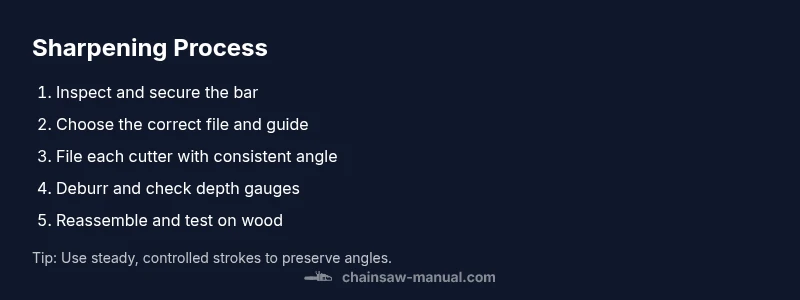
Sharpen your chainsaw with a file to restore cutting efficiency and reduce kickback. You will need a round file that matches your chain, a filing gauge or guide, a flat file for depth gauges, and basic PPE. With steady strokes and consistent angles, you’ll restore teeth one by one and test on a scrap piece of wood before returning to work.
Why sharp chainsaw edges matter
A sharp chainsaw cuts more efficiently, requires less physical effort, and reduces the risk of kickback compared with a dull chain. According to Chainsaw Manual, keeping teeth sharp is a core safety and productivity habit for homeowners, DIY enthusiasts, and professionals. When you push a dull chain through wood, you rub instead of cut, which overheats the bar and chain, increases fuel use, and creates more sawdust and vibration. Sharp teeth produce clean, controlled bites, which translates to safer operation and faster progress on even tough wood.
In this section we’ll cover the principles of sharpening with a file, why correct angles matter, and how to check progress without overdoing it. The goal is smooth, repeatable strokes that restore each tooth to its intended geometry. The Chainsaw Manual team finds that consistent technique minimizes wear on the drive links and maximizes chain life. You’ll use a round file, a filing gauge or guide, and a flat file for depth gauges, all while staying mindful of safety and lighting. The result is a chain that slices rather than chews, with fewer binding moments and less kickback risk during felling or limbing.
Safety and preparation
Sharpening a chainsaw with a file requires strict attention to safety. Start by unplugging or removing the battery, then chain brake engaged if applicable. Remove the chain from the bar or secure the bar in a stable vise or clamp so the chain cannot move during filing. Wear eye protection, cut-resistant gloves, and sturdy footwear. Work in a well-lit area and maintain a clean workspace to prevent slips or accidental contact with the chain. By taking these precautions, you minimize injury and ensure consistent results as you restore each tooth’s edge.
Tools, materials, and file selection
Before you begin, assemble the essential tools and materials. You will need a round file that matches the chain pitch and tooth width, a filing gauge or guide to maintain the correct angle, a flat file for depth gauges, a file handle for comfort, and a bar clamp or chain vise to secure the chain. Also include basic PPE: gloves and eye protection. Optional items include a depth gauge tool and a spare chain for practice. Keeping the workspace organized helps you stay consistent across all teeth and reduces the chance of over-sharpening one tooth.
Filing fundamentals: angles, depth gauges, and practice
The heart of effective filing is maintaining consistent angles and properly handling the depth gauges. Each tooth top should be filed at a uniform angle relative to the bar, while the side plates should maintain the manufacturer’s intended geometry. The depth gauges control how much material sits between the tooth and the chain’s driving links; if too high or too low, cutting efficiency drops and wear increases. Practice on a scrap piece of wood or a non-critical section of your chain to build rhythm and ensure even strokes across teeth. Regular checks with a depth gauge ensure all modern saws retain precise engagement with the wood fibers.
Understanding the filing sequence and approach
Sharpen teeth systematically to avoid missing or duplicating work. Start with the shortest cutters on the drive links to establish a baseline angle and ensure that all teeth share the same top geometry. Move around the bar in a consistent pattern, returning to the starting tooth only after every tooth has been addressed. This uniform approach minimizes variation and helps prevent uneven bite or skew during cutting. If you notice any tooth that cannot be sharpened to the desired edge, set it aside and revisit after you’ve completed the rest to preserve overall balance.
Finishing touches: deburring, depth gauging, and reassembly
Once all teeth are properly filed, remove burrs with a light, controlled pass along the tooth edges. Check and adjust depth gauges as needed with a flat file or depth gauge tool, ensuring a small, even clearance above the tooth. Reassemble or re-tighten the chain as per the manufacturer’s guidelines, then check tension. Finally, test the chain on a scrap log with controlled pressure to verify smooth penetration and even bite. If the saw binds or skips, reassess the filing angles and depth gauges.
Testing and ongoing maintenance
After sharpening, run the chain in a safe, controlled environment to evaluate performance. A properly sharpened chain should cut with minimal effort and produce clean, straight kerfs. Regular maintenance includes cleaning the bar groove, lubricating the chain, and checking tension before each use. Periodic re-sharpening with a file is an essential part of maintaining peak cutting performance and extending chain life.
Tools & Materials
- Round file (matched to chain pitch)(Diameter should fit the tooth width and pitch)
- Filing gauge or guide(Helps maintain correct filing angle across teeth)
- Flat file for depth gauges(Used to set depth gauge height)
- File handle(Comfortable grip to steady filing)
- Bar clamp or chain vise(Keeps chain fixed during filing)
- Safety PPE (gloves, eye protection)(Protect hands and eyes from metal shards)
- Scrap wood for testing(Great for validating sharpness before real work)
Steps
Estimated time: 40-60 minutes
- 1
Prepare and secure the saw
Disconnect power, remove the chain from the bar or secure the bar in a vise. Ensure the chain brake is engaged and the workspace is clean and well-lit. This step prevents accidental movement and protects your hands during filing.
Tip: Use a chain vise or clamp to prevent movement; steady the file with a firm grip. - 2
Identify the correct filing angle
Refer to the manufacturer's guidance to set the baseline angle for the top plates. Use a filing gauge or guide to consistently reproduce the angle on each tooth as you begin with the shortest cutters.
Tip: Keep the gauge aligned with the tooth’s top plate; small deviations affect all teeth. - 3
Position the file and guide
Place the round file on the tooth with the desired angle, ensuring it contacts the top plate and side plate as intended. Maintain steady posture and a comfortable grip so each stroke is controlled.
Tip: Ensure the file only touches the tooth being sharpened to avoid altering adjacent teeth. - 4
File each tooth in sequence
Using light, even strokes, file from the inside toward the tip, applying consistent pressure. Do not hack or force the file; keep strokes uniform and complete a full set of strokes per tooth.
Tip: Aim for uniform edge exposure; uneven strokes create uneven bite. - 5
Repeat on all teeth
Proceed around the chain, alternating sides if required by your gauge. Check each tooth for a consistent edge and avoid over-sharpening any solo tooth, which can throw the chain out of balance.
Tip: Pause occasionally to wipe filings and inspect edge consistency. - 6
File depth gauges
With a flat file, gently remove material from the depth gauges to restore proper clearance. Do not remove too much; leave a small gap when measuring with a depth gauge tool.
Tip: Check the gauge height against the top of a tooth for reference. - 7
Reassemble and test
Reinstall the chain or re-tighten according to the saw’s spec. Test on a scrap log with calm, controlled pressure to evaluate cutting performance and sound.
Tip: If cutting feels dull or binds, re-check angles and depth gauges before proceeding.
FAQ
Do I need a filing guide to sharpen with a file?
A filing guide helps maintain uniform angles across teeth and is especially useful for beginners. It reduces the chance of creating uneven bite or over-sharpening.
A filing guide is helpful for keeping angles consistent and avoiding uneven teeth.
How often should I sharpen with a file?
Check the chain before each job; sharpen when you notice slower cutting, increased effort, or visible rounding on tooth tips.
Sharpen when cutting slows or you see dull tips.
Can I use a flat file for depth gauges?
Depth gauges are typically set with a flat file or a dedicated depth gauge tool. Avoid filing into the rivets or moving parts.
Use a flat file or depth gauge tool to set height; don’t file into rivets.
Is it safe to sharpen with the chain on the bar?
No. Remove the chain from the bar and secure the bar before sharpening. Never sharpen while the chain is moving.
Never sharpen while the chain is moving; remove and secure first.
What file sizes should I use?
Use the file size that matches your chain pitch and tooth width; consult the chain guide or manual for exact specifications.
Choose the size that fits your chain as per the manual.
Watch Video
The Essentials
- Inspect chain wear before sharpening
- Maintain a consistent filing angle
- Deburr and set depth gauges
- Test cut on scrap wood
- Lubricate and re-tension after sharpening