Safety Equipment for Chainsaw: Essential PPE and Gear
A practical guide to safety equipment for chainsaw use, covering PPE, additional protective gear, gear fit and maintenance, and how to choose the right setup for homeowners, DIY enthusiasts, and professionals.


This guide helps you understand safety equipment for chainsaw use, including the essential PPE and protective gear you need, how to choose gear that fits you and your saw, and best practices for wearing it correctly. You’ll learn about helmets, eye/face protection, hearing protection, gloves, leg protection, boots, and how to maintain and store gear properly.
Why Safety Equipment Matters in Chainsaw Work
According to Chainsaw Manual, using the right safety equipment for chainsaw work dramatically reduces the risk of severe injuries, including cuts and kickback-related accidents. The Chainsaw Manual team found that well-chosen PPE and protective gear act as multiple layers of defense, especially when chainsaw operators face unpredictable wood density, weather changes, and fatigue. This section explains the risk landscape and why investing in protective equipment is a non-negotiable part of any sawing task, whether you’re felling trees, limbing, or bucking. A solid safety baseline includes a helmet with face shield, hearing protection, eye protection, cut-resistant legwear, and sturdy boots, complemented by gloves and high-visibility clothing when working near others. Understanding these fundamentals helps you build a safer routine from day one and reduces downtime due to injuries or gear failures.
Safety gear isn’t a one-size-fits-all solution. For homeowners, a streamlined but robust PPE set can be enough for occasional work, while professionals may require higher-grade PPE designed for long hours and tougher jobs. In every scenario, your gear should fit properly, be rated for chainsaw use, and be inspected before each job. The most important concept is proactive protection: don’t wait for a close call to remind you to suit up. Your safety starts with the right equipment and ends with disciplined practice and maintenance.
Essential PPE for Chainsaw Use
Helmet with face shield: A hard hat with a continuous face shield protects your head, ears, and face from flying debris. Look for ANSI or EN ratings and ensure the face shield provides enough clearance to wear other eye protection without glare.
Hearing protection: Chainsaws generate loud noise; use earmuffs or high-attenuation plugs to reduce sound exposure. Ensure a comfortable seal and that the protection remains effective during movement.
Eye protection: Safety glasses or a full-coverage shield should be worn even when the helmet provides some coverage. Choose impact-rated lenses with anti-fog treatment for clear visibility.
Gloves: Heavy-duty leather or synthetic chainsaw gloves protect hands from cuts, vibration, and abrasions while maintaining a good grip on controls. Check for a snug fit and reinforced palms.
Cut-resistant leg protection: Chainsaw chaps or cut-resistant pants significantly reduce the risk of deep lacerations if a chain slips. Ensure they cover the front of the legs and wrap securely at the waist and thighs.
Boots: Steel-toed, nonslip boots with ankle support help prevent foot injuries and provide stability on uneven ground. Look for abrasion resistance and a high cuff to seal out debris.
High-visibility outerwear: A bright jacket or vest improves visibility in outdoor work zones, especially when cutting near roads or other workers. It’s optional in calm, private properties but strongly recommended for most setups.
First aid kit: A compact, well-stocked kit with trauma dressings, antiseptic, and a tourniquet can be a lifesaver in the event of a serious cut. Keep it easily accessible.
Optional extras: Chainsaw-protective gloves (clarified above), anti-vibration gloves, and a moisture-resistant pouch for storing PPE between uses can improve long-term comfort and safety. A belt or harness for long or heavy tasks can help distribute weight and reduce fatigue and instability when operating the saw.
Non-PPE Safety Gear and Accessories
Beyond PPE, several non-PPE items contribute to overall safety:
- Chain brake and chain catcher systems: Ensure your saw’s chain brake is easy to activate and stays engaged when needed. Practice quick actions so you can react instantly if the chain begins to move unexpectedly.
- Anti-vibration features: Choose tools and accessories with anti-vibration handles to reduce fatigue and hand-arm vibration syndrome over long sessions.
- Cutting techniques and stance aids: A simple harness or leg guards can provide stability when working on uneven terrain. Use a stable stance with feet shoulder-width apart and knees slightly bent.
- First aid readiness and signaling devices: Keep a whistle and a flashlight handy for signaling and visibility in low-light conditions or if you need to alert others.
- Maintenance and fluids: Regularly check bar oil levels and fuel quality; using clean, stable lubricants reduces kickback risks caused by chain friction and sudden stops.
These accessories do not replace PPE but complement it by reducing the likelihood of mishaps and improving your control during difficult cuts. Always keep a clear work area and maintain your tools according to the manufacturer’s instructions to minimize hazards.
How to Fit and Maintain Your Gear
Fit matters more than you might think. Ill-fitting PPE can slip out of place, restrict movement, or fail under stress. Start by trying on each item with the clothing and layers you’ll wear during work, then perform basic movements—bending, twisting, reaching—to ensure flexibility. Inspect for wear and tear before every job: torn stitching, frayed cords, cracked visors, and brittle straps are signs you should replace items. Cleaning is essential; wipe down helmets and face shields after exposure to sap, dirt, or moisture to prevent glare and fogging. Store PPE in a cool, dry place away from direct sunlight to maintain protective properties. If a piece has been involved in a hit or shows any visible damage, retire it according to manufacturer guidance and replace it immediately. Regular maintenance checks help you avoid unexpected failures mid-task and extend the life of your gear.
If you’re fitting new PPE, budget time to read the manufacturer’s sizing guides and try on multiple brands. A proper fit reduces fatigue and ensures that protective features work as designed. For example, a helmet should sit securely without pinching the ears, and chaps should completely cover the front of the legs without excessive looseness that could snag on branches. Finally, practice with your PPE on to build muscle memory for correct use during real work.
Choosing the Right Gear for Your Job
Different tasks call for different gear combinations. Felling a mature tree in windy conditions demands more robust protection and possibly a longer safety chain brake travel distance. Limbling or bucking might require lighter, more flexible leg protection to allow for easier movement. You should consider the weight of the saw and the length of your workday; heavier gear can contribute to fatigue, increasing risk. Climate matters, too—breathable materials prevent overheating, while water resistance helps in wet environments. When in doubt, prioritize certified PPE and contact the chain saw’s manufacturer guidance for recommended protective equipment standards. The Chainsaw Manual analysis shows that a balanced setup—well-fitted helmet, eye protection, hearing protection, leg protection, gloves, boots, and visibility gear—provides a reliable foundation for safe operation across varied tasks. Remember to replace any worn components and to perform regular safety audits of your gear after each project.
Training, Practice, and Safe Habits
Training is the cornerstone of safety. Begin with a hands-on session under supervision to master grip, stance, and correct use of the chain brake. Practice neutral handling drills, such as starting with the saw off the ground and performing controlled cuts in a clear area. Build a habit of performing a quick PPE and tool check every time you prepare to work, so you don’t miss a critical safety step. Fueling your knowledge with reputable sources helps too; seek out certified training programs and follow manufacturer guidelines for maintenance. The aim is to develop disciplined routines that become second nature, reducing the risk of injuries during real-world work. The Chainsaw Manual team emphasizes that consistent practice with proper PPE and safety habits protects you, your crew, and your property.
AUTHORITY SOURCES
Below are reputable sources you can consult for safety standards and PPE guidelines related to chainsaw use. These sources provide foundational guidance on personal protective equipment, safe work practices, and compliance expectations:
- OSHA: Occupational Safety and Health Administration – PPE requirements and best practices for hazardous environments. https://www.osha.gov/
- NIOSH: National Institute for Occupational Safety and Health – Research and guidelines for safe use of power tools and protective equipment. https://www.cdc.gov/niosh/
- CPSC: U.S. Consumer Product Safety Commission – general safety advice for consumer tools and equipment. https://www.cpsc.gov/
These references support the guidance offered in this article and help you verify safety standards for PPE and gear selection. Always verify the latest standards from official agencies and consult local regulations when necessary.
Tools & Materials
- Helmet with face shield(ANSI/EN-rated; ensure full-face protection and a proper fit.)
- Hearing protection (earmuffs or plugs)(Choose high NRR and comfortable for long wear.)
- Safety glasses or goggles(Impact-rated, anti-fog preferred.)
- Cut-resistant pants or chaps(Certified EN/ANSI; covers front of legs.)
- Chainsaw gloves(Leather palm, cut-resistant material; snug fit.)
- Steel-toed, slip-resistant boots(Ankle support; consider insulation for cold weather.)
- High-visibility outerwear(Bright colors improve position awareness around others.)
- First aid kit(Trauma dressings, antiseptic, and a small tourniquet.)
- Optional accessories (anti-vibration gloves, gear bag)(Enhance comfort and organization for frequent users.)
Steps
Estimated time: 60-90 minutes
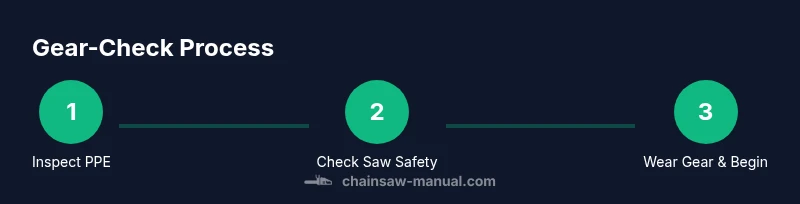
- 1
Inspect gear for wear
Check each PPE item and the saw’s safety features. Look for cracks, tears, or loose straps. If anything is damaged, replace it before you start.
Tip: When in doubt, replace—protective gear is not worth the risk when damaged. - 2
Put on PPE in sequence
Wear helmet with face shield first, then eye protection, hearing protection, gloves, and leg protection before any tool handling. Ensure a snug but comfortable fit.
Tip: Raise the shield and inspect your line of sight to confirm clear visibility before starting. - 3
Inspect the chainsaw safety features
Engage the chain brake, check chain tension, and confirm that the automatic stop-switch functions correctly. Ensure the bar oil reservoir is full and the chain is sharp.
Tip: Do a quick test cut in a safe area to verify the brake engages promptly. - 4
Establish a safe working stance
Position feet shoulder-width apart, knees slightly flexed, weight centered. Keep both hands on the saw handles and maintain a stable, controlled motion path.
Tip: Never cut from a position where your body is between the saw and your escape route. - 5
Start with light, controlled cuts
Begin in a clear, level area. Use low throttle, steady feed, and slow, deliberate movements to minimize kickback risk.
Tip: If you feel the saw kicking back, stop and reassess your stance and grip. - 6
Finalize and store safely
Cool the chain, clean debris, and re-check gear before storage. Store PPE in a dry place and the saw in a secure location away from children.
Tip: Document any gear maintenance needed for the next session.
FAQ
What is the most important PPE for chainsaw safety?
The most important PPE includes a helmet with face shield, hearing protection, eye protection, cut-resistant leg wear, gloves, and sturdy boots. These items work together to prevent head, eye, ear, leg, and foot injuries during cutting tasks.
The helmet with face shield, hearing protection, eye protection, leg protection, gloves, and sturdy boots are the core safety set for chainsaw work.
Do safety chaps really protect against chain injuries?
Yes. Cut-resistant chaps or pants slow or stop the chain from reaching your legs in a worst-case scenario. They are not a substitute for safe cutting practices, but they significantly reduce injury risk when used properly.
Yes, cut-resistant chaps protect your legs and are an important part of your protection, along with safe cutting behavior.
How do I know if my PPE meets safety standards?
Look for product labeling that references recognized standards (e.g., ANSI, EN). Check the manufacturer’s certification and ensure the PPE is specifically rated for chainsaw use.
Check the labels for recognized standards and confirm the gear is rated for chainsaw use.
Can I substitute regular gloves and boots for chainsaw-specific gear?
No. Chainsaw-rated gloves and boots offer protection designed for saw-related hazards and should be used instead of regular gloves or footwear.
No—use PPE rated for chainsaw use to stay protected.
What should I do if PPE gets damaged?
Replace damaged PPE immediately. Do not continue work with compromised protection, and retire items according to the manufacturer’s guidance.
If PPE is damaged, replace it right away to stay protected.
How should I store safety equipment between uses?
Store PPE in a clean, dry place away from heat and direct sunlight. Regularly inspect gear for wear and recheck items before the next job.
Keep PPE dry and in good condition, and inspect it before you reuse it.
Watch Video
The Essentials
- Wear full PPE before starting any chainsaw task.
- Inspect gear and saw features prior to each use.
- Choose PPE and accessories that fit well and meet safety standards.
- Practice safe habits and maintain gear to extend protection.