Ladies Chainsaw Safety: A Practical Guide for All Operators
Educational, safety-first guide to using lightweight, ergonomic saws designed for smaller hands. Learn selection, handling, and maintenance to use a ladies chainsaw confidently and safely.


Using a ladies chainsaw means choosing a lightweight, ergonomically designed model that fits smaller hands and reduces fatigue on long jobs. The goal is safer, more controllable cutting for operators of any height or strength. Look for balanced weight, comfortable handles, low vibration, and reliable safety features; always wear full PPE and follow manufacturer instructions.
Understanding the concept of a ladies chainsaw and ergonomics
In everyday use, the term ladies chainsaw is commonly heard, but it's not about gender-specific tools. It's shorthand for lightweight saws designed to improve handling for operators with smaller hands or lower grip strength. According to Chainsaw Manual, ergonomic design reduces fatigue and increases control, especially on longer cutting sessions. When selecting a saw, look for a compact body, balanced weight distribution, and a handle shape that feels natural without forcing your wrist into awkward angles. Test the feel of the front and rear handles by holding the saw with protective gloves before starting any work. Consider vibration levels: lower vibration not only protects nerves and joints but also helps you maintain safe control when making precise cuts. Fit matters: a ladies chainsaw should feel like an extension of your arm, not a clumsy tool that fights you at every twist.
How to evaluate ergonomic features when choosing a chainsaw
Ergonomics should guide every purchase. Start with grip size and texture—hands should grip without slipping, but without causing pinching or fatigue. Look for adjustable handles or molded contours that match your natural grip. Weight distribution matters: a well-balanced saw reduces wrist strain during long cuts. Check anti-vibration systems, which minimize hand and arm fatigue and improve control when starting and stopping. If you’re shopping for a ladies chainsaw for yard work or occasional felling tasks, compare models with multiple bar lengths and low kickback designs. Finally, assess accessibility to user manuals and safety features such as chain brake, inertia-activated switches, and automatic chain lubrication. These details collectively support safer, more confident operation for operators with varying strengths.
Essential PPE and safety practices for female operators
Personal protective equipment (PPE) is non-negotiable. Always wear a certified helmet with face shield, hearing protection, cut-resistant gloves, chainsaw chaps or leggings, and sturdy boots with ankle support. Eye protection is essential, as wood chips can cause injuries during material handling and cutting. Before starting a cut, inspect your PPE for wear, and replace any damaged items. Establish a clean work area free from trip hazards, secure the workpiece, and clear bystanders. Remember that PPE is your last defense against fragmentation, kickback, and flying debris. In addition, maintain a safe, controlled environment by keeping a safe distance from others and never operate a saw with loose clothing that could snag.
Proper handling techniques for lighter, smaller-handed users
Adopt a stance that centers your weight and keeps your balance stable. Place one foot slightly ahead of the other and bend your knees to absorb shock. Maintain a firm two-handed grip with wrists unlocked, allowing smooth motion rather than forced leverage. Start with short, controlled cuts on small tasks to build muscle memory and confidence. Between cuts, pause to recheck your stance and grip to prevent fatigue from creeping in. For the best results when using a ladies chainsaw, keep your shoulders square to your cut line and avoid overreaching. When you need to reposition, stop the engine, set the saw down safely, and re-enter with a fresh setup. A well-practiced routine reduces the likelihood of safety mistakes.
Reading specs: bar length, weight, vibration, and power source
Understanding key specs helps you choose the right tool for the job. Bar length determines the maximum diameter you can cut in a single pass, so choose shorter bars for smaller tasks and longer bars for thicker material. Light-weight models reduce fatigue but may have less sustained power; electric cordless options often provide lower vibration and easier starting, while gas engines offer more runtime for remote sites. Vibration ratings indicate the tool’s impact on hands over time—lower numbers generally indicate a more comfortable experience. Power source also affects maintenance: electric saws require battery management and charging, while gas engines demand fuel mixing, oiling schedules, and regular spark plug checks. Finally, verify safety features such as chain brake, anti-kickback bars, and chain lubrication consistency to ensure dependable performance during use.
Maintenance and care to keep performance consistent
Regular maintenance extends the life of any saw and keeps it safer to operate. After use, wipe down the saw to remove sap and debris, then inspect the chain for sharpness and proper tension. Keep the bar oil reservoir topped up and clean around the oiling mechanism to prevent clogs. Scheduled maintenance includes chain sharpening with appropriate files, checking drive sprockets, and servicing air filters on gas models. For electric or cordless models, ensure the battery is stored at the correct temperature and charged according to the manufacturer’s guidelines. Always perform a test run in a safe area before resuming work. Clean storage conditions reduce corrosion and keep your tools ready for the next job.
Practical cutting drills for confidence and control
Set up a simple practice station with pre-marked targets and test pieces to build accuracy. Start with straight, shallow cuts on clean wood, then progress to small-radius cuts and tensioning logs for better grip. Practice kickback avoidance by keeping the saw’s bar tip away from your body and maintaining a safe stance. Record your time and fatigue level to monitor progress over sessions, and gradually increase cut depth as your confidence grows. Small, frequent practice sessions outperform infrequent, longer drills for developing muscle memory and hand–eye coordination. Always track your form, and adjust your grip if you notice any slippage or discomfort.
Accessories that improve safety and usability
Protective accessories enhance comfort and safety. Consider chain brakes with inertia activation, side-chain guards, bar covers, and magnetic holsters for safe transport. Anti-vibration handles, improved grip tapes, and ergonomic gloves can reduce fatigue and improve control. If you frequently work in dusty or humid environments, look for air filtration accessories and protective storage solutions to keep components clean. A quality scabbard and a reliable carrying case ensure safe transport between sites, while a robust chain file and lubricant kit keeps cutting efficiency high. Finally, select PPE that integrates well with your chainsaw setup so you don’t need to compromise safety for convenience.
Debunking myths about women and chainsaws
Common myths claim women cannot handle heavy tools or that ergonomic features are optional. Reality contradicts these stereotypes: proper training, PPE, and a lightweight saw designed for smaller grips make chainsaw work safer and more manageable for all users. The goal is to empower operators with the right equipment and knowledge, not to perpetuate outdated assumptions. Staying current with best practices and manufacturer guidelines ensures everyone can perform tasks efficiently without compromising safety. Embrace the learning curve and build confidence through practice and proper technique.
Tools & Materials
- Lightweight chainsaw appropriate for smaller hands(Choose a model with a compact body and adjustable handles; consider bar length for typical tasks.)
- Personal protective equipment (PPE)(Helmet with face shield, hearing protection, cut-resistant gloves, chainsaw chaps, and sturdy boots.)
- Bar oil and chain(Ensure consistent lubrication; check dipstick or reservoir and refill as needed.)
- Chain sharpener/file set(Keep chain sharp for clean cuts and safer operation; carry spare files for on-site maintenance.)
- Wrench or multi-tool for tensioning(Used for adjusting chain tension and basic maintenance.)
- Gloves, non-slip grip tape(Protect hands and improve grip; avoid overly bulky gloves that hinder control.)
- Sturdy work boots with toe protection(Supportive footwear prevents injuries if you drop material or slip.)
- Fuel (gas models) or charged battery(Gas models require proper fuel mix; ensure you follow local regulations for storage.)
- First aid kit(Keep a basic kit nearby; any chainsaw task should be paired with emergency readiness.)
Steps
Estimated time: 60-90 minutes
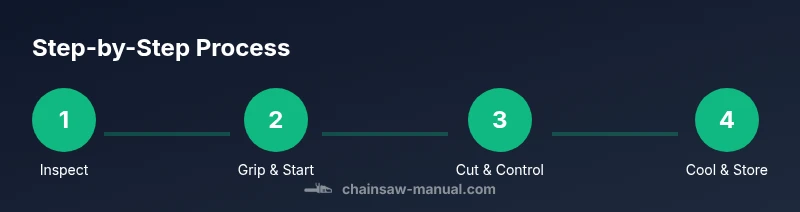
- 1
Inspect the saw and PPE
Perform a visual inspection of the chain, bar, and sprockets. Check fuel/oil levels, chain tension, and brakes. Verify PPE is intact and properly worn before starting.
Tip: If anything feels loose, stop and address it before proceeding. - 2
Check chain tension and lubrication
Ensure the chain moves freely and snaps back to position when pushed by a gloved finger. Confirm the bar oil reservoir is full and the oiling mechanism is functioning.
Tip: A properly tensioned chain reduces kickback risk and improves control. - 3
Position your stance
Stand with feet shoulder-width apart, one foot slightly forward. Keep your body centered and avoid leaning away from the cut.
Tip: A stable stance prevents fatigue and helps maintain balance during cuts. - 4
Grip with both hands
Grip the rear handle firmly with the dominant hand and cradle the front handle with the other. Keep wrists relaxed to absorb vibration.
Tip: Avoid over-gripping; too tight a grip increases fatigue and reduces control. - 5
Make the first cut carefully
Begin with small, shallow cuts on clean wood to establish control. Do not attempt deep cuts immediately; build up to heavier tasks gradually.
Tip: Always start with a test cut and stay aware of kickback potential. - 6
Apply safe cutting technique
Use a straight, smooth motion with minimal force; let the saw do the work. Keep the bar away from your body; avoid cutting above shoulder height.
Tip: Maintain a clear escape path and do not work with your back to other people. - 7
Pause and re-check fatigue
Take short breaks to assess posture, grip, and energy. If fatigue sets in, stop and rest or switch tasks.
Tip: Fatigue dramatically increases the risk of mistakes and injuries. - 8
Post-cut cleanup
Turn off the saw, engage the chain brake, and remove debris from the bar and chain. Inspect for any wear and store safely.
Tip: A clean tool is safer and ready for the next use. - 9
Maintenance and storage
Sharpen the chain, check tension, and refill lubrication. Store in a dry, secure place away from children and pets.
Tip: Schedule regular maintenance to prevent sudden failures on job sites.
FAQ
What exactly is meant by a 'ladies chainsaw'?
It's not about gender; it's about a lightweight, ergonomic design that fits smaller hands for safer, more controllable cutting. Look for reduced weight, better balance, and lower vibration in models marketed toward comfort and ease of use.
A ladies chainsaw refers to a lightweight, ergonomic model designed for smaller hands, offering safer, easier control with proper PPE.
Do I need special training to use a chainsaw safely?
Yes. Training covers safe starting procedures, kickback awareness, and proper cutting techniques. Hands-on practice with supervision or an accredited course improves confidence and reduces the risk of injury.
Yes. Get hands-on training to learn safe starting, cutting, and kickback avoidance.
What PPE should I wear when operating a chainsaw?
Always wear a helmet with face shield, hearing protection, gloves, chainsaw chaps, and sturdy boots. Eye protection and a long-sleeve shirt also help prevent injuries from flying debris.
Wear helmet and eye protection, hearing protection, gloves, chainsaw chaps, and sturdy boots every time you cut.
How do I choose the right bar length for smaller hands?
Start with a shorter bar for balance and control, especially for learning. You can gradually move to longer bars as your experience grows and you need to cut larger material.
Choose a shorter bar to improve balance and control when learning, then adjust as you gain experience.
Can beginners safely operate a chainsaw on their own?
Beginners can operate safely with proper training and supervision, adherence to PPE, and starting with simple tasks. Always have a buddy nearby for larger jobs, and never rush through cuts.
With proper training and supervision, beginners can operate safely; start with simple tasks and don't rush.
What maintenance does a ladies chainsaw require?
Regularly sharpen and tension the chain, check lubrication, drain fuel or replace batteries as needed, and store properly. Annual professional checkups help ensure safety features function correctly.
Sharpen and tension the chain, check lubrication, and store safely; periodic professional checks are helpful.
Watch Video
The Essentials
- Choose ergonomic models with balanced weight for easier handling.
- Wear full PPE and follow safety guidelines at all times.
- Practice proper stance, grip, and cutting technique to reduce fatigue.
- Regular maintenance keeps the tool safe and effective.