Husqvarna Professional Chainsaw: Safe Use, Maintenance & Techniques
Learn safe operation, maintenance, and sharpening for Husqvarna professional chainsaws. This guide from Chainsaw Manual covers starting, cutting techniques, lubrication, and a proactive maintenance routine for pro-grade performance.


Begin every task with proper PPE and a full safety plan. A Husqvarna professional chainsaw demands respect: choose the right bar and chain, verify chain tension, and follow manufacturer guidance for fuel, maintenance, and starting procedures. This guide covers operation, sharpening, and routine maintenance to keep the saw efficient and safe on the job site.
Why Husqvarna Professional Chainsaws Are a Trusted Choice
For professional tradespeople and serious DIYers, Husqvarna professional chainsaws offer durability, power, and predictable performance. According to Chainsaw Manual, these models are designed with heavier duty components, refined ergonomics, and safety features that help maintain productivity on long jobs. Key traits include robust air filtration, high-quality bars and chains, efficient anti-vibration systems, and reliable fueling arrangements. In this section we explore why pros reach for Husqvarna when the task is demanding, from forestry work to landscape clearing. We also cover common configurations used by professionals, such as longer bar lengths for felling or limbing, and how power-to-weight ratios influence fatigue during extended cutting sessions.
The Chainsaw Manual team emphasizes that professional models are built for continuous use, not occasional weekend projects. Users benefit from features like improved air filtration to reduce engine wear, a stronger clutch system for reliable starts, and optimized cooling to prevent overheating during long cuts. By understanding these design choices, you can select a Husqvarna professional chainsaw that aligns with your workload, whether you’re a homeowner tackling large firewood tasks or a contractor handling tree care across a worksite.
Key Differences Between Pro vs Consumer Husqvarna Models
Professional Husqvarna chainsaws differ from consumer-grade units in several tangible ways. Pro models typically employ heavier-duty crankcases, more robust bar mounting hardware, and higher-capacity fuel and oil systems to support longer cutting sessions. They also feature advanced anti-vibration systems and improved air filtration, which help reduce operator fatigue and engine wear during extended use. The clutch and drive systems are designed for higher RPM stability, ensuring consistent power delivery when felling or limb removal. For professionals, bar options tend to be longer, enabling deeper cuts with fewer repositionings, though this comes with increased weight. Finally, pro models often allow more precise carburetor adjustments and easier maintenance access, reducing downtime on busy projects. Chainsaw Manual notes that choosing the right model hinges on your typical task mix, bar length needs, and your willingness to perform regular maintenance.
Safety First: PPE, Inspection, and Setup
Operating a Husqvarna professional chainsaw safely starts long before the first cut. Proper PPE is non-negotiable: a hard hat with face shield, hearing protection, cut-resistant chaps, safety boots, and snug gloves are all essential. Before starting, inspect the saw for damage, verify the chain brake engages, check fuel and bar oil levels, and ensure the chain is properly tensioned. A quick walk-around helps identify loose nuts, damaged bars, or worn teeth. When setting up, clear the work area of bystanders, maintain a stable stance, and plan a retreat path in case the kickback risk increases. Chainsaw Manual emphasizes that safety is a continuous practice, not a one-time check.
Stepwise Operation: Safe Starting and Handling
Starting a Husqvarna pro chainsaw requires discipline and consistent technique. Begin with the chain brake engaged and the saw on stable ground. Prime the carburetor only if required by your model, then start with a controlled pull or electric start as appropriate. Once the engine purrs, ease off the choke and test the throttle in a controlled low-rev state before initiating a cut. Maintain a firm, balanced stance with both hands on the handles, and avoid overreach or cutting above shoulder height. Practice makes smooth starts and reduces the likelihood of kickback or stalls.
Maintenance and Sharpening for Pro Performance
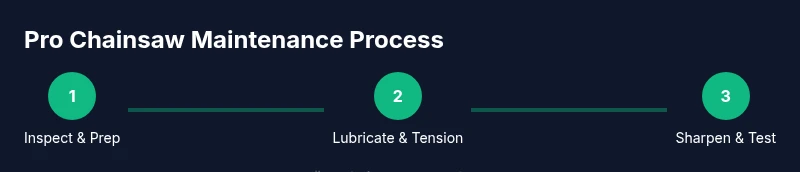
Pro-grade maintenance extends your Husqvarna’s life and keeps performance steady. Regularly inspect and clean the air filter, keep the bar oil reservoir topped up, and check chain tension after every few uses. Sharpen or replace the chain as soon as cutting efficiency declines, and always file with a proper guide to maintain correct angles. Use a high-quality bar oil and store fuel in approved containers to prevent gum buildup and degraded performance. A simple post-cut cleaning routine—wipe the air intake, remove debris from behind the bar, and perform a quick lubrication check—can greatly reduce long-term problems.
Troubleshooting and When to Service Your Pro Saw
Even the best Husqvarna professional chainsaw can experience issues in field conditions. Common symptoms include loss of power, hard starting, or abnormal vibration. Start with the simplest checks: verify fuel mix, inspect the spark plug, inspect the air filter, and confirm chain tension and bar oil flow. If issues persist, consult the service schedule in your owner’s manual and consider a professional inspection for carburetor and clutch components. Chainsaw Manual advises logging service intervals and tracking any anomalies to catch wear before failure.
Tools & Materials
- Full PPE kit (helmet with face shield, hearing protection, gloves, cut-resistant chaps, sturdy boots)(PPE compliant with local standards (e.g., ANSI/OSHA or EN) and chainsaw-specific protection)
- Husqvarna bar and chain appropriate for your model(Match bar length to task; keep a spare chain on hand)
- Chain file or precision grinder(Use the correct file type and guide for your chain pitch and gauge)
- Screwdriver or scrench, wrench set(Carry a dedicated scrench for quick tension and cover adjustments)
- Bar oil and fresh fuel mix(Use manufacturer-recommended oil and correct two-stroke fuel mix; store safely)
- Cleaning supplies (brush, rags, compressed air)(For quick field maintenance and debris removal)
- Owner’s manual or service guide(Keep it accessible for model-specific guidance)
Steps
Estimated time: 60-90 minutes
- 1
Prepare safety gear and inspect the saw
Don your PPE and perform a quick external inspection. Check for loose fasteners, damaged bar or chain, and ensure the chain brake engages. This initial check helps prevent safety incidents and unnecessary tool damage.
Tip: Verify the chain brake is engaged before you pick up the saw. - 2
Check chain tension and bar oil level
With the saw off, check tension by pressing the chain at the mid-point; it should deflect slightly but not sag. Refill bar oil to the recommended level to ensure proper lubrication during cutting. Fixed tension improves cutting accuracy and reduces chain derailment.
Tip: Tension should be adjusted with the chain cool; a hot chain is looser. - 3
Start safely and test idle
Follow your model’s starting procedure. With the chain brake still engaged, start the saw and let it idle briefly to confirm smooth operation. If revs stumble or stall, stop and recheck fuel, air intake, and spark.
Tip: Never start with the chain touching wood; create space to prevent unintended cuts. - 4
Position yourself for a controlled cut
Adopt a stable stance with feet shoulder-width apart. Hold the saw with a firm grip using both hands, left hand on front handle and right hand on rear handle. Keep the bar at waist height and feed the cut smoothly to minimize kickback risk.
Tip: Plan escape routes and never stand directly behind the cut line. - 5
Make the cut and monitor chain behavior
Begin the cut with steady, even pressure and let the chain do the work. Avoid forcing the bar; if binding occurs, back out and reposition. Stop immediately if you sense unusual vibration or heat buildup.
Tip: Use a wedges and a controlled feed to prevent pinching. - 6
Finish, shut down, and maintain
After cutting, release throttle, apply the chain brake, and transport the saw safely. Clean the air intake and saw exterior, inspect the chain for wear, and refill bar oil for next use. Store in a cool, dry place away from heat sources.
Tip: Keep a log of maintenance tasks to guide future service intervals.
FAQ
What distinguishes Husqvarna professional chainsaws from consumer models?
Pro models use heavier-duty components, longer bar options, and enhanced filtration and cooling. They are designed for sustained use and higher workload, with easier maintenance access for field service.
Pro models use tougher parts, longer bars, and better filtration for heavy, ongoing work.
What PPE is required when operating a Husqvarna professional chainsaw?
Always wear a helmet with face shield, hearing protection, cut-resistant chaps, sturdy boots, and gloves. Ensure eye and throat protection when needed and keep bystanders clear of the work area.
Always wear full PPE, including a helmet, ear protection, gloves, and chainsaw chaps.
How often should I sharpen the chain?
Sharpen as soon as you notice reduced cutting efficiency or visible dull teeth. Check teeth height and consistency regularly and use a guide to maintain correct angle for optimal performance.
Sharpen when you notice dull teeth or slower cuts, and check teeth regularly.
What is the best storage practice for a pro chainsaw?
Store in a dry, ventilated area away from extreme temperatures. Drain or stabilize fuel if storing long-term and perform a quick inspection before the next use.
Store in a dry place, avoid extreme temperatures, and check fuel if storing long-term.
What should I do if the saw won't start after several pulls?
Check fuel mix, air filter, spark plug, and choke position. Confirm the chain brake is disengaged and ensure proper cooling before attempting again. If problems persist, seek professional service.
Check fuel, air filter, spark plug, and choke; make sure the chain brake isn’t engaged.
Is it safe to use a Husqvarna professional chainsaw on hardwoods like oak?
Yes, with proper technique and the right bar length. Maintain steady feed pressure, keep the chain sharp, and use occasional relief cuts to avoid pinching or kickback.
Yes, with careful technique and proper chain care.
Watch Video
The Essentials
- Wear full PPE before any operation.
- Regularly check chain tension and bar oil levels.
- Follow safe starting and cutting techniques to minimize kickback.
- Commit to a routine maintenance and sharpening schedule.
- Document service intervals to keep pro performance consistent.