How to Stop a Chainsaw Safely: A Practical Guide
A comprehensive, safety-first guide showing how to stop a chainsaw quickly and safely, including kill switch use, chain brake engagement, fuel-off steps, and post-stop checks for homeowners and professionals.


Goal: Stop a chainsaw quickly and safely. You’ll learn to use the kill switch, engage the chain brake, and shut off fuel or power as appropriate. The guide covers gas and electric models, essential PPE, and common mistakes to avoid, plus how to verify the engine is fully stopped and the bar is secure before moving on. According to Chainsaw Manual, safe stopping protects you and those nearby.
Why stopping a chainsaw safely matters
Stopping a chainsaw safely is about more than just ending a cut. When a saw continues to run or the chain keeps moving after you think you’ve shut it down, you can expose yourself and others to serious injury. The moving chain can snag on clothing, snag skin, or rebound in unpredictable ways, especially if you’re dealing with kickback or a distracted workspace. A consistent shutdown routine reduces residual risk from hot exhaust, moving parts, and stored fuel. For homeowners and professionals alike, developing a clear stop procedure minimizes reaction time in emergencies and sets a baseline for safe habit formation. In this section we explore the hazards you face when stopping a chainsaw and the general safeguards that keep you and your team safer on every job. You’ll encounter practical cues you can apply regardless of the model you use, from gas-powered setups to modern electric saws.
Essential safety features and how they help you stop
Modern chainsaws come with several built-in safeguards designed to stop the blade quickly and minimize risk. The chain brake arrests the chain’s momentum, the kill switch provides a rapid shutdown, and the power delivery controls (throttle lock or ignition switch) help you move from active work to rest safely. Some models also include a master fuel shut-off valve that, when closed, limits fuel flow and reduces the chance of leaks while the engine is off. PPE such as a helmet with face shield, cut-resistant chaps, gloves, hearing protection, and sturdy boots remains essential even when you think the job is done. Chainsaw Manual analysis shows that operators who routinely engage all primary safety features—brake, switch, and valve—experience fewer near-misses and safer post-job handling.
Kill switch, chain brake, and other controls: how to use them in practice
Knowing where each control sits and how to use it in sequence makes stopping a chainsaw predictable. The kill switch stops the engine immediately, the chain brake immobilizes the chain, and the throttle control ensures you’re not fighting the engine as you shut down. On electric models, simply switching off or unplugging is enough, but gas engines rely on the kill switch and sometimes a fuel valve. Practice locating these controls before you start work, and rehearse shutting down in a calm, open area so you’re not scrambling when you need to act quickly. The more you drill the sequence, the safer your shutdown will be when clearance, visibility, or noise levels are reduced.
Step-by-step stopping procedure for common scenarios
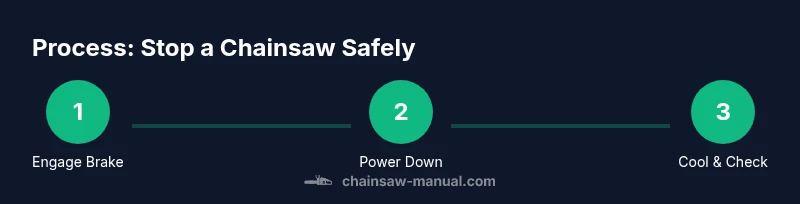
Gas-powered chainsaw shutdown typically follows a consistent sequence: engage the chain brake, switch off the engine with the kill switch, and, if equipped, close the fuel valve. Electric models require simply cutting power at the source (unplug or remove the battery). After the engine stops, wait a moment to let the bar and chain come to a complete halt, then conduct a quick inspection for fuel leaks or embers. If you’re working in a dry, windy environment, ensure the exhaust and muffler are cool before touching the saw or placing it on any surface. In all cases, keep your body clear of the chain and maintain a stable posture while performing the shutdown.
Common mistakes and how to avoid them
One common error is trying to shut down the saw while the chain is still moving, which can lead to accidental contact. Another pitfall is failing to engage the chain brake before stopping, allowing inertia to keep the chain in motion. Some operators neglect to close the fuel valve on gas models, increasing the risk of leaks during storage. Inadequate PPE or poor stance can compound risks during shutdown. To avoid these issues, commit to a standard shutdown routine, use the brakes consistently, and limit movement around the chain until you’re certain it is fully stationary.
After-stop checks and maintenance
Once the saw is off, take a moment to perform a quick post-stop check: look for any fuel leaks or puddles around the carburetor or fuel lines, inspect the bar and chain for tightness and damage, wipe away oil and debris, and store the tool in a safe, dry location away from children or pets. If you’ve used the saw in dusty or chemical-log environments, consider wiping down the air intake and checking the air filter for cleanliness. These routine checks help ensure there are no latent issues that could cause a restart problem or safety risk later.
Quick safety checklist before the next use
Before your next cut, run through a brief safety checklist: confirm PPE is intact (helmet, eye/face protection, ear protection, gloves, and chainsaw chaps), ensure the chain brake is accessible and functional, and verify there are no fuel spills or fuel leaks. Inspect the chain for proper tension and sharpness, confirm fuel and oil levels are appropriate, and rehearse the shutdown sequence one more time in a safe area to ensure you’re comfortable with the procedure.
Tools & Materials
- Chainsaw (gas or electric)(Model with functional kill switch, chain brake, and fuel valve (gas) or battery/cord (electric))
- Personal protective equipment (PPE)(Helmet with face shield, hearing protection, cut-resistant chaps, gloves, sturdy boots)
- Owner’s manual or model-specific shutdown guide(For reference to locate controls on your exact model)
- Clean rag or shop towel(For wiping down the bar area and catching drips)
- Fuel valve key or lever (if applicable)(Only for models with a dedicated fuel shut-off valve)
- Battery charge tool or spare battery (electric saws)(Keep spare to minimize downtime when testing shutdowns)
Steps
Estimated time: 15-25 minutes
- 1
Stand in a stable position
Position your feet shoulder-width apart and ensure the work area is clear of obstacles. Keep the saw pointed away from your body and maintain a firm grip with both hands so you can react if the chain starts to move unexpectedly.
Tip: A stable stance gives you better control during shutdown and reduces the chance of slips if you need to reposition. - 2
Engage the chain brake
Slide the chain brake lever fully forward until it engages. This locks the chain and reduces the chance of accidental contact while you power down.
Tip: Always verify the brake is engaged by trying to gently move the chain by hand after the engine is off; never rely on memory alone. - 3
Turn off the engine with the kill switch (gas models)
Move the kill switch to OFF to cut ignition instantly. This stops fuel delivery and power to the motor, bringing the saw to a halt as rapidly as possible.
Tip: If the saw doesn’t stop immediately, keep the chain brake engaged and pause briefly before attempting another shutdown. - 4
Close the fuel valve (gas models only)
If your model has a fuel shut-off valve or petcock, close it to prevent fuel leaks while the unit is stored. This reduces fire risk and potential leaks.
Tip: Do not force the valve; rotate to the OFF position and confirm it stays closed when moved lightly. - 5
Power down electric saws
For electric saws, unplug the power cord or remove the battery to ensure there is no power available before handling the tool.
Tip: Never carry a running electric saw to a storage area; dead battery removal minimizes shock risk and accidental startup. - 6
Wait for the bar to stop completely
Allow 20–30 seconds for the bar and chain to come to a complete stop after shutdown. Do not touch the chain during this cooldown.
Tip: Use this brief pause to inspect the immediate area and prepare for post-stop checks. - 7
Inspect for leaks and damage
Check around the carburetor, fuel lines, and bar for any signs of fuel leaks or abnormal wear. A quick visual scan can catch issues before they become hazards.
Tip: If you see leaks, transport the saw to a service area with the engine cool and avoid starting it again until repaired. - 8
Wipe down and secure
Wipe off excess oil and debris from the bar area and store the chainsaw in a secure, dry location away from children and pets.
Tip: Cover the bar with a protective sheath if available to prevent accidental contact during storage. - 9
Document any anomalies
Note any unusual performance, leaks, or damage observed during shutdown for maintenance follow-up.
Tip: Record the model, date, and a brief symptom so your technician can diagnose quickly if needed.
FAQ
What do I do if the chainsaw won’t stop after hitting the kill switch?
If the kill switch doesn’t halt the engine, immediately engage the chain brake, move the throttle to idle (if applicable), and attempt the shutdown again. If it still won’t stop, remove the power source (battery or plug) if possible and seek professional service.
If the kill switch fails, engage the chain brake, attempt a secondary shutdown, and disconnect power if safe to do so, then contact a technician.
Is it safer to shut off fuel before engaging the chain brake?
For most gas models, engage the chain brake first to immobilize the chain, then switch off the engine. After that, close the fuel valve if present. Electric models should simply power down and unplug or remove the battery.
Engage the brake first, then stop the engine; for gas, close fuel afterward. Electric: power down and unplug.
Can I stop a chainsaw by pulling the starter cord?
No. Rely on the chain brake and kill switch to stop the engine. Pulling the starter cord while the chain is moving can cause kickback and injuries; use proper shutdown procedures.
Never stop a running chain by yanking the starter cord; use the brake and kill switch.
What safety gear should I wear during shutdown?
Wear a helmet with face shield, hearing protection, gloves, cut-resistant pants, and sturdy boots. PPE protects you from accidental contact with the chain during shutdown and from flying debris.
Always wear full PPE when stopping and handling the saw afterward.
What should I check after stopping the saw?
Inspect for leaks, check chain tension, clean off debris, and store the saw properly. Document any anomalies for servicing before your next use.
After stopping, look for leaks and ensure the saw is stored safely.
How long should I wait before touching the bar after shutdown?
Wait at least 20-30 seconds for the bar to stop completely, especially if the engine was hot. Use this time to perform post-stop checks calmly.
Wait a 20-30 second cooldown, then inspect the saw.
Is shutdown the same for electric and gas saws?
Not exactly. Gas saws require engaging the kill switch and possibly closing the fuel valve, while electric saws require cutting power at the source. Always follow model-specific instructions in the manual.
Gas shuts off with the kill switch (and fuel valve if present); electric simply unplug or remove the battery.
What should I do if fuel leaks after shutdown?
Do not start or move the saw. Place it on a non-flammable surface and contact a technician. If the leak is severe, evacuate the area and seek professional help immediately.
If fuel leaks after shutdown, don’t start it again and seek service.
Watch Video
The Essentials
- Engage chain brake before shutdown to arrest the chain.
- Use the kill switch or power off in a model-appropriate way.
- Verify the engine is fully stopped before leaving the work area.
- Close fuel valve on gas models to prevent leaks during storage.
- Inspect for leaks and wear after every stop.