How to Hold a Chainsaw When Cutting: A Practical Guide
Learn the correct stance, grip, and cutting method to hold a chainsaw safely. This comprehensive guide covers posture, hand placement, PPE, and practical steps for safer, more efficient cutting.


To hold a chainsaw correctly while cutting, stand with feet shoulder-width apart, keep your body aligned with the bar, and grip the front handle with your left hand and the rear handle with your right hand. Maintain firm, steady pressure, elbows close to your torso, and keep the chain below shoulder height. Always wear full PPE and stay in a clear, level work zone.
Safety first: PPE and basics
When tackling a task as demanding as cutting with a chainsaw, safety must come first. How you hold a chainsaw when cutting is inseparable from your protective equipment and your environment. According to Chainsaw Manual, a solid safety foundation starts with the right PPE: a helmet with face shield, hearing protection, cut-resistant chaps, sturdy gloves, and non-slip boots. Eye protection is essential, and a first aid kit should be within reach. Before you even touch the saw, perform a quick risk assessment: clear the work area of bystanders, remove loose clothing or jewelry, and check weather conditions. The Chainsaw Manual Team emphasizes that working in a clean, stable area reduces the chance of slips or trips. This initial preparation helps you maintain control as you begin the technique of holding the saw properly.
Correct stance: balancing your body for control
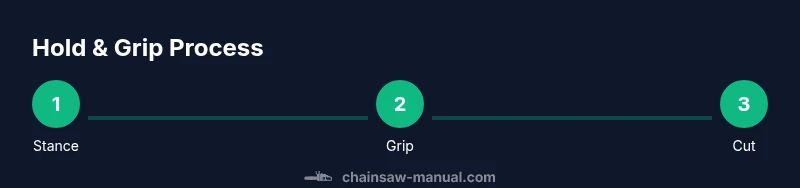
A strong holding pattern begins with your stance. Position your feet slightly wider than shoulder width, with one foot slightly ahead of the other to create a stable base. Bend your knees slightly and keep your hips square to the cut. Your shoulders should be relaxed, and your spine neutral to minimize fatigue. The goal is to align your body with the line of the bar so your movements translate into controlled, precise cuts rather than abrupt twists. When you hold a chainsaw correctly, your center of gravity stays over your feet, which helps you respond quickly to kickback and changes in log orientation. Practice this stance slowly at first, then combine it with your grip in the next section.
Hand placement and grip: two-handed technique for stability
The two-handed grip is essential for maintaining control during every cut. Place your left hand on the front handle (proximal to the bar) and your right hand on the rear handle near the trigger. Keep your wrists straight and your grip firm but not white-knuckle tight to avoid fatigue. Your left elbow should point slightly outward to guide the bar, while your right elbow stays tucked and close to your body for stability. Avoid wrapping your hands around the top of the front handle; this reduces control and increases the risk of kickback. A proper grip translates the force you apply with your arms into steady acceleration of the cut, letting your legs do much of the supporting work.
Chain brake and starting position: prep for safe cutting
Before you start cutting, engage the chain brake and verify the saw is in a safe starting configuration. Stand with the bar tip pointed away from your body, maintain a neutral grip, and keep the saw away from your legs. When you start the engine, ensure the chain does not rotate until you are ready. The chain brake acts as a critical safeguard by preventing the chain from moving if you shift or stumble. This preparation reduces the risk that an uncontrolled motion will lead to injury, and it supports the correct holding technique from the instant the chain begins to move.
Cutting technique: controlling the bar and applying pressure
With the stance and grip established, direct the bar toward the log along the natural line of the cut. Use your legs to drive most of the force, keeping your arms responsive rather than rigid. Let the saw do the work; don’t push too hard or twist your wrists. Keep your shoulders aligned with your hips and the bar to minimize torque on the body. If the wood binds, adjust your stance rather than forcing the cut. A controlled feed, combined with a consistent two-handed grip, will yield smoother cuts and reduce fatigue over the course of the job.
Common mistakes and fixes: quick corrections for safer cuts
Even seasoned users slip into bad habits when fatigued. Common mistakes include overreaching with the front arm, cutting from an awkward stance, allowing the chain to idle in the wood, and neglecting to engage the chain brake when moving between cuts. To fix these, reset your stance, re-establish a two-handed grip, and pause to evaluate the working surface. The Chainsaw Manual notes that small, repeated checks beat large, risky corrections. Rehearse the correct hold in a safe, open area before moving to more challenging tasks.
Environment and planning: reducing risk before you cut
A safe cut begins before you start cutting. Survey the tree or log, identify escape routes in case the cut behaves unexpectedly, and clear obstacles that could trip you or snag the bar. Keep spectators at a safe distance and maintain a generous working zone around your target. Be mindful of kickback zones: never cut with the tip of the bar at the wood, and maintain a low, steady grip to avoid sudden, dangerous rebounds. The environment matters as much as technique when holding a chainsaw during cutting.
Practice drills and progressive training: safe, incremental skill-building
Structured practice helps cement good habits. Start with dry runs using a safe wood block or softwood with known grain. Practice the two-handed grip, stance, and chain brake engagement without cutting, then progress to light cuts on non-load-bearing sections. Increase complexity gradually: practice straight cuts first, then corners, then vertical cuts, always prioritizing balance and control. Keep sessions brief to avoid fatigue, and always stop if you feel your form slipping.
Why proper hold matters: real-world outcomes and long-term safety
A correct hold reduces fatigue, improves accuracy, and lowers the risk of injury during cutting tasks. Consistent grip and stance help you react to unexpected logs and changes in direction. In the end, the best holding technique is one that you can perform confidently over the course of a shift or day of work. The Chainsaw Manual Team emphasizes that daily adherence to proper form translates into safer, more productive outcomes.
Tools & Materials
- Chainsaw(Ensure chain is sharp and properly tensioned; confirm bar oil level)
- Chainsaw chain oil(Required for lubrication during operation)
- PPE: helmet with face shield(Integrated hearing protection preferred)
- PPE: hearing protection(Earmuffs or earplugs)
- PPE: cut-resistant chaps(Important for leg protection)
- PPE: gloves(Non-slip, snug fit)
- PPE: sturdy boots(Steel-toe recommended; ankle support)
- Wrench or scrench(For adjusting chain tension and bar)
- First aid kit(Basic trauma supplies)
- Clear work area markers(Cones or tape to define drop zone)
- Rope or wedges(For log positioning or jamming situations)
Steps
Estimated time: 60-90 minutes
- 1
Check gear and work area
Visually inspect the chainsaw for damage, ensure the chain tension is correct, and verify fuel and oil levels. Clear the work area of debris and bystanders. Confirm you have a clear escape route and bail-out options before cutting begins.
Tip: Remove loose clothing and jewelry; secure long hair. - 2
Put on PPE and verify fit
Put on a helmet with face shield, hearing protection, cut-resistant chaps, gloves, and sturdy boots. Adjust straps so PPE fits snugly and does not shift during movement.
Tip: Double-check that PPE covers all exposed skin and that the face shield is clean. - 3
Set your stance and grip
Place feet shoulder-width apart with one foot slightly ahead. Bend knees slightly and align hips with the cut. Grip the front handle with the left hand and the rear handle with the right hand.
Tip: Keep wrists neutral and avoid overreaching to maintain balance. - 4
Engage chain brake and prepare to start
Engage the chain brake before starting. Stand with the bar pointed away from your body and never touch the throttle while positioning the saw. Start the engine following safe procedures.
Tip: Ensure the chain cannot rotate during the initial setup. - 5
Begin cutting with control
Slowly advance the saw along the log, using your legs to drive the movement and your arms for steering. Maintain a steady, moderate feed rate and keep the bar aligned with the intended cut.
Tip: Avoid forcing the cut; let the saw do the work. - 6
Adjust stance as you progress
Move your feet to follow the wood and maintain balance. If the wood shifts, reposition rather than twisting your body.
Tip: Take short pauses to reassess alignment and grip. - 7
Pause, reassess, and switch off when done
After completing each cut or reaching a natural stopping point, engage the chain brake, turn off the saw, and inspect for any issues before the next cut.
Tip: Always confirm the chain is stopped before moving the saw. - 8
Store and transport safely
Allow the saw to cool before transporting. Store with chain cover on and in a secure location away from children or bystanders.
Tip: Wipe down the saw and re-check chain tension before next use. - 9
Review and improve your practice
Reflect on each session: what went well, what caused fatigue, and where grip or stance could be improved. Schedule safe drills to reinforce good habits.
Tip: Document lessons learned to build lasting skill.
FAQ
What is the safest stance when holding a chainsaw for cutting?
A stable, shoulder-width stance with knees slightly bent and weight evenly distributed helps maintain balance and reduces fatigue.
Maintain a stable, shoulder-width stance with slightly bent knees.
Should I cut from a kneeling or seated position?
No. Standing upright offers better balance, sightlines, and reaction time in case the cut behaves unexpectedly.
Avoid kneeling; stand for better balance.
Is chain brake a mandatory safety feature?
Yes. Engage the chain brake whenever you are not actively cutting to prevent unintended bar movement.
Always engage the chain brake when not cutting.
What PPE is mandatory for cutting tasks?
Helmet with face shield, hearing protection, cut-resistant chaps, gloves, and sturdy boots are recommended and often required.
Wear full PPE: helmet, eye and hearing protection, gloves, and chaps.
How can I avoid kickback during cutting?
Maintain proper bar orientation, keep the saw away from your body, and never cut with the bar tip at the wood.
Avoid kickback by keeping the bar away from your body and not using the tip.
What should I do if the log binds or the chain stops?
Stop the saw, disengage the chain brake, assess the situation, and reposition before attempting another cut.
Stop, disengage, and reassess before trying again.
Watch Video
The Essentials
- Stand with stable stance and bent knees.
- Use a two-handed grip with proper alignment.
- Keep the chain below shoulder height and brake engaged until cutting.
- Wear complete PPE and maintain a clean, clear work area.
- Inspect equipment and environment before each cut.