Holding a Chainsaw: Safe Handling and Grip Guide
Learn how to hold a chainsaw safely with proper grip, stance, PPE, and technique. This step-by-step guide from Chainsaw Manual covers starting correctly, maintaining control, and avoiding common mistakes for homeowners, DIY enthusiasts, and professionals in 2026.


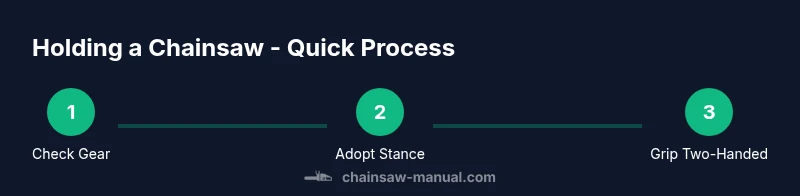
Holding a chainsaw safely starts with a controlled two-handed grip, a stable stance, and a ready chain brake. Before any cut, engage the brake, keep your weight centered, and maintain elbows slightly bent for control. This approach reduces kickback risk and improves precision, especially for homeowners and DIYers.
Posture and grip foundations for holding a chainsaw
Successful, safe operation begins with your body. Stand with feet shoulder-width apart and your weight centered. If you’re cutting on uneven ground, adjust your stance to keep balance and avoid slips. Bend your knees slightly and keep your spine neutral—never hunch over the bar. When gripping, place your right hand on the rear handle near the throttle and your left hand on the front handle. Your grip should be firm but not white-knuckle; thumbs wrapped around the handles help prevent your wrists from buckling under load. Remember, holding a chainsaw safely means staying in control at all times, not fighting the tool. Keep the bar close to your body to reduce torque and maintain visibility of the work area. Chainsaw Manual emphasizes steady control and constant awareness of kickback zones, especially when cutting near the ground or into a log. In 2026, the standard remains: a balanced stance, two-handed grip, and a proactive safety mindset.
PPE and workspace setup
Before you ever start the engine, equip yourself with the right gear and inspect the workspace. Always wear a helmet with a face shield and hearing protection, plus cut-resistant chainsaw chaps, sturdy boots, and snug-fitting gloves. Eye protection is essential, and a breathable, flame-resistant long-sleeve shirt helps reduce reaction time during a snag. Clear the area of bystanders, pets, and loose debris within a safe radius (at least the length of your arm plus the bar). Ensure the ground is dry and stable; avoid ice, mud, or loose gravel that could cause slips. If you must work in poor light, use a headlamp and a high-visibility vest so you stand out. The Chainsaw Manual team notes that good lighting and a clean perimeter are as important as the grip itself for safe operation.
The two-handed grip and chain brake
Two hands on the saw provide the best control. Left hand on the front handle guides the saw, while the right hand controls throttle and stability on the rear handle. Keep your elbows slightly bent and wrists neutral to absorb shocks. Your grip should allow minute corrections without losing control. Engage the chain brake whenever you’re not actively cutting to prevent unintentional bite. When starting or inspecting the saw, ensure the chain brake is engaged before pulling the starter rope. Maintain a slight forward lean and keep the bar tip slightly lower than shoulder height to reduce kickback potential. Chainsaw Manual highlights that a firm, consistent grip with both hands minimizes jerk and helps you react quickly to kickback triggers.
Safe starting technique and idle control
Starting a chainsaw safely starts with the chain brake engaged and a stable stance. Place the saw on solid ground or your thigh, but never against a knee while starting. With the brake engaged, grip the rear handle firmly and pull the starter rope with controlled, even tension. Do not yank; a steady, deliberate pull reduces bar movement and wear on the chain. Once the engine fires, release the lever gradually and move to idle while keeping both hands on the handles. If you feel the engine surge or the bar kick, immediately re-engage the chain brake and reassess your footing. Chainsaw Manual stresses that starting technique is a critical safety moment that sets the tone for every cut.
Cutting technique, body alignment, and feed control
When cutting, position your body so the bar stays under the shoulder line and in front of your body to maximize control. Keep your left arm extended but not locked, allowing slight give to absorb vibration. Feed is slow and deliberate; let the saw do the work instead of forcing it. Avoid reaching or twisting your torso; instead, reposition your feet and hips to align with the cut line. If you need to cut into a piece that’s above your shoulder, stop and re-evaluate; overhead cuts are high-risk and require deliberate technique and protection. Maintain a clear line of sight, never cut from a kneeling or crouched position that reduces balance, and stop if your footing slips. Chainsaw Manual emphasizes smooth, controlled movements over brute force.
Common mistakes and how to fix them
Common errors include gripping too tightly, which causes fatigue and slower reaction times, and standing with a stiff stance that reduces balance. Another frequent mistake is starting with the chain brake off or releasing it too late, increasing kickback risk. Poor bar alignment during cuts can trap the chain and cause unpredictable motion. To fix these, practice two-handed control in a safe area, keep the chain brake engaged when not actively cutting, and always check that the blade is not contacting material until you’re ready. Regular self-checks of your stance, grip, and brake action significantly reduce accident risk over time.
Maintenance and post-cut checks
After finishing a cut, turn off the saw and allow the chain to stop before moving. Clean the debris from the bar and chain, inspect for wear, and re-tension the chain if needed. Wipe down the housing and air intake to prevent dust clogs. Check that the bar and chain lubrication system is functioning and refill if necessary. Store the saw in a dry, secure location away from children and pets. Regular maintenance improves control and prolongs the tool’s life, helping you stay safe while holding a chainsaw.
Tools & Materials
- Chainsaw(Main cutting tool; ensure chain is sharp and tensioned per manual.)
- Helmet with face shield(Protects head and face from debris.)
- Hearing protection(PPE to prevent hearing damage in loud environments.)
- Cut-resistant chainsaw chaps(Stops chain contact on legs; wear with boots.)
- Safety gloves(Provide grip and cut resistance.)
- Steel-toe boots(Stable footing; ankle protection.)
- Eye protection(Goggles or safety glasses for eye safety.)
- Workbench or stable ground(Secure area for starting and checks.)
Steps
Estimated time: 25-40 minutes
- 1
Inspect gear and environment
Check PPE, inspect the chainsaw, and clear the work area. Ensure the chain brake works, the bar is lubricated, and that you have a stable stance before starting.
Tip: If you notice damage or wear, stop and consult a professional or replace parts before proceeding. - 2
Position feet and grip
Stand with feet shoulder-width apart, left foot forward for balance, and grip with both hands on the front and rear handles. Keep elbows slightly bent and wrists neutral for control.
Tip: Maintain a light forward lean to keep the bar under your center of gravity. - 3
Engage chain brake and prepare to start
Engage the chain brake and place the bar away from your body. Position the saw on a stable surface if starting from ground level.
Tip: Never start with the chain moving; ensure the brake is engaged at all idle moments. - 4
Start and idle safely
With the brake still engaged, pull the starter rope in controlled, steady increments until the engine fires. Return to idle and confirm the chain is stationary before proceeding.
Tip: If the engine struggles, pause, re-check fuel and air filtration. - 5
Make a controlled cut
Begin with small, shallow cuts to establish control, keeping the bar moving smoothly and avoiding kickback zones. Watch for binding and adjust stance as needed.
Tip: Always maintain two-handed control and avoid cutting above shoulder height. - 6
Shut down and inspect
Turn off the saw, wait for the chain to stop, and inspect for damage. Clean the bar and chain, lubricate as needed, and store safely.
Tip: Document any issues and schedule maintenance if you notice unusual vibrations or reduced performance.
FAQ
Why is the two-handed grip essential when holding a chainsaw?
A two-handed grip provides greater control, reduces kickback risk, and helps stabilize the bar during cuts. It also allows quicker corrective movements if the saw binds or kicks.
Two hands give you better control and safety. It helps you respond quickly if the saw binds or kicks back.
Can I operate a chainsaw with one hand?
No. One-handed operation reduces control and greatly increases the chance of a dangerous kick or misdirection. Always keep a firm two-handed grip and use the chain brake when repositioning.
One-handed operation is not safe. Always use two hands and the brake when moving or re-positioning.
What is kickback, and how can I avoid it?
Kickback occurs when the saw bar teeth contact a solid object and the saw violently twists toward you. Avoid it by keeping the bar tip away from obstacles, using proper stance, and maintaining a firm grip with both hands.
Kickback is when the saw bites back toward you. Keep the bar clear of obstacles and stay in a strong, two-handed stance to avoid it.
What should I do after finishing a cut?
Turn off the saw, wait for the chain to stop, and inspect for wear or damage. Clean the bar and chain, apply lubrication if needed, and store the tool safely.
Shut it off, wait for the chain to stop, and inspect and clean before storage.
Is overhead cutting safe, and how should I approach it?
Overhead cuts are high-risk due to gravity and kickback potential. If overhead work is unavoidable, re-check footing, maintain a strong two-handed grip, and cut slowly with a clear escape path.
Overhead cuts are risky. Re-check your stance, use two hands, and proceed slowly with an escape path.
How should I store my chainsaw after use?
Store on a stable surface in a dry area, away from children and pets. Empty fuel if storing for long periods and perform routine maintenance before the next use.
Store in a dry area away from kids, and perform a quick maintenance check before next use.
Watch Video
The Essentials
- Adopt a stable two-handed grip and a balanced stance.
- Always engage the chain brake when not actively cutting.
- Wear full PPE and keep the work area clear.
- Start and idle with the brake engaged and the bar away from your body.
- Inspect and maintain your saw after each session.