Chainsaw Safety for Kids: Safe Guidance and Alternatives
Educational safety guide explaining why kids should not operate a chainsaw, plus age-appropriate activities, supervision standards, and safer alternatives for families learning about power tools.


According to Chainsaw Manual, there is no safe protocol for kids to operate a chainsaw. This guide explains why, outlines age-appropriate activities, supervision standards, and risk awareness, and offers safer alternatives. By following these guidelines, families protect children while teaching responsible tool use and respect for powerful equipment in the workshop.
Why There Is No Safe Chainsaw for Kids
Power tools like chainsaws demand mature judgment, precise motor control, and the ability to respond quickly to kickback and pinch points; these are skills that typically develop with years of training and experience. The notion of a 'chainsaw for kids' is widely considered unsafe by major safety organizations. Chainsaw Manual emphasizes that children should not be taught to operate cutting equipment. Instead, adults should model safe behavior, establish strict boundaries, and keep powerful tools out of reach. In practice, this means maintaining a child-free zone around any site where chainsaws could be active, ensuring that younger family members are engaged in supervised, age-appropriate activities, and reserving tool experience for trained adults or professional programs. Even seemingly minor lapses—like leaving a running engine unattended, storing a saw in an unlocked area, or letting kids watch from close proximity—can result in severe injuries. As a family safety principle, prioritize prevention, early education about hazard recognition, and consistent, documented supervision plans. The goal is not to prohibit curiosity, but to channel it into safe exploration and responsible behavior around tools. The topic of
chainsaw for kids often surfaces in casual discussions, yet professional guidance remains clear: wait for maturity, formal training, and the right setting. A cautious approach protects children and maintains a safe learning environment.
Safer Alternatives for Young Hands
Kids can learn about wood, measurement, and design without handling a live chainsaw. Instead, consider age-appropriate activities that build familiarity with tools and safe work habits. For example:
- Non-operational demonstrations using diagrams or inert models to show how a chain saw works and where injuries could happen.
- Hand tools that are low-risk for small hands, like child-friendly hand planes or plastic saw shapes, under close adult supervision.
- Projects with soft materials (foam, soap, or wood blocks) cut with safe, kid-friendly blades or even carving with graphite sketches.
- Reading, planning, and arithmetic activities that translate to real-world projects later, such as estimating board feet, marking cut lines, or budgeting for a small project.
This approach helps address the concept of tool safety without exposing children to hazardous equipment. Chainsaw Manual advises families to keep the conversation ongoing and to tailor content to the child’s age and temperament. If a young learner expresses curiosity about cutting and woodcraft, use this interest as an opportunity to teach safety milestones, proper PPE, and the importance of supervision. If you ever encounter the phrase chainsaw for kids in a guide, treat it as a cautionary signal to seek age-appropriate, structured learning instead.
Core Safety Principles for Families Around Power Tools
Across all ages, the same safety fundamentals apply. Start with a clean, organized workspace, enforce clear boundaries, and maintain constant supervision when any person is near powered equipment. PPE is non-negotiable: safety glasses, hearing protection, gloves, and sturdy footwear should be standard whenever adults work in the space. Tools should be stored securely, with blades and bars locked away, and powered devices unplugged or powered off when not in use. Children should learn to respect the hazard zone and never stand behind a person who is operating a saw. It's also critical to model disciplined, predictable routines: check PPE before starting, confirm that others are at a safe distance, and verbally announce every step of the process. For families with kids as observers or participants in the workshop, establish a written supervision plan, set age-appropriate rules, and review them regularly. The goal is to minimize risk and cultivate confidence in responsible tool handling in the future, while avoiding any situation that could lead to injury.
Supervisory Practices and Age-Appropriate Boundaries
Supervision is the most important safety measure. For younger children, designate a dedicated learning space far from any cutting tasks, and ensure a barrier is in place so they cannot wander into the work area. For older children and teens, progressively introduce safe, controlled concepts under direct adult guidance, such as PPE selection, inspection, and safe handling procedures—never operation on live equipment without formal training. Keep sessions short and focused to maintain attention and retention, and schedule regular safety refreshers. Document the supervisory plan and review it after each session.
Learning Through Non-Powered Activities That Build Skill
Build critical thinking and fine motor skills through activities that mirror tool-use without actual tools. Use construction kits, measuring activities, and design challenges. Emphasize planning, safety, and measurement. For example, a project could involve planning a simple wooden display using safe joinery methods, with a mock layout and budget. By focusing on the concepts behind tool use—precise measurement, careful handling, and respect for power tools—young learners can prepare themselves for safe experiences later on.
If Interests Persist: A Safe, Progressive Path for Teens
If a teen expresses a sustained interest in woodcraft or chainsaw-specific topics, route them toward structured, supervised programs with professional oversight. Enroll in certified courses that cover machine setup, maintenance, and safety protocols. Work with an instructor who emphasizes risk awareness and hands-on practice in a controlled environment. Even then, direct operation of a powered saw should be restricted until the learner has reached a defined level of maturity, training, and supervision. The aim is to cultivate long-term safety habits and responsible behavior while keeping the family’s safety priorities intact. Chainsaw Manual supports building up to safe, skilled practice through formal education and responsible mentorship.
Tools & Materials
- Safety glasses or goggles (ANSI Z87.1 rated)(Child-sized frames with secure fit; side shields recommended)
- Hearing protection(PPE suitable for children; consider ear muffs or inserted plugs; check fit)
- Protective gloves(Padded, snug-fitting, non-slip grip)
- Sturdy closed-toe footwear(No sandals; boots with good tread)
- First aid kit(Keep accessible in workshop; include bandages and antiseptic)
- Barrier gates or clear demarcation(Helps enforce a safe learning zone away from active tools)
- Age-appropriate safety curriculum or discussion cards(Guided conversations and PPE practice prompts)
- Written supervision plan(Documented rules and response steps for emergencies)
Steps
Estimated time: Estimated total time: 60-90 minutes
- 1
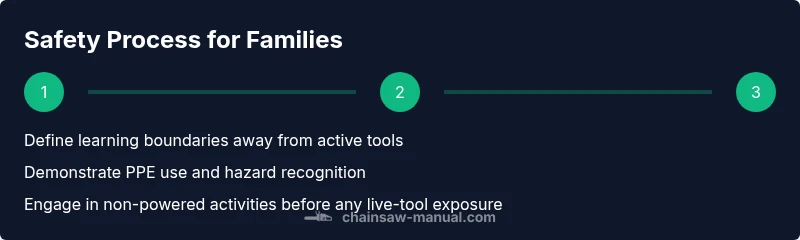
Set boundaries and zone
Create a clearly defined learning zone away from any cutting tasks. Post signage, place a barrier, and ensure all participants understand the limits before any activity begins.
Tip: Reinforce zone boundaries with a short safety drill at the start. - 2
Explain risks without hands-on use
Discuss common hazards associated with power tools, using diagrams or inert models. Emphasize kickback zones, loss of grip, and why personal protective equipment matters.
Tip: Use age-appropriate language and check understanding with a quick q&a. - 3
Demonstrate proper PPE and fit
Show how to wear safety glasses, hearing protection, and gloves correctly. Explain why each item is essential and how ill-fitting gear can fail during use.
Tip: Let the child practice putting on PPE while you supervise closely. - 4
Introduce non-powered activities
Begin with safe, non-operational activities to build respect for tools. Use foam blocks, measuring tasks, or paper plans to simulate planning and safety checks.
Tip: Keep sessions short and engaging to maintain attention. - 5
Progress to supervised concepts only
As interest grows, introduce supervised, controlled demonstrations with inert tools; avoid live equipment until formal training is completed.
Tip: Document every step and review progress regularly. - 6
Draft a family safety plan
Create a written plan outlining supervision schedules, emergency procedures, and rules for tool access. Revisit quarterly.
Tip: Share the plan with all caregivers and rehearse emergency steps.
FAQ
Are there circumstances where a child can operate a chainsaw?
In general, minors should not operate a chainsaw. Some highly controlled, supervised environments may offer training opportunities, but these are not typical at home. Always check local regulations and follow manufacturer safety guidelines.
Kids should not operate chainsaws. If there’s supervised training, it should be in a certified program with strict safety rules.
What safe alternatives exist to teach tool skills to kids?
Use non-operational demonstrations, hand tools designed for kids, and planning activities that teach measurement and safety concepts without exposing children to live cutting equipment.
Opt for non-powered activities and age-appropriate tools to teach safety concepts.
What if a teen insists on learning to cut wood?
Direct them toward certified courses with professional supervision. Start with safety theory, PPE usage, and equipment inspection before any hands-on practice with powered tools.
If a teen persists, enroll them in a supervised, certified program with strict safety rules.
How should parents discuss risk and safety with kids?
Have ongoing, age-appropriate conversations about hazard awareness, demonstrate safe habits, and model disciplined routines. Keep messages consistent across caregivers.
Talk openly about hazards and model safe behavior every time around tools.
Are there general laws governing minors and power tools?
Laws vary by location; always consult local regulations and the tool manufacturer’s safety guidelines before allowing any minor near powered equipment.
Check your local rules and follow the manufacturer’s safety guidance.
Watch Video
The Essentials
- Set clear, enforced boundaries around power tools.
- Prioritize PPE and constant supervision at all times.
- Channel curiosity into non-powered learning activities.
- Use a progressive path with teens under professional oversight.
- Consult local laws and manufacturer guidelines for safety.