Chainsaw and Hockey Mask: PPE Safety Comparison Guide
A detailed, analytical comparison of basic PPE versus a full PPE kit for chainsaw work, focusing on safety, usability, and practical recommendations. Learn when to upgrade protection and how to optimize your setup with Chainsaw Manual guidance.


For safe chainsaw work, compare two PPE strategies: a basic setup with eye protection, gloves, and sturdy boots, versus a full PPE kit that adds a helmet with face shield, chainsaw chaps, hearing protection, and reinforced boots. The Chainsaw Manual analysis suggests that the full PPE kit offers substantially higher protection for typical residential and professional tasks, especially when risk factors are elevated.
The Chainsaw and Hockey Mask Safety Context
The image of a worker wielding a chainsaw while wearing a hockey mask is a powerful visual cue, but it is not a substitute for purpose-built safety gear. When we discuss the combination of a chainsaw and hockey mask in safety terms, the focus should be on properly rated PPE that covers the head, face, eyes, ears, hands, torso, and legs. According to Chainsaw Manual, relying on non-specialized face coverings alone is a high-risk approach that can give a false sense of protection. This section lays out the safety fundamentals that underpin responsible PPE decisions, including how face protection should integrate with a helmet, hearing protection, gloves, and cut-resistant clothing. The goal is to reduce exposure to kickback, debris, and long-term wear-and-tear on your body during demanding jobs or frequent maintenance tasks.
In practice, professionals and homeowners should treat the phrase "chainsaw and hockey mask" as a prompt to confirm that PPE is designed for chainsaw operations, and not as a universal safety standard. Factors such as the bar length, chain type, typical duration of cuts, and environment (dry wood versus frozen material, outdoor vs. indoor) all influence the protective needs. This section sets the stage for a rigorous, task-based comparison of PPE configurations, with actionable guidance you can apply immediately.
Core PPE Approaches: Basic PPE Setup vs Full PPE Kit
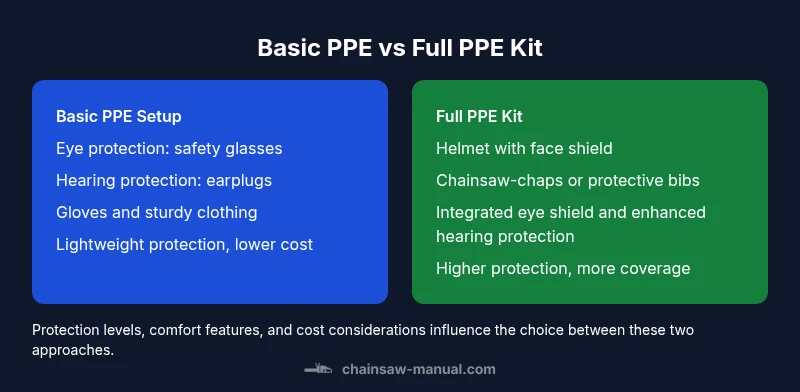
Choosing between a basic PPE setup and a full PPE kit is not merely a matter of cost; it is a risk-management decision. A basic setup typically includes eye protection (ANSI-rated safety glasses or goggles), hearing protection (earplugs or earmuffs), sturdy gloves, long sleeves, and sturdy boots. This combination offers essential protection for light-to-moderate tasks and is often sufficient for occasional homeowners who rarely encounter high-dust, high-debris, or high-kickback scenarios. However, it leaves gaps in facial protection, head protection, and leg protection that can be critical under heavier workloads or less controlled environments.
A full PPE kit expands protection to a helmet with a full face shield, a pair of chainsaw-resistant bibs or chaps, integrated eye shield, advanced hearing protection, cut-resistant pants, and reinforced boots. This configuration is designed to address common failure points—face injuries from flying debris, facial lacerations from contact with the chain, head impacts from branches or tools, and leg injuries from accidental contact with the bar. Chainsaw Manual’s approach emphasizes consistency and fit: when you upgrade to a full PPE kit, you should verify helmet compatibility with face shields, ensure that chaps cover the sides of the legs, and check that gloves allow dexterity without sacrificing protection. The result is a safer, more resilient setup for both homeowners and professional operators facing higher-risk jobs.
The crucial contrast is not just coverage but also integration. A full PPE kit integrates protection with comfort features such as ventilation, moisture-wicking liners, and ergonomic designs that reduce fatigue. In contrast, a basic setup may require constant adjustments during a long session to maintain protection and comfort. When planned properly, the full kit can reduce cumulative risk across multiple cuts and longer workdays.
Risk Profiling and Task Profiling: What the Work Demands
A critical step before selecting PPE is risk profiling. Tasks such as felling, limbing, bucking, or clearing brush each present different risk profiles. High-risk tasks—especially those conducted in variable terrain, with older or poorly maintained equipment, or under adverse weather—benefit from the full PPE kit. In residential settings, where tasks are intermittent and environments are controlled, a basic PPE setup may be adequate for certain projects, yet the risk of kickback and debris remains unless protective barriers are consistently in place. Chainsaw Manual emphasizes a clear assessment of risk factors: bar length relative to wood size, chain sharpness, operator experience, and the presence of bystanders or pets. The more you assess and document risk, the easier it is to justify upgrading from basic protection to a full PPE kit while operating a chainsaw.
Additionally, consider the mask question in this context. While hockey masks are popular in culture, they do not meet safety standards for chainsaw work. They lack certified face-shield integration and impact protection required for effective protection against kickback and debris. In contrast, a helmet with a certified face shield and a properly sized set of protective gear provides a reliable barrier against both face and eye injuries. This distinction matters because Face and eye protection must remain intact and free of cracks or scratches to maintain visibility and protection during high-thrust cuts.
From a risk-management perspective, the most responsible choice is to align PPE with risk, task duration, and potential exposures. The Chainsaw Manual framework recommends documenting each job’s risk factors and updating PPE choices as tasks scale up in complexity or frequency.
Comfort, Mobility, and Performance Tradeoffs
Protection comes with a cost in the form of weight, heat, and reduced mobility. A basic PPE setup is lighter and cooler, improving comfort during short tasks in temperate conditions. However, as task duration increases or environmental conditions worsen, comfort becomes a limiting factor, potentially degrading safety performance. A full PPE kit adds weight, which can increase fatigue, yet modern PPE designs incorporate lightweight materials and airflow channels to mitigate heat buildup. The key trade-off is between protection level and comfort; the right balance depends on task duration, climate, and user experience.
For example, during summer or in hot environments, the full PPE kit still offers ventilation-aware features, but the wearer should take deliberate breaks to maintain focus and ensure proper donning of gear after rest periods. In colder weather, the added insulation of a full kit can be beneficial and protective, provided the wearer remains able to sense pressure points and adjust the fit. The long-term benefit of choosing a full PPE kit is a reduction in incidental injuries that can cause longer downtime, medical costs, and emotional stress. Chainsaw Manual’s recommendations emphasize trying on different PPE combinations and validating that protective layers do not impede crucial tasks such as handling fuel, starting the saw safely, and maintaining grip on the saw handle.
Training, Fit, and Donning: A Routine for Safety
No PPE system protects you if it is not worn correctly. A basic PPE setup requires discipline to ensure that safety glasses remain in place, ear protection seals stay intact, and gloves stay dry during use. A full PPE kit demands an even more careful approach, including proper helmet sizing, face shield adjustment, and the correct tension on chainsaw chaps. Training should emphasize the sequence of donning: helmet, face shield, hearing protection, gloves, and chain brake engagement. In addition, operators should practice adjustments with the saw powered at idle to avoid sudden movement while donning.
The Chainsaw Manual team highlights that regular practice with a consistent routine reduces the likelihood of exposure to hazards and makes the PPE more effective. A well-fitted helmet with a shield and a properly sized set of chaps can dramatically alter the protection profile by preventing debris from reaching the face and limbs. Training should also cover maintenance checks—tightness of buckles, proper cleaning, and periodic replacement of worn components—to preserve the PPE’s protective qualities over time.
Practical Scenarios: When to Use Each PPE Approach
- Basic PPE Setup: Suitable for simple, short-duration tasks such as pruning small branches, routine maintenance, and light cleanup where the risk of kickback or branch impact is lower. For these tasks, having reliable eye protection, gloves, and sturdy footwear offers adequate protection.
- Full PPE Kit: Best for professional-level work, heavy-duty cutting, felling, or work in unpredictable environments (wet ground, dense brush, or unstable wood piles). The full kit provides comprehensive protection for head, face, eyes, ears, torso, and legs, and it is especially important when chainsaw use becomes routine or task complexity increases.
- Transitional approach: Start with basic PPE for low-risk tasks, then add a helmet with face shield and chainsaw-chaps as you begin more demanding projects. The goal is to minimize cumulative risk across multiple tasks and ensure you are prepared for unforeseen hazards.
The key is to tailor PPE to the actual risk, rather than the aesthetic of a stereotyped image. The Chainsaw Manual guidance emphasizes not to rely on visuals alone, but to verify protection levels with standards-compliant gear and proper fit.
Maintenance, Inspection, and Replacement Plans
Protection degrades over time. PPE components should be inspected before each use for cracks, wear, or compromised seals. Eye protection must be free of scratches; helmets should have intact suspensions; face shields must move smoothly and lock securely. Chainsaw chaps should be checked for cut resistance integrity, and gloves should show no holes or thinning. Replacement guidelines depend on usage frequency, exposure to chemicals, and exposure to moisture. Chainsaw Manual recommends adopting a PPE maintenance schedule that includes routine cleaning, drying, and storage in a dry, cool place to preserve material integrity. If a single component shows wear or fails a protective standard, replace it promptly to maintain overall protection.
Getting the Right Fit: Sizing and Adjustment Tips
Fit is essential for effective protection. A helmet that sits too high or too loose can fail to absorb impacts; shield alignment must be correct for optimal visibility; chaps must cover the exposure areas fully. Before starting work, conduct a quick fit test: ensure the helmet sits snugly, the shield is aligned just above the eyebrows, hearing protection sits securely without pinching, and gloves allow full finger movement without slippage. If in doubt, consult the manufacturer’s sizing chart and seek professional guidance. The goal is to create a protective barrier that remains in place during vigorous cuts and unexpected movements.
Quick Start PPE Readiness Checklist
- Confirm you have a certified helmet with a full-face shield and properly fitted harness.
- Verify eye protection and hearing protection meet or exceed applicable safety standards.
- Check that chainsaw-chaps or cut-resistant pants are in place and covering the legs.
- Confirm gloves provide grip without compromising dexterity.
- Inspect the PPE for wear, damage, or misalignment before every job.
Comparison
| Feature | Basic PPE Setup | Full PPE Kit |
|---|---|---|
| Eye protection | ANSI-rated safety glasses or goggles | Helmet with full face shield integrated |
| Head protection | Hard hat optional/none | Certified helmet with secure suspension |
| Hearing protection | Earplugs or basic earmuffs | Dedicated hearing protection with higher attenuation |
| Body protection | Long sleeves, basic gloves | Chainsaw-resistant jacket or jacket + bibs |
| Leg protection | Regular pants; no built-in protection | Chainsaw chaps or protective bibs |
| Footwear | Sturdy boots; basic toe protection | Reinforced boots with metatarsal protection |
| Comfort/Weight | Lightweight, more breathable | Heavier but better protection and coverage |
| Price | Lower upfront cost | Higher upfront cost, long-term protection |
| Best For | Low-risk, short-duration tasks | High-risk, long-duration tasks or professional use |
Strengths
- Enhanced protection reduces exposure to facial injuries
- Full kit supports professional use and high-risk jobs
- Integrated gear simplifies donning and ensures consistent protection
- Better protection against environmental debris and noise
Drawbacks
- Higher upfront cost and longer setup time
- Increased weight can reduce mobility on hot days
- Requires proper fit and periodic maintenance to stay effective
- Overkill for very light, infrequent tasks
Full PPE Kit is the safer, more reliable choice for most chainsaw tasks
If you perform regular or high-risk cutting, a full PPE kit provides broader and more durable protection. For occasional, light-duty work, a basic setup can suffice, but you should still follow best practices and consider upgrading as tasks intensify.
FAQ
What is the key safety difference between a basic PPE setup and a full PPE kit when using a chainsaw?
A basic PPE setup covers essential eye and hearing protection and basic clothing, but a full PPE kit includes a helmet with face shield, cut-resistant protection for legs and torso, and enhanced hearing and eye protection. The full kit reduces exposure to kickback debris and protects critical areas more comprehensively.
A full PPE kit covers more areas and provides better protection during high-risk tasks. For most serious work, upgrading protection is the safer choice.
Is a hockey mask appropriate PPE for chainsaw work?
No, a hockey mask is not designed for chainsaw work and does not meet safety standards for face or eye protection during cutting. Use certified helmet with a face shield and appropriate PPE instead.
A hockey mask should not be used for chainsaw tasks; choose a purpose-built face shield and helmet.
Can I retrofit PPE to fit better for long sessions?
Yes, you can upgrade gradually by adding a helmet with face shield and protective chaps. Ensure each component fits correctly and that the system remains comfortable for extended use.
You can start with basics and add protection as sessions lengthen; ensure proper fit at every step.
What should I check before starting a cut?
Inspect PPE for wear, ensure shields are clear, test fit, and verify that the chain brake and safety devices on the saw function correctly. Clear the area of bystanders and ensure proper stance before starting.
Do a quick PPE and tool check, then clear the work area and verify controls before starting.
How often should PPE be inspected and replaced?
Inspect PPE before each use for damage; replace any worn or cracked elements promptly. Establish a replacement timeline based on usage intensity and exposure to environmental factors.
Inspect before every use and replace worn parts promptly to maintain protection.
The Essentials
- Assess risk before choosing PPE; don’t rely on looks.
- A full PPE kit offers comprehensive protection for most tasks.
- Fit and maintenance are as important as the gear itself.
- Training and proper donning reduce protection gaps.
- Upgrade gradually as task complexity grows.