Chainsaw Pants vs Chaps: PPE Showdown
Compare chainsaw pants and chaps to decide which PPE provides better protection, comfort, and value. Chainsaw Manual analyzes materials, fit, and real-world use to guide your choice.


When choosing protective gear for chainsaw work, chainsaw pants typically deliver superior full-leg protection and longer-term value, while chaps offer lighter, cheaper, and quicker-ready protection for short tasks. The Chainsaw Manual approach weighs coverage, comfort, and maintenance to help you pick the safer option for frequent cutting versus occasional use.
Overview: chainsaw pants vs chaps — what’s the difference?
In the realm of personal protective equipment for chainsaw work, the choice between chainsaw pants and chainsaw chaps (sometimes called chaps) hinges on coverage, construction, and intended use. Chainsaw pants are a continuous garment that covers the legs, often with integrated protective panels, liners, and sometimes knee pads. Chaps, by contrast, wrap around the legs as external panels that attach to normal pants and provide protection primarily through coated or reinforced materials facing outward. This article, following Chainsaw Manual’s safety-first philosophy, analyzes both options for homeowners, DIY enthusiasts, and professionals. When you compare chainsaw pants vs chaps, you should consider protection level, fit, ventilation, durability, and total cost of ownership. The goal is to help you choose the gear that minimizes risk while maximizing comfort and productivity in real-world tasks.
In practical terms, the decision often comes down to how frequently you work with a chainsaw, your typical climate, and whether you value all-day comfort or rapid donning and removal. The Chainsaw Manual team emphasizes that no PPE can compensate for unsafe technique, but the right pants or chaps can significantly reduce injury risk when used correctly. For many users, a balanced approach is to evaluate both options against a simple decision framework: coverage area, material quality, fit for mobility, maintenance needs, and budget constraints. This article uses real-world guidance to help you navigate that framework.
Overall, the question of chainsaw pants vs chaps is not binary. In daily practice, many professionals carry both options as part of their kit: pants for heavy, frequent workdays and lighter chaps for quick tasks or pruning in mild weather. The goal is to pair your PPE with proper cutting techniques, maintenance routines, and safe operating procedures to build a safer workflow.
Comparison
| Feature | chainsaw pants | chainsaw chaps |
|---|---|---|
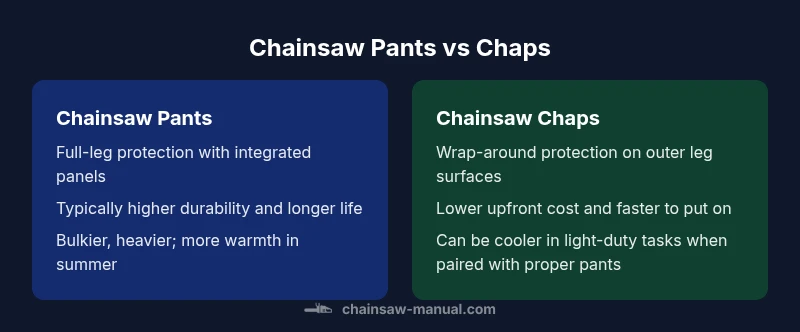
| Coverage area | Full-length leg protection with integrated panels and liners | Wrap-around panels that cover from knee to hip (varies by model) |
| Materials and construction | Heavy-duty fabric blends with reinforced inner panels; some include moisture-wicking liners | Outer brief of protective material over regular pants; possible leather or synthetic overlays |
| Breathability and comfort | Typically more breathable when vented designs are used; can be warmer in non-vented versions | Often cooler to don but can trap heat if fabric is dense |
| Mobility and freedom of movement | Designed for full leg mobility; stretch panels and articulated knee areas are common | Can restrict knee flexion depending on wrap design and size; generally less breathable due to panel setup |
| Durability and maintenance | Usually more durable over long-term use; may require separate washing cycles and care | Easier to wash quickly but may wear out faster with frequent use |
| Fit and sizing | Standard sizes with waist adjustments and inseam options | One-size-fits-most with adjustable straps; depends on wrapping mechanism |
| Price range | $60–$120 | $90–$180 |
| Best for | Frequent, demanding cutting in varied conditions; long-term projects | Light-duty tasks, pruning, and quick-doff scenarios; budget-conscious use |
Strengths
- Better overall leg protection with integrated panels
- Longer lifespan when properly cared for
- More suitable for frequent, heavy-duty cutting
- Can be paired with existing workwear for layered protection
Drawbacks
- Heavier, warmer, and less breathable in hot climates
- Higher upfront cost and more maintenance
- Can feel bulky under tight workwear or when kneeling frequently
- Availability and sizing vary by region
Chainsaw pants generally provide better all-around protection and comfort for frequent use; chaps can be adequate for light-duty tasks or budget-conscious buyers
For regular chainsaw work, pants are the safer, more versatile option. If you cut rarely or need the lowest upfront cost, lightweight chaps can be acceptable. The Chainsaw Manual team recommends prioritizing protection and fit, then cost.
FAQ
What is the key difference between chainsaw pants and chaps in terms of protection?
Chainsaw pants provide full-leg protection with integrated panels, often including a moisture-wicking liner for comfort. Chaps wrap around the legs and shield only the exposed outer surfaces, making them lighter but potentially less comprehensive. Your protection choice should align with how frequently you cut and the risk of kickback or debris exposure.
Pants cover more of the leg with built-in protection; chaps are lighter and wrap around the leg to protect the outer surfaces. Choose based on how often you cut and the risk you face.
Are chainsaw pants or chaps more breathable for warm conditions?
Breathability depends on fabric, vent panels, and liner design. Pants with mesh panels or lighter blends typically feel cooler for long days. Chaps can trap heat if the outer panels are dense, but some models use breathable fabrics for summer use.
Breathability varies by model—pants often vent better, but choose lighter fabrics if you work in heat.
Can I wear protective pants over chaps, or vice versa?
Mixing PPE layers is generally discouraged unless the manufacturer approves it. Improper layering can create gaps or bulk that reduce protection. Always follow the product guidance and safety standards for your gear.
Don’t stack layers unless the manufacturer says it’s safe. Layering can leave gaps or bulk that reduce protection.
How should I maintain chainsaw pants or chaps to extend their life?
Follow the care label for washing and drying. Use cold or warm water, avoid high heat, and air dry to preserve protective fibers. Inspect for wear, especially around knee areas and seams, and replace if panels are damaged or thinning.
Wash per label, avoid high heat, and inspect for wear regularly to keep protection reliable.
What is a good buying approach for infrequent chainsaw users?
For infrequent use, chaps may be a cost-effective entry point, but beware of comfort and fit. If budget allows, a lighter, breathable pants option with a reasonable price may offer better long-term value for occasional tasks.
If you cut rarely, consider affordable chaps or a lighter pants option with a good fit.
Are there standards I should look for when buying chainsaw PPE?
Look for recognized safety labels and fit for chainsaw protection appropriate to your region. PPE should be free of damage, have intact protective panels, and come with care instructions. Standards vary by country, so check local guidance before purchasing.
Check for safety labels and region-appropriate protection; ensure panels are intact and care guidelines are clear.
The Essentials
- Assess your typical cutting days to choose pants or chaps
- Prioritize full-leg coverage and quality materials
- Account for climate when evaluating breathability
- Budget for long-term maintenance and potential replacements
- Always pair PPE with proper technique and safe operation