Can You Use a Chainsaw When It’s Wet? A Safety Guide
Discover if you can use a chainsaw when it's wet, the risks involved, essential PPE, weather considerations, and step-by-step precautions to safely manage wet-weather cutting.


Yes, you can operate a chainsaw in damp conditions under strict safety rules, but wet wood, slick ground, and reduced grip increase the risk of kickback and slips. The quick answer: inspect the weather and ground, wear full PPE, maintain a sharp chain, and cut with controlled motions. If rain is heavy or surfaces are slick, postpone the job.
Can You Use a Chainsaw When It's Wet? Safety First
The question can you use a chainsaw when it's wet is common among homeowners and professionals who work outdoors in uncertain weather. Wet conditions amplify several hazards: reduced traction on muddy or slick ground, slippery wood surfaces, and oily handles or fuel spills. Chainsaw Manual emphasizes that wet weather demands enhanced focus, slower tempo, and deliberate cuts. When the wood is damp, fibers resist clean splitting, increasing the chance of pinching or kickback. Always start with a clear plan, a dry exit route, and a commitment to stopping if conditions worsen. By adhering to a safety-first approach, you can reduce risk and complete your task with minimal danger.
Weather Conditions and Wood Moisture
Moisture in the air and on the wood changes how a cut behaves. Wet wood can close in around the bar more quickly, increasing resistance and kickback potential. Ground moisture can transform a stable work area into a slick hazard, so plan your footing as part of your cut. Chainsaw Manual’s analysis shows that ensuring dry footing and dry wood surfaces wherever possible significantly lowers the chance of loss of control. If wood is visibly water-soaked or if rain is actively falling, reassess whether the cut must be done immediately or postponed until conditions improve.
Personal Protective Equipment You Need
When operating a chainsaw in wet conditions, PPE becomes even more critical. Always wear a certified helmet with a face shield, ANSI-rated hearing protection, cut-resistant chaps, and snug-fitting gloves with good grip. Eye protection and a sturdy pair of boots with slip-resistant soles are essential on rain-soaked ground. Chainsaw Manual recommends inspecting PPE before every use and replacing any damaged gear. In wet weather, breathable, quick-dry fabrics help keep you comfortable without compromising protection. Remember: PPE is your first line of defense against injury when conditions are slippery.
Equipment Readiness and Chainsaw Prep in Wet Weather
Prep starts with your saw. Engage the chain brake, verify chain tension, and ensure the bar is clean and free of ice or moisture buildup. Use bar oil and fuel as appropriate for your saw model, and check the air intake and exhaust area for moisture. A wet environment demands extra attention to the chain’s sharpness; a dull chain requires more force and increases kickback risk. Chainsaw Manual stresses testing pressure on a piece of scrap wood to confirm control before proceeding with any real cuts.
Work Area Setup: Ground, Grip, and Slippery Surfaces
Choose a stable, dry spot if possible, and establish a clear escape path. Keep the cutting area free of loose debris that could trip you, and avoid standing directly on slick surfaces like wet leaves or mud. Use a stance that distributes weight evenly; keep feet shoulder-width apart, knees slightly bent, and hips square to the cut. If the ground is slick, consider using traction aids or stepping onto a dry board to create a stable platform. A secure setup reduces the likelihood of a sudden slip during a critical cut.
Cutting Techniques in Wet Conditions
In wet weather, aim for controlled, conservative cuts rather than quick, deep bites. Start with smaller cuts to reduce binding and keep the bar near the wood’s surface rather than forcing it through water-slicked fibers. Maintain constant pressure with a smooth feed and avoid sideways or overhead cuts that invite kickback. Always cut with the saw in a balanced position, and pause if you notice the wood pinching or the saw bogging down. Chainsaw Manual recommends using wedges to prevent pinching when dealing with wet wood.
Handling Felling and Snapped Wood in Rain
Wet wood can behave unpredictably, especially when felling. Plan the fall direction and leave a safe retreat path. If you encounter a jam or binding, stop the cut, reassess, and avoid using excessive force to free the bar. In damp conditions, felling should be approached with extra caution; never rush a cut where the wood is swelling or warping. If the wind shifts or rain intensifies, halt operations and move to a dry, sheltered area before continuing.
Maintenance and Cleaning After Wet Use
Rust and moisture can affect chains, bars, and fasteners. After finishing, wipe down the saw to remove sap and water, lubricate the chain, and check for any moisture-induced corrosion on fasteners. Dry all components completely before storage. Chainsaw Manual advises storing your saw in a dry place and performing a quick post-use inspection to catch moisture-related issues early. Proper drying extends the life of critical parts and helps ensure the saw is ready for the next job.
When to Stop and Call for Help
If weather worsens to heavy rain, thunderstorms, or strong winds, reconsider continuing work. Slippery terrain, reduced visibility, and fatigue increase the risk of serious injury. When in doubt, stop, retreat to safety, and schedule the task for drier conditions. Chainsaw Manual’s verdict is clear: safety comes first, and weather should never be forced for the sake of finishing a job.
Common Mistakes to Avoid in Wet Weather
Avoid rushing, which leads to poor footing and sloppy cuts. Don’t cut on bare, slick ground or under a canopy where water can pool on your legs or boots. Never ignore chain tension or dull teeth, as these cause more strain on the engine and a higher chance of kickback. Finally, avoid removing protective guards or bypassing safety features to speed up the job; protective systems exist to prevent injury in hazardous conditions.
Quick Reference Checklist for Wet Weather Cutting
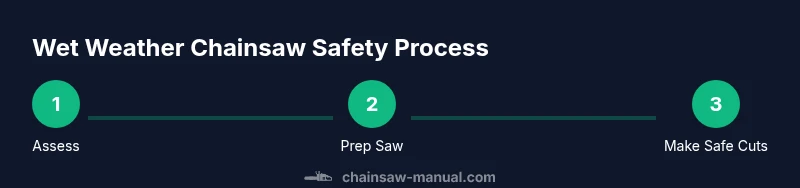
- Inspect weather, ground, and wood moisture before starting
- Wear full PPE and ensure gear is dry and functional
- Engage chain brake and test on scrap wood
- Maintain a balanced stance and controlled cuts
- Use wedges to prevent binding and kickback
- Dry the saw after use and store in a dry place
Tools & Materials
- Chainsaw with chain brake engaged(Ensure chain is sharp and properly tensioned; test brake before starting)
- Personal Protective Equipment (PPE)(Helmet with face shield, hearing protection, cut-resistant chaps, gloves, and sturdy boots)
- Bar oil and appropriate fuel(Use fresh fuel mix for 2-stroke engines; check for moisture in the fuel system)
- Wedges and leverage tools(Helpful for preventing pinch and guiding wood release)
- Dry rags or towels(Keep hands and handles dry to maintain grip)
- First aid kit(Ensure accessible and stocked)
- Sturdy, non-slip boots(Look for oil resistance and good tread)
- Dry, sheltered workspace or weather-appropriate shelter(Prevents continued exposure to rain during the job)
Steps
Estimated time: 90-120 minutes
- 1
Assess weather and work area
Survey the forecast and ground conditions. If rain is heavy or surfaces are slick, postpone. Confirm you have a clear escape path and dry footing before you begin.
Tip: Start with light duties before committing to heavy cuts to test control. - 2
Don PPE and secure workspace
Put on helmet with face shield, hearing protection, gloves, and chaps. Clear the area of obstacles and ensure you have solid footing.
Tip: Dry your gloves if they become wet; a dry grip improves control. - 3
Inspect and prepare the chainsaw
Check chain tension, lubrication, and chain brake operation. Wipe off moisture from the bar and chain and ensure air intake is clear.
Tip: Test the saw on a piece of scrap wood before cutting live material. - 4
Check ground footing and establish stance
Position feet shoulder-width apart, knees slightly bent, and weight centered. Keep the bar close to your body to maintain balance and minimize reach.
Tip: Avoid standing on slopes; if needed, reposition to a stable, dry spot. - 5
Secure the wood and plan a safe cut
Place wood on a solid surface and orient cuts to minimize pinch. Plan escape routes and keep bystanders away.
Tip: Cool-down breaks help maintain control during longer cuts. - 6
Engage chain brake, start saw, test cut
With the chain brake engaged, start the saw and perform a low-pressure test cut on scrap wood to verify control.
Tip: Keep a steady, gradual throttle to avoid jerky movements. - 7
Make a controlled initial cut
Begin with shallow cuts to assess wood behavior and moisture effects. Do not force the bar through wet fibers.
Tip: Use wedges if the wood tends to pinch. - 8
Proceed with main cut using proper technique
Proceed in small, controlled bites, maintaining balance and paying attention to kickback zones. Keep the chain sharp and maintain a smooth feed.
Tip: If you feel the saw wandering, ease off and re-center. - 9
Watch for binding and kickback indicators
Be alert for wood pinching or chain catching. If binding occurs, stop, step back, and reassess the cut direction.
Tip: Avoid cutting with the bar high above shoulder level. - 10
Finish the cut and retreat to safety
Complete the cut and move to a safe, dry area before inspecting the work. Never rush to pry a stuck bar.
Tip: Hold the saw away from your body as you exit the cut. - 11
Clean and dry the saw after use
Wipe moisture from the body, chain, and air intake. Lubricate the chain and inspect for rust or moisture damage.
Tip: Dry storage reduces corrosion risk and extends saw life. - 12
Store and transport safely in wet weather
Store in a dry place; use a protective cover if transporting on wet days. Ensure fuel and oil are sealed and cool before storage.
Tip: Check fuel stability if the saw will sit for a while.
FAQ
Is it safe to cut wet wood?
Wet wood is more prone to pinching and kickback, so proceed with extra caution. If the wood appears unusually wet or the ground is slick, postpone the cut.
Wet wood increases kickback risk; proceed with caution or postpone if conditions worsen.
Should I use lighter cuts in wet weather?
Yes. Lighter, shallower cuts reduce binding and heat buildup, making it easier to maintain control in damp conditions.
Lighter cuts help maintain control when the wood is damp.
Can I use an electric chainsaw in rain?
Electric chainsaws should not be used in heavy rain or standing water unless they are rated for wet conditions and kept dry. Always follow the manufacturer’s guidance.
Only use a wet-rated electric saw if the manufacturer approves it and conditions stay dry.
What PPE is essential in wet weather?
Helmet with face shield, hearing protection, gloves with good grip, cut-resistant chaps, and waterproof boots with slip resistance.
Wear full PPE—helmet, face shield, hearing protection, gloves, chaps, and slip-resistant boots.
What should I do if the ground is slick?
Move to a dry, stable area if possible. If you must work, adjust stance, slow your feed rate, and keep a clear escape path.
If the ground is slick, step back and consider postponing or moving to a dry spot.
How long should I wait after a rain to cut again?
Wait for surfaces to dry and wind to reduce moisture. Reassess the work area before resuming.
Wait until surfaces dry and conditions improve before continuing.
Watch Video
The Essentials
- Assess weather and ground before starting.
- Wear full PPE and maintain dry, firm footing.
- Cut in controlled, shallow bites to manage moisture effects.
- Stop if conditions worsen or footing becomes unsafe.
- Dry and inspect the saw after use to prevent corrosion.