Can you use a chainsaw if you have a defibrillator? A safety guide
Learn whether it's safe to operate a chainsaw if you have a defibrillator. This guide covers medical clearance, safety steps, PPE, emergency planning, and practical tips from Chainsaw Manual to keep you safe in 2026.


Can you use a chainsaw if you have a defibrillator? According to Chainsaw Manual, the safe answer is: consult your physician before operating any power tool. A defibrillator or implanted device may impose limits on strenuous activity, vibration exposure, and shock risk. If cleared, follow strict safety steps, PPE, and ensure an AED is accessible. If you feel chest symptoms, stop immediately.
Why this question matters
For homeowners, DIY enthusiasts, and professionals, the idea of using a chainsaw when a defibrillator is involved raises immediate safety questions. The risk is not only from the tool itself but from how a medical device interacts with intense physical activity, vibrations, and potential electrical sparks. The Chainsaw Manual team emphasizes that safety must come first, and the best course is to obtain medical clearance before handling high-powered equipment. In this context, 'defibrillator' covers implanted cardiac devices, external defibrillators, and medical devices that might require a controlled environment. The core message here is practical: do not assume compatibility or safety without personalized medical advice. This article outlines clear steps, risk factors, and best practices to help you assess readiness, prepare appropriately, and minimize risk if you proceed. Remember, an AED or implantable defibrillator does not automatically render chainsaw work safe; it simply means you must plan more carefully and comply with medical and safety guidelines. According to Chainsaw Manual, responsible tool use starts with medical clearance, comprehensive PPE, and a well-planned work zone.
Medical clearance and informed consent
Medical clearance is the foundation of safe chainsaw work when a defibrillator is involved. The physician will review heart function, medication interactions, recent symptoms, and the patient’s tolerance for vibration and exertion. In many cases, clearance may come with restrictions—shorter work sessions, frequent breaks, or avoidance of certain high-vibration tasks. Carry a copy of your clearance during work, and share it with your crew if you are working with others. Chainsaw Manual stresses that written guidance from a clinician reduces ambiguity and helps tailor a plan to your health status and environment. The goal is not to eliminate risk but to manage it through professional oversight and disciplined practice. If your clinician advises against chainsaw work, respect that recommendation and seek alternative methods.
Understanding defibrillators, EMI, and practical risk
Defibrillators—theory aside—are designed to respond to abnormal heart rhythms. Modern devices are shielded and tested for common ambient electrical environments, but high-power tools introduce unique risks: mechanical shocks, sudden movements, and potential interference from spark plug ignition systems. While there is no universal rule that bans chainsaw use for everyone with a defibrillator, individuals must evaluate device type (implantable vs external), device manufacturer guidelines, and personal health status. The Chainsaw Manual approach is conservative: prioritize device safety, avoid unnecessary exposure to vibration, and ensure a clear plan with your medical team. If you operate, you should know how to recognize early warning signs and stop immediately if symptoms appear.
PPE, workspace setup, and emergency readiness
Appropriate PPE is non-negotiable when you add a defibrillator to the equation. A certified chain saw helmet with face shield, cut-resistant chaps, sturdy gloves, hearing protection, and non-slip boots reduce injury risk from kickback and debris. The work area should be dry, well-lit, and free of bystanders who could be startled or injured. Having an AED nearby and functional is part of the safety baseline. Keep a charged battery or fueled tool in good condition, store fuel away from ignition sources, and have a first aid kit accessible. According to Chainsaw Manual, preparedness is a safety force multiplier—your readiness to respond to a sudden health event can be the difference between a minor incident and a serious one.
Pre-start checks: inspection, planning, and communication
Before you start, perform a quick but thorough inspection: chain tension, chain brake, anti-kickback features, bar oil, air filter, spark plug, and overall chain condition. Plan the task so you don’t overextend, and map out escape routes in case you need to step away. Communicate your plan with others nearby and designate a safety observer if possible. The presence of a defibrillator adds a layer of accountability to your plan: ensure you can stop quickly, access emergency services, and follow your clinician’s guidance. Practicality matters: fewer surprises during a cut means safer operation for everyone involved.
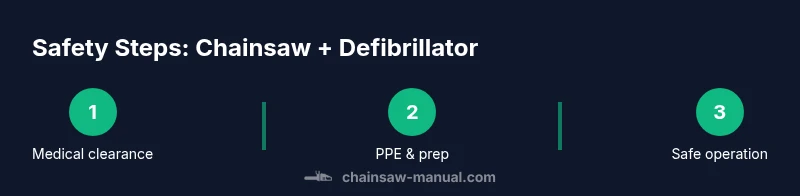
Step-by-step safety protocol before starting work (see STEP-BY-STEP block for full sequence)
This section highlights the key checks you perform before pulling the starter cord. Verify healthcare clearance, confirm equipment readiness, and establish an emergency contact protocol. If you encounter any warning signs—dizziness, chest discomfort, or unusual fatigue—pause work and reassess with medical guidance. Keeping a log of conditions (temperature, humidity, and fatigue) over several sessions helps tailor ongoing risk management. Chainsaw Manual notes that consistency in preparation reduces the likelihood of unexpected tool behavior and health events during operation.
Recognizing symptoms and when to stop
Chest pain, lightheadedness, shortness of breath, or abnormal heart rhythms are red flags. If any symptom arises during operation, discontinue immediately, move to a safe stance, and contact emergency services if active symptoms persist. Do not resume work until you have medical clearance. In practice, maintain constant communication with a teammate who understands your health plan and knows how to initiate emergency steps if needed. The goal is to prevent emergencies by respecting your health status and the device’s constraints.
Authority sources and medical guidance
A core part of safe operation is referencing reliable sources. In this section, you’ll find links to regulatory and medical guidance that support the safety framework described above. Always cross-check with your clinician before engaging in any heavy tool work when a defibrillator is involved. The intent is to provide a structured, safety-forward approach rather than casual tips. Authority guidance helps you align practice with current recommendations and device usage guidelines.
Safer alternatives and ongoing learning
If your clinician advises against chainsaw use, consider alternatives such as hiring professionals, using lighter-duty tools, or completing tasks in stages with breaks. Continuous education about safety—PPE updates, kickback prevention, chain maintenance, and device compatibility—helps you stay compliant and reduce risk over time. Chainsaw Manual promotes ongoing learning as a core habit for anyone operating high-risk tools around a defibrillator.
Tools & Materials
- Chainsaw in good working order(Chain sharp, tension correct, chain brake functional; bar oil accessible)
- Personal protective equipment (PPE)(Hard hat with face shield, cut-resistant chaps, safety glasses, hearing protection, gloves, sturdy boots)
- Medical clearance documentation(Doctor's note or card indicating clearance for high-vibration tools)
- AED or external defibrillator(Accessible location, batteries charged, instructions available)
- First aid kit(Adhesive bandages, sterile dressings, antiseptic wipes, splints)
- Dry work area and weather-appropriate clothing(Avoid wet surfaces; wear non-slip footwear; dress for temperature)
- Fuel and bar oil appropriate for your chainsaw(Keep fuel away from ignition sources; follow manufacturer ratios)
- Communication device(Phone or radio for emergencies; share location with someone else nearby)
- Note-taking or logging sheet(Record conditions, rest breaks, and any symptoms)
Steps
Estimated time: 60-120 minutes
- 1
Obtain medical clearance
Consult your cardiologist or primary care clinician to determine if you can safely operate a chainsaw with a defibrillator. Request written guidance on activity limits, required rest periods, and signs that require stopping work.
Tip: Document the clearance and carry it during work. - 2
Prepare the work area
Clear the nearby ground, remove bystanders, and ensure there is a dry, stable surface. Establish a safe retreat path in case you need to step back quickly.
Tip: Keep a dedicated observer if possible. - 3
Inspect the chainsaw
Check chain tension, sharpness, bar oil reservoir, and chain brake function. Inspect spark plug and air filter; ensure everything is secure before starting.
Tip: Address any abnormal sounds or vibrations before starting. - 4
Don PPE and set up
Put on helmet with face shield, cut-resistant chaps, gloves, hearing protection, and sturdy boots. Verify the AED is accessible and ready for use.
Tip: Do a quick PPE check before you touch fuel or start the engine. - 5
Plan the cut and communicate
Outline the task, identify hazards, and communicate plans to any helpers. Choose a task that minimizes heavy exertion and keeps the body aligned for balance.
Tip: Prefer a staged approach over long continuous cuts. - 6
Start safely and monitor
Start the saw with stable footing, use controlled, deliberate cuts, and maintain three points of contact. Monitor for chest discomfort, dizziness, or unusual fatigue.
Tip: Take frequent short breaks to reduce fatigue and vibration exposure. - 7
Stay within medical limits
Distribute workload to respect your clinician’s restrictions. If you hit any limit, stop and reassess a plan with a professional.
Tip: Never push beyond advised activity levels. - 8
Respond to symptoms immediately
If chest pain, shortness of breath, or faintness occur, stop, call for help, and contact medical services as needed.
Tip: Keep emergency numbers visible near the work area. - 9
Wrap up and review
Cool down, refuel, inspect the tool again, and log any issues or symptoms for future planning.
Tip: Review lessons learned with a buddy to improve future safety.
FAQ
Is it safe to operate a chainsaw with an implanted defibrillator?
Safety depends on medical clearance and individual device guidance. Always consult your cardiologist and device manufacturer before operating a chainsaw.
Safety depends on medical clearance and device guidance. Consult your doctor and the device manufacturer before operating a chainsaw.
What symptoms mean I should stop immediately?
Chest pain, dizziness, shortness of breath, or fainting require stopping work and seeking medical advice.
Stop immediately if you have chest pain, dizziness, or trouble breathing and contact medical help.
What PPE is essential when using a chainsaw with a defibrillator?
Helmet with face shield, cut-resistant chaps, gloves, eye and ear protection, and sturdy boots are essential.
Wear a helmet, face shield, cut-resistant chaps, gloves, eye and ear protection, and sturdy boots.
Should I work in wet conditions if I have a defibrillator?
Wet conditions increase slip and provide additional risk. Avoid working in rain or damp environments when possible.
Avoid wet conditions; they increase slip risk and may affect equipment.
How can I reduce vibration exposure?
Use proper stance, keep the chain sharp, take breaks, and choose tasks that minimize runtime.
Stand properly, keep the chain sharp, take breaks, and limit runtime to reduce vibration.
Where can I find medical clearance documentation?
Ask your clinician for written clearance and keep it accessible during work.
Get written clearance from your clinician and keep it handy while you work.
Watch Video
The Essentials
- Obtain medical clearance before chainsaw work with a defibrillator.
- Wear full PPE and prepare a safe work zone.
- Keep an AED accessible and monitor for warning signs.
- Follow a clear step-by-step plan and take breaks as needed.
- If symptoms appear, stop immediately and seek help.