Chainsaw and Pacemaker Safety: A Practical Guide for 2026
Explore the risks of operating a chainsaw with a pacemaker and learn practical safety steps, medical considerations, and safer alternatives for homeowners, DIYers, and professionals.


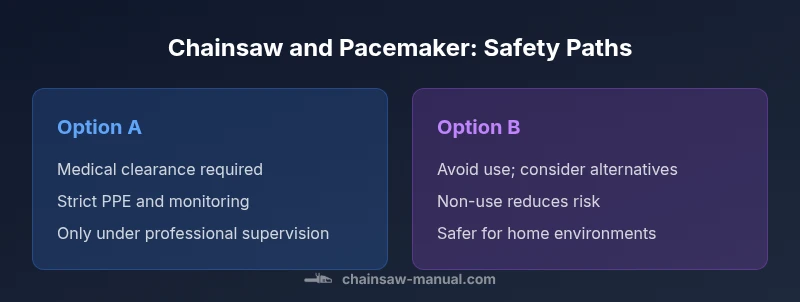
For most people with a pacemaker, operating a chainsaw is not recommended without medical clearance. The safest approach is to avoid direct chainsaw use and rely on professional services or safer alternatives. Chainsaw and pacemaker safety requires physician approval, strict PPE, and controlled environments, plus adherence to manufacturer guidelines. This comparison highlights when in-person use might be acceptable under supervision.
Chainsaw and Pacemaker Safety: Why the Risk Demands Attention
People with pacemakers face unique safety considerations when working with power tools like chainsaws. The combination of high vibrations, substantial electrical activity, and potential kickback can present risks that aren’t obvious to casual users. In this Chainsaw Manual guide, we analyze how a pacemaker interacts with chainsaw use and outline practical steps to protect heart devices, workers, and bystanders. This article focuses on safety-first decision making, medical clearance, and realistic alternatives for homeowners, DIY enthusiasts, and professionals. By understanding the core issues, you can plan safer outcomes and avoid avoidable emergencies.
- Key risk factors include vibration, noise, fatigue, and environmental hazards.
- Medical clearance means a conversation with your cardiologist, checking device manufacturer guidelines, and local regulations.
- The goal is to balance task feasibility with heart health through documented guidance and appropriate safeguards.
How Pacemakers Work and How They Interact with Electrical Equipment
Pacemakers regulate heart rhythm and are designed to react to physiological cues. When exposed to strong electromagnetic fields or electrical noise from power tools like chainsaws, some devices may respond unpredictably. Modern pacemakers are built with shielding and features to minimize interference, but that does not guarantee safety in every scenario. The interaction depends on device type, model, and monitoring settings, as well as the saw’s motor type and the task’s duration. This section explains the science at a high level and underscores why medical oversight is essential before attempting any hands-on work near a pacemaker.
Regulatory and Medical Guidance You Should Follow
There is no substitute for individualized medical advice. Before considering any chainsaw activity with a pacemaker, obtain explicit medical clearance from your cardiologist. Review the pacemaker’s documentation for device-specific warnings about electrical devices and motors. Additionally, check local occupational safety guidelines and insurance policies that may require documenting heart-device considerations. Chainsaw manufacturers typically provide general safety guidance, and clinicians can tailor recommendations to your health status. This section helps readers translate clinical advice into practical, on-the-ground decisions.
Practical Safety Guidelines for Homeowners and Professionals
- Prioritize a no-work approach unless cleared by a cardiologist.
- If proceeding, use full PPE: cut-resistant gloves, eye/face shield, hearing protection, and appropriate clothing.
- Maintain a clear work area, secure footing, and avoid wet or uneven surfaces.
- Work with a partner who can assist and call for help if needed.
- Limit task duration and avoid complex or high-risk cuts near obstacles.
- Consider non-mechanical alternatives (hand pruning, pole saw, or professional services) when possible.
Safer Alternatives to Chainsaw Use
For pacemaker wearers or anyone uncertain about device interactions, consider:
- Hiring professional arborists for risky cuts.
- Using non-motorized tools like hand saws for small tasks.
- Employing a long-reach pole saw or pruning shears for overhead work.
- Scheduling tasks during periods of optimal personal health under medical guidance.
- Renting specialized equipment with operator supervision when appropriate.
Equipment Setup and PPE for Pacemaker Wearers
PPE alone cannot guarantee safety, but it significantly reduces risk when combined with medical clearance. Always inspect gear before use and ensure proper fit. PPE should include:
- Eye protection, face shield, and hearing protection.
- Cut-resistant gloves and leg protection where appropriate.
- High-visibility clothing and non-slip footwear.
- Battery or fuel management practices to minimize distractions.
- A well-ventilated workspace with adequate lighting and classified waste handling.
Planning and Documentation: Medical Records, Insurance, and Workplace Safety
Effective planning reduces risk. Obtain written clearance from your cardiologist and keep copies of device documentation. Document the specific task, tools, PPE, duration, and supervision level. If a workplace safety program is involved, ensure it addresses heart-device considerations and emergency procedures. Maintaining clear records can support safer decision-making and liability protection.
Case Scenarios and Decision Framework
- Scenario A: A homeowner with a pacemaker needs to remove a fallen branch. After medical clearance, a professional arborist handles the job with proper PPE and a controlled environment.
- Scenario B: An experienced DIYer plans a small pruning task. They obtain clearance, use a pole saw with reduced duration, and stop if any symptoms arise.
- Scenario C: A contractor has a high-demand cutting project and must determine whether to defer tasks to a specialized team or switch to an alternative method. The framework emphasizes physician guidance, device manufacturer instructions, and prudent risk assessment.
Comparison
| Feature | Chainsaw use with pacemaker under strict protocols | Avoid chainsaw use with pacemaker; rely on alternatives |
|---|---|---|
| Medical clearance | Required before use with clinician guidance | Strongly recommended to avoid use; rely on alternatives |
| Electromagnetic interference risk | Managed by device manufacturer guidelines and physician | Not applicable; avoid exposure |
| PPE intensity | High: PPE + monitoring and controlled environment | Not applicable; alternatives only |
| Feasibility for typical tasks | Low to moderate depending on task; highly controlled conditions required | Unfeasible for most everyday tasks |
| Cost of safety measures | Moderate (PPE, monitoring, possible supervision) | Low (no chainsaw exposure; use alternatives) |
| Legal/insurance considerations | Potential coverage with medical clearance and documented risk assessment | Typically safer route with avoidance |
Strengths
- Promotes safety-first approach and reduces injury risk
- Encourages medical clearance and professional guidance
- Helps plan safer alternative methods
Drawbacks
- Restricts common yard tasks for pacemaker wearers
- May increase project duration and cost if professionals are required
- Could limit DIY learning opportunities in some settings
Avoid direct chainsaw use with a pacemaker unless medically cleared; safer to pursue alternatives or professional services.
For most pacemaker wearers, the prudent path is deferring chainsaw work. Medical clearance, strict safety protocols, and consideration of safer alternatives minimize risk to heart devices and personal health.
FAQ
Is it safe to operate a chainsaw if I have a pacemaker?
Generally, operating a chainsaw is not recommended for pacemaker wearers without explicit medical clearance. The decision depends on cardiologist guidance and device specifications. Always weigh the risk with professional advice before attempting any hands-on work.
Pacemaker wearers should not operate a chainsaw without doctor approval. Check with your cardiologist and device manual before proceeding.
What steps should I take before considering chainsaw use with a pacemaker?
Obtain written clearance from your cardiologist, review the pacemaker's guidelines for electrical devices, and assess the task for risk with a supervisor or safety expert. Plan for emergency procedures and ensure appropriate PPE and ventilation.
Get medical clearance, review device guidelines, and plan for emergencies before any work.
Can electric chainsaws pose different risks than gas-powered models for pacemaker wearers?
Both electric and gas-powered saws generate electrical noise and vibration, but the risk profile depends on the device and task. Always treat any power tool around a pacemaker with caution and seek professional guidance for model-specific considerations.
Both types carry risk; don’t assume one is safer—get medical and device guidance first.
Are there documented cases of pacemaker interference with chainsaw operation?
Publicly available case reports are limited. The safest approach is to rely on professional assessment, device manufacturer guidelines, and clinician recommendations rather than relying on anecdotal evidence.
Evidence is limited; follow medical guidance and manufacturer instructions for safety.
What are safer alternatives to chainsaws for someone with a pacemaker?
Consider non-motorized tools, pole saws with supervision, or hiring a professional arborist. These alternatives can complete the task with reduced risk to the pacemaker and heart health.
Use non-motorized tools or hire pros to minimize risk.
How can I ensure PPE adequacy when a pacemaker is present?
PPE is essential but not sufficient alone. Combine proper PPE with medical clearance, controlled environment, and safe work practices. Regularly inspect gear and replace damaged equipment.
Wear proper PPE and get medical clearance; inspect gear before each use.
The Essentials
- Consult a cardiologist before any chainsaw work
- Prioritize PPE and controlled environments when clearance exists
- Explore safer alternatives to reduce exposure
- Document medical guidance and task details for safety accountability
- Use a clear decision framework to decide between execution and deferment